Organic Abstraction is an artistic style characterized by "the use of rounded or wavy abstract forms based on what one finds in nature." It takes its cues from rhythmic forms found in nature, both small scale, as in the structures of small-growth lea...
To enter a space defined by organic abstraction is to step away from the rigid, often taxing geometry of modern life and surrender to a more primal, soothing rhythm. Unlike the cold, intellectual formalism found in Cubism or Constructivism—styles that rely on the sharp, uncompromising edges of squares and triangles—biomorphic abstraction whispers through rounded, wavy forms that feel as intuitive as breathing. This is an artistic language born from the soft curve of a nautilus shell, the delicate veins of a leaf, or the sweeping movement of wind across a sun-drenched dune. It does not seek to strictly mimic nature through literal representation; instead, it captures its very essence, suggesting life itself without the need for precise depiction.
This style finds its strength in what is familiar yet transformed. When we encounter these organic shapes, we are witnessing a celebration of the rhythmic, undulating forms that define our shared biological experience. It is an art of connection, bridging the gap between our structured indoor environments and the wild, flowing energy of the earth. Whether observing the microscopic structure of a cell or the grand, sweeping curves of cosmic phenomena, this mode of expression invites us to find beauty in the continuous flow of existence.
Ancestral Curves: The Sculptural Foundations of Biomorphic Form
Mária Bartuszová (24 April 1936 – 22 December 1996) was a Slovak sculptor known for her abstract white plaster sculptures. Her work is included in the Centre Pompidou in Paris, the Slovak National Gallery in Bratislava and the Tate in London. Her art...
The lineage of these fluid forms is deeply rooted in the mid-20th century, where sculptors began to move away from the austerity of geometric construction toward a more vital, living aesthetic. Masters such as Jean Arp, Constantin Brâncuși, and Henry Moore utilized organic abstraction to explore the relationship between mass and movement. Their work often drew inspiration from the fundamental structures of life: nautilus shells, honeycombs, bones, and the very musculature of the human and animal bodies. By softening heavy materials or manipulating weight through form, these artists created a dialogue between the permanent and the transient.
This sculptural tradition extends into the realm of design, where figures like Isamu Noguchi and Charles Eames applied biomorphic principles to create objects that feel both functional and natural. Even in architecture, the influence is palpable; the sweeping, organic lines of Eero Saarinen or the integrated landscapes of Frank Lloyd Wright demonstrate how these curves can define our built environment. This movement was not merely a stylistic choice but a reaction against the rigidness of mid-century Constructivism, seeking instead to embrace the undulating vitality of the natural world.
Microscopic Wonders: Observing the Logic of Natural Patterns
Nature photography encompasses a wide range of photography taken outdoors and devoted to displaying natural elements such as landscapes, wildlife, plants, and close-ups of natural scenes and textures. Nature photography tends to place a stronger emph...
There is a profound structural truth found in the way nature organizes itself, a logic that provides abstract artists with a non-arbitrary vocabulary. The most durable abstract art often feels inevitable rather than accidental because it is drawn from forms that follow evolutionary and physical laws. We see this in the "whiplash" curve of Art Nouveau, derived directly from the stem of a cyclamen plant, or in the way Georgia O’Keeffe enlarged flowers until their botanical details became pure, powerful abstraction. These works are not departures from natural observation but intensifications of it.
This fascination with pattern extends from the minute to the monumental. We find inspiration in the small-scale structures of leaves and stems, yet we also look toward the grand shapes of the universe revealed by astronomy and physics. The branching structures of trees or the spiral growth of a shell are not merely decorative; they represent structural efficiency and mathematical precision. When an artist captures these patterns, they are tapping into a universal language of growth and stability that resonates on both a biological and a cosmic scale.
Tactile Landscapes: The Weight and Texture of Earthbound Forms
A Vision of Timeless Equilibrium Monolithic Serenity: An Abstract Study of Organic Forms and Earthbound Textures is a profound exploration of Neo-Abstract beauty, offering a fresh, modern perspective on the intersection of nature and structure. This ...
In the realm of contemporary abstraction, the focus often shifts from pure shape to the visceral sensation of texture and weight. Artists like Laurent Fabre and David Moreau treat the canvas as a sculptural site, where the application of pigment creates a literal topography. In works such as Monolithic Serenity: An Abstract Study of Organic Forms and Earthbound Textures, heavy, impasto-like textures and rhythmic, vertical compositions evoke the quiet strength of geological formations. Here, the art is not just seen but felt; the ridges and valleys created by a palette knife invite a deep, meditative contemplation.
This tactile approach allows for an exploration of primordial balance. In Monolithic Earth Tones, the use of interlocking organic shapes in terracotta, ochre, and sage green creates a sense of monumental stillness. Similarly, David Moreau’s Monolithic Silence utilizes heavy white masses and sweeping tan fields to anchor a space with a sense of permanence. This emphasis on materiality—the intentional accumulation of physical matter—transforms a flat plane into a sensory landscape, reminding the viewer of the beauty found in the tangible and the imperfect.
The Philosophy of Flow: Spontaneity and the Bergsonian Influence
Abstract expressionism in the United States emerged as a distinct art movement in the aftermath of World War II and gained mainstream acceptance in the 1950s, a shift from the American social realism of the 1930s influenced by the Great Depression an...
The intellectual heartbeat of organic abstraction can be traced to the French philosopher Henri Bergson, who proposed a values system that elevated creativity mimicking nature's own processes: fecundity, mutation, and unforeseeable novelty. Bergson challenged the primacy of logic and science, advocating instead for an appreciation of intuition and the continuous flow of life. This philosophy deeply influenced artists who sought to capture the spontaneous and the subconscious, much like the Abstract Expressionists who utilized gestural, energetic methods.
This spirit of spontaneity is evident in the works of artists like Jackson Pollock, whose techniques had roots in the surrealist methods of André Masson and Max Ernst. It is also seen in the "pneumatic shaping" used by Mária Bartuszová, whose white plaster sculptures appeared tentative, unfinished, and transitory. By embracing deformation—crushing, squeezing, or breaking forms—artists can mimic the transformative power of nature. This approach celebrates the idea that art, like life, is a process of constant mutation and unpredictable emergence.
The Curated Interior: Integrating Organic Serenity into Modern Living
The Pulse of Nature: Defining Biomorphic Abstraction Nature Reimagined: A Guide to the Fluid Beauty and Serenity of Biomorphic Art The Poetry of Curves: Defining Biomorphic Abstraction Organic Abstraction Organic Abstraction is an artistic style char...
Integrating organic abstraction into a modern interior offers a profound sensory shift, moving away from the sterile and toward the harmonious. In high-end design, the introduction of rounded, wavy forms can dictate an entire perception of prestige and calm. These pieces act as anchors for a room, providing a sense of stability through their earthbound textures while simultaneously adding a layer of sophisticated movement. Whether it is a large-scale mural or a singular, textured oil painting, organic abstraction brings a pulse of life to contemporary spaces.
For the collector, selecting such works is an exercise in finding balance. A piece that utilizes a palette of sage green, deep charcoal, and warm cream can harmonize with modern architectural elements, while more energetic works, like those by Gusti Agung Mangu Putra, can introduce a dynamic tension. By choosing art that reflects the rhythmic beauty of the natural world, one creates an environment that is not merely decorated, but deeply connected to the enduring flow of existence.
At AllPaintingsStore.com, we specialize in bringing these tactile and fluid visions to your home. From hand-painted oil reproductions that capture every heavy impasto stroke to professional digital mockups that allow you to visualize a piece on your own wall, our mission is to make the discovery of fine art an accessible and inspiring experience.
By the AllPaintingsStore.com Editorial Team
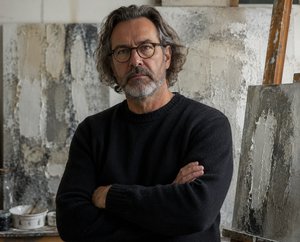
Exclusive ArtistDavid Moreau
b. 1967 · Lyon, France
Discover the exquisite textured works of Moreau. WahooArt offers exclusive access to his master-style plaster and texture art reproductions.
Exclusive ArtistClément Hardy
b. 1977 · Lyon, France
Discover the exclusive collection of Clement Hardy on WahooArt.com. Explore his Wallpaper Repeat Pop style featuring seamless patterns and vibrant digital imagery.
Discover the soothing elegance of biomorphic art. Explore how organic forms and fluid abstractions bring nature's harmony into your home through our expert guide to curated, hand-painted masterpieces and custom fine art reproductions.
Discover the mesmerizing world of Biomorphic Art. Explore how organic shapes, fluid forms, and nature-inspired abstraction are revolutionizing modern interior design and contemporary art collecting.


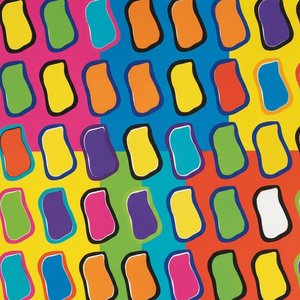


 Organic Abstraction
 Mária Bartuszová
 Nature photography
 Monolithic Serenity: An Abstract Study of Organic Forms and Earthbound Textures
 Biomorphic Art: Mastering the Fluidity of Organic Shapes and Modern Design Trends