In art, chiaroscuro (English: kee-AR-ə-SKOOR-oh, -SKURE-, Italian: [ˌkjaroˈskuːro]; lit. 'light-dark') is the use of strong contrasts between light and dark, usually bold contrasts affecting a whole composition. It is also a technical term used by a...
To understand the weight of a Baroque canvas, one must first look at how light is carved from the void. The term chiaroscuro, derived from the Italian chiaro (light) and scuro (dark), describes more than a mere trick of illumination; it is a fundamental method of defining form through the tension of opposing values. While its roots lie in the careful tonal gradations of Renaissance drawing—where artists worked from a base paper tone toward highlights with white gouache—the Baroque era expanded this vocabulary into something far more muscular.
In the earlier traditions, light often served to clarify, providing a steady, even glow that revealed the anatomical precision of a figure. We see the seeds of this in the works of Leonardo da Vinci, whose subtle sfumato blurred edges to suggest atmosphere. However, as we move into the seventeenth century, the relationship between light and shadow shifts from a tool of clarity to a tool of conflict. The contrast becomes bold, affecting the entire composition to create a sense of three-dimensional volume that feels tangible to the viewer.
This technical evolution mirrors the broader shift in European thought. Just as the Renaissance sought to map the world through rational perspective, the Baroque used light to explore the unseen. When we observe the way light strikes a surface today, whether in a high-end photograph or a modern cinematic frame, we are seeing the enduring legacy of this geometric struggle between what is revealed and what remains hidden in the dark.
Beyond the Balanced Line: The Departure from Renaissance Serenity
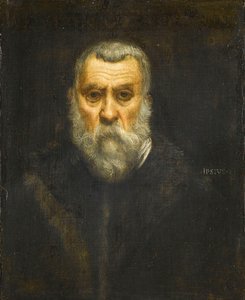
Introduction To step into the world of Jacopo Tintoretto is to enter a realm where light does not merely illuminate, but erupts. Known to history as Il Furioso , Tintoretto possessed an energy that defied the balanced serenity of the High Renaissance...
The transition from the High Renaissance to the Baroque was not merely a change in fashion, but a rejection of a specific kind of stillness. The Renaissance prized a calm rationality, a sense of equilibrium where every limb and landscape element occupied a harmonious, predictable space. Artists like Raphael sought a perfection of balance that felt eternal and undisturbed.
The Baroque era arrived to disrupt this peace. Instead of capturing the moment before an event, Baroque masters chose the moment of peak action. Where a Renaissance sculptor might present David in a state of quiet preparation, a Baroque artist would present him in the very act of hurling the stone. This shift required a new way of handling light and composition to manage the resulting chaos. The stability of the pyramid structure, often used by Rubens in works like The Entombment, was now tasked with containing an explosion of movement and grief.
This departure from serenity finds an echo in the works of Jacopo Tintoretto. Though working in the late sixteenth century, his energy—often described as Il Furioso—defied the balanced grace of his contemporaries. His rapid, sketch-like brushstrokes and swirling compositions acted as a bridge, moving away from the static perfection of the past toward the visceral, kinetic intensity that would define the next century.
--- title: Baroque painting - Wikipedia author: Authority control databases url: https://en.wikipedia.org/wiki/Baroque_painting hostname: wikipedia.org sitename: Wikimedia Foundation, Inc. date: 2001-03-26 --- # Baroque painting | This article needs ...
If chiaroscuro is the use of contrast to create volume, tenebrism is its most extreme and theatrical manifestation. Derived from the Italian tenebroso, meaning dark or gloomy, this technique utilizes violent contrasts where darkness dominates the canvas, leaving subjects dramatically spotlit against an impenetrable black background. This is not merely shading; it is a spotlighting effect that forces the viewer’s eye to a singular, often harrowing, focal point.
Caravaggio was the architect of this revolution. In works such as The Calling of Saint Matthew, he stripped away unnecessary scenery, using deep shadows to isolate his figures and imbue them with a sudden, startling presence. This style was not an end in itself but a means to achieve a profound psychological depth. By obscuring the periphery, the artist directs all emotional energy toward the central drama, making the spiritual experience feel immediate and inescapable.
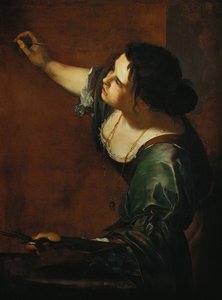
We see this same impulse in the work of Artemisia Gentileschi. In her rendering of Judith Slaying Holofernes, she employs a single, oblique light source to create shadows that heighten the physical struggle. This use of light as a narrative driver finds its modern counterpart in low-key photography and film noir, where the shadow is just as communicative as the light, telling stories of mystery and tension through what is left unlit.
Sculpting with Light: The Technical Pursuit of Volume
A Vision of Spiritual Ascent: Francisco Zurbarán’s *Vision of Brother Andrés Salmerón* Francisco de Zurbarán's *Vision of Brother Andrés Salmerón*, painted in 1639, is more than simply a religious depiction; it’s an immersive experience of faith rend...
At its most technical level, chiaroscuro serves to model three-dimensional forms on a two-dimensional surface. This process, known as chiaroscuro modelling, relies on the precise gradation of color and value to suggest the weight and texture of flesh, fabric, and stone. It is an analytical division of light and shadow that allows a painter to sculpt figures out of the darkness.
In the hands of masters like Francisco de Zurbarán, this technique achieves a near-photographic realism. In his Vision of Brother Andrés Salmerón, the light does not merely illuminate; it probes the textures of the monk's habit and the weathered lines of his face. The palette is restrained—dominated by ochres, browns, and grays—which allows the single source of light to define the heavy, palpable folds of cloth. This creates a sense of physical presence that makes the spiritual subject matter feel grounded in reality.
This pursuit of volume through value finds its technical parallels in the world of printmaking. In chiaroscuro woodcuts, artists use different blocks and colored inks to achieve similar effects of depth and tone. Whether through the hatching of a print or the thick impasto of an oil painting, the goal remains the same: to use the interplay of light and dark to convince the eye that the subject possesses true mass and substance.
Visual Rhetoric: The Counter-Reformation’s Mandate
The Protestant Reformation during the 16th century in Europe almost entirely rejected the existing tradition of Catholic art, and very often destroyed as much of it as it could reach. A new artistic tradition developed, producing far smaller quantiti...
The dramatic intensity of Baroque art was not solely a matter of personal expression; it was deeply entwaged with the religious politics of the Counter-Reformation. Following the Council of Trent, the Catholic Church sought to use art as a powerful tool for spiritual instruction and propaganda. The mandate was clear: art must be legible, powerful, and capable of inspiring intense piety in the faithful.
This period saw a move away from the intellectualized, often complex allegories of Mannerism toward a more direct, emotional realism. Ecclesiastical authorities encouraged works that depicted biblical episodes with clarity and decorum, yet with enough drama to stir the soul. Artists like Gaspard De Crayer navigated this landscape by producing monumental altarpieces that combined the grandeur of the era with the strict requirements of Catholic doctrine. The art was intended to be a visual sermon, using scale and light to overwhelm the senses and reinforce the majesty of the Church.
This era of controlled, purposeful imagery finds an echo in the way we use visual branding today. Just as the Counter-Reformation used specific iconographic canons to communicate authority and tradition, modern institutions use carefully curated aesthetics to signal stability and values. The Baroque artist understood that to move a population, one must first capture their attention through the sheer force of visual impact.
Cézanne's 'Factories near the Mount of Cengle' captures the quiet tension between nature & industry. Explore his innovative style & Post-Impressionism at AllPaintingsStore.com.
The legacy of the Baroque lies in its ability to speak a universal language of emotion. The techniques developed in the seventeenth century—the dramatic spotlighting, the heavy shadows, and the focus on the decisive moment—have become the foundational grammar of much of our modern visual culture. We see the DNA of Caravaggio in every film that uses shadow to build suspense or character depth.
From the candlelit intimacy of Georges de La Tour’s paintings to the sweeping, celestial dramas of Peter Paul Rubens, the Baroque era taught us how to use light to guide the eye and manipulate the heart. It moved art from a state of observation to a state of experience. The heavy, textured brushstrokes of an oil reproduction on canvas provide a tactile connection to this history, reminding us that the struggle between light and dark is a fundamental part of the human condition.
As we continue to consume images in an age of digital perfection, the "imperfect" and visceral nature of Baroque art offers a necessary grounding. The visible hand of the artist, the deep shadows that refuse to be fully illuminated, and the raw emotionality of the subject matter all serve as a reminder that true power in art often resides not in what is clearly seen, but in the mystery of what remains obscured.
Embark on a sophisticated journey through Italian Baroque art. Discover the dramatic interplay of light and emotion in Caravaggio’s masterpieces and explore how to bring this timeless grandeur into your collection with expert art insights.
Immerse yourself in the dramatic world of Jacopo Tintoretto. Explore 25 iconic Renaissance masterpieces defined by light, shadow, and emotion. Find inspiration for museum-quality art reproductions and curated decor. Discover all masterpieces on AllPaintingsStore.com.
Explore the dramatic world of Baroque portraiture. Discover how masters used chiaroscuro and light to evoke profound emotion during the Counter-Reformation. A definitive guide for art enthusiasts seeking to understand the power of 17th-century masterpieces.


 Chiaroscuro
 Master of Drama: The Top 25 Greatest Artworks by Jacopo Tintoretto
 Vision of Brother Andrés Salmerón
 Art in the Protestant Reformation and Counter-Reformation
 The bird and its shadow III