The Roots of Observation: From Ancient Herbals to Scientific Realism The Flourishing Canvas: A Historical & Artistic Exploration of Botanical Illustration The Roots of Observation: Early Botanical Depictions & Medicinal Herbals Wikipedia: Botanical i...
Long before the camera lens could freeze a moment in time, the human understanding of the plant kingdom relied entirely upon the patience of the artist. In the early centuries, botanical depictions were rarely about pure aesthetics; they were tools for survival. The earliest herbals, such as the 12th-century Circa Instans, functioned as essential medical manuscripts. Within monastic gardens, monks and nuns cultivated plants for their healing properties, and the illustrations in these texts served to identify which flora could cure an ailment and which might prove lethal.
This era of transition moved from symbolic representation toward a disciplined need for utility. While early works often utilized woodcuts that were repeated across various texts—sometimes representing several different species with a single image—they established the fundamental impulse to categorize the natural world. This period laid the necessary groundwork for the later revolution in naturalism, where the artist's eye began to move away from myth and toward an empirical, documented reality.
Mapping the Unknown: The Age of Discovery and Contemporary Biodiversity
A Legacy of Scientific Discovery Nikolaus Joseph Freiherr von Jacquin was not a visual artist in the traditional sense, but rather a distinguished scientist whose life's work resided at the profound intersection of medicine, chemistry, and botany. Bo...
As the horizons of the known world expanded during the Age of Discovery, the role of the botanical illustrator underwent a profound transformation. Explorers returned from distant lands with specimens that defied European classification, creating an urgent demand for artists who possessed both the eye of a painter and the discipline of a researcher. This era turned the botanical manuscript into a window onto the exotic, blending the rigor of empirical observation with a growing sense of wonder at the diversity of life.
We see this same drive for documentation in the work of later figures like Nikolaus Joseph Freiherr von Jacquin, whose expeditions to the West Indies allowed him to collect and describe numerous new species. Today, this tradition continues through the vital work of researchers at institutions like the California Academy of Sciences. The legacy of H. Bruce Bartholomew, for instance, demonstrates how the study of vascular plants in China remains a critical act of preservation. In an era of rapid habitat loss, the ability to document biodiversity is not merely an artistic pursuit but a scientific necessity.
Anatomy of a Specimen: Renaissance Realism and Modern Precision
The Renaissance of Realism: From Medieval Herbals to Scientific Precision Botanical Realism: The Art of Capturing Nature's Precise Detail through Scientific Mastery The Evolution of Observation: From Ancient Herbals to Scientific Realism The Art of P...
The convergence of fine art training and scientific inquiry reached its peak when the artist became a master of morphology. To capture the delicate translucency of a petal or the rugged architecture of a stem required more than just talent; it required an understanding of organic structure. This period saw the rise of botanical realism, where techniques such as layered glazes and fine brushes allowed for a depth of field that mimicked three-dimensional reality.
This precision is evident in the meticulous studies found within the Harvard University Herbaria, where illustrations provide a level of detail often invisible to the naked eye. Modern scientific illustration continues this standard, utilizing tools like microscopes to render the subtle pubescence of a leaf or the intricate chambers of a seed capsule. Whether through the use of watercolor or modern digital media, the goal remains unchanged: to present the diagnostic characters of a plant with such clarity that no anatomical inaccuracy can be found.
The Artist as Scientist: Historical Pioneers and Modern Documentation
A Life Rooted in Observation: The Botanical World of H. Bruce Bartholomew Bruce Monroe Bartholomew, born in the United States in 1946 and passing away in 2023, led a life that beautifully intertwined scientific rigor with an artistic sensibility. Whi...
History is written by those who possess an obsessive attention to detail. Figures like Johann Simon von Kerner exemplify this intersection, as his life was inextricably linked to both botany and the art of illustration. His work was not merely an artistic endeavor but a scholarly pursuit designed to bring the complexity of nature to a wider audience. Similarly, the 18th-century apothecary Johann Wilhelm Weinmann utilized the innovative mezzotint techniques of engravers like Georg Dionysius Ehret to achieve unprecedented tonal nuance in his botanical prints.
This dedication to accuracy is mirrored in the work of Frederick E. Cohen, whose 19th-century illustrations captured the flora of the American Midwest with an almost photographic quality. Even in contemporary settings, such as the Cambridge University Botanic Garden, the boundary between the laboratory and the gallery remains blurred. The garden’s systematic arrangement allows visitors to witness evolutionary relationships through a rhythmic flow of texture and color, much like the intentional compositions found in the works of great landscape artists.
A Permanent Record: Preserving Extinct Species through Illustration
A Botanical Legacy: Where Science Meets the Sublime To step into the Department of Plant Sciences at Cambridge University is to enter a sanctuary where the rigorous precision of scientific inquiry dissolves into the profound beauty of the natural wor...
There is a profound difference between a photograph and a botanical illustration. While a photograph captures a single moment, an illustration can synthesize the entire life cycle of a plant—showing the bud, the bloom, the fruit, and the seed in a single, cohesive image. This ability to provide a permanent, idealized yet accurate record is vital for conservation. Illustrations can preserve a species in perpetuity within books and journals, even after that species has vanished from the wild.
This permanence was seen in the way illustrators documented critically endangered species, such as those found in the Hawaiian islands, ensuring their morphology remains known to science. As we look at the collections in the Marianne North Gallery or the archives of the Department of Plant Sciences at Cambridge, we see more than just art; we see a living chronicle. These works act as irreplaceable artifacts that illuminate the evolution of human knowledge and ensure that even when a species is lost, its essential form remains part of our collective memory.
At AllPaintingsStore.com, we appreciate this enduring legacy of precision. We offer high-quality, hand-painted reproductions of botanical works, produced on 100% cotton canvas with the same respect for texture and detail that defined the masters. For those looking to furnish professional or residential spaces with a sense of historical depth, our catalog provides a wide range of sizes and custom options, including multi-panel layouts for large-scale architectural projects. Whether you require a single study of a leaf or a large-format mural, our artists bring academic excellence to every commission.
Explore the profound history of botanical illustration, from ancient herbals to masters like Kerner and Eaton. Discover how scientific precision meets aesthetic grace in these timeless works of natural history and art.
Explore the profound history of botanical realism. From scientific masters like Kerner to exquisite hand-painted reproductions, discover how precision meets aesthetic grace in the art of capturing nature's true essence for timeless interiors.
Explore the high-impact world of scientific illustration. From botanical realism to precision-driven masterpieces, discover how legendary illustrators blend scientific accuracy with breathtaking aesthetic beauty for the modern art collector.


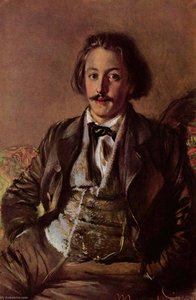

 The Art of Precision: A Definitive Guide to Scientific Illustration and Botanical Mastery
 Nikolaus Joseph Freiherr Von Jacquin
 The Eye of Discovery: Masterpieces Capturing the Spirit of Scientific Observation
 H. Bruce Bartholomew, Bruce Monroe Bartholomew
 Department of Plant Sciences


