


The Primordial Palette: From Sepia Ink to Earth-Toned Abstraction
 Sepia (color)
Sepia is a reddish-brown color, named after the rich brown pigment derived from the ink sac of the common cuttlefish Sepia. The word sepia is the Latinized form of the Ancient Greek word σηπία (sēpía), meaning cuttlefish. == In the visual arts == Sep...
Sculpting with Shadow: The Legacy of Chiaroscuro in Modern Relief
 Relief of Weathered Umber Cells in Deep Sepia Grooves
Relief of Weathered Umber Cells in Deep Sepia Grooves, David Moreau
The mastery of light is rarely about the light itself, but rather about the shadows it leaves behind. This is the essence of chiaroscuro, a technique that emerged during the Renaissance to provide three-dimensional volume to two-dimensional surfaces through the calculated contrast of light and dark. While often associated with the dramatic, high-contrast intensity of Baroque tenebrism—seen in the works of Caravaggio or Rembrandt—the principle remains a fundamental tool for defining form. By manipulating value gradation, an artist can instruct the eye exactly where to rest and where to move, creating a sense of weight and physical presence that transcends simple line work.
This classical manipulation of shadow finds a new, tactile dimension in the realm of texture art. In David Moreau’s Relief of Weathered Umber Cells in Deep Sepia Grooves, the concept of chiaroscuro is translated into a physical, architectural experience. Here, the light does not merely fall upon a painted surface; it interacts with deep, recessed grooves and raised modules. As directional lighting strikes the work, it casts actual shadows within the pigment, much like the skiagraphia practiced by Athenian painters in antiquity. The technique has evolved from a method of optical illusion to one of physical relief, yet the objective remains unchanged: using the absence of light to sculpt form and command attention.
Tactile Permanence: Impasto and the Physicality of Pigment
 Monumental Rhythms: An Organic Procession of Sculpted Horses in Earthy Tones
A Vision of Primal Energy The visceral power of Monumental Rhythms: An Organic Procession of Sculpted Horses in Earthy Tones is immediately apparent through its rhythmic, panoramic composition. This contemporary abstract work captures a dynamic movem...
Atmospheric Gravity: The Emotional Resonance of Muted Tones
 Earthy Hues & Masterpieces: Top 10 Paintings with 'Mushroom' Tones |
Introduction Close your eyes and imagine a forest floor—damp earth, decaying leaves, the subtle luminescence of fungi emerging from shadow. These 'mushroom tones' – earthy browns, muted ochres, soft grays, and deep umbers – evoke a sense of quiet con...
The Architecture of Stillness: Curating Enduring Spaces with Earthy Hues In the context of modern interior curation, particularly for high-end hospitality and corporate environments, the selection of art must consider more than mere decoration; it must consider atmosphere. A collection dominated by earthy tones provides an architectural stability to a room. These works do not compete with the surrounding design but rather ground it, offering a sense of heritage and organic warmth. Whether through the use of multi-panel group sets that span a large wall or a single, commanding centerpiece, the presence of brown and umber tones fosters an environment of understated elegance. This pursuit of stability is reflected in the contemporary "Plaster & Texture" movement, where artists like David Moreau create works that feel like unearthed artifacts. In Monolithic Fragments of Memory, the use of distressed sepia and heavy impasto creates a sense of monumental nostalgia. For the professional decorator or procurement manager, such pieces offer a way to introduce depth and history into a space without the need for literal historical references. By integrating these enduring palettes, one can curate spaces that feel both modern in their execution and ancient in their soul, ensuring that the aesthetic impact is as lasting as the pigments themselves. At AllPaintingsStore.com, we specialize in providing this level of profound, textured art for discerning collectors and professionals alike. From hand-painted oil reproductions that capture the true impasto of the masters to custom commissions that transform personal memories into historical styles, our catalog is built on the principles of quality and reliability. Whether you are furnishing a single room or an entire hotel wing, we offer the scale, customization, and global logistics required to bring enduring beauty to any project.
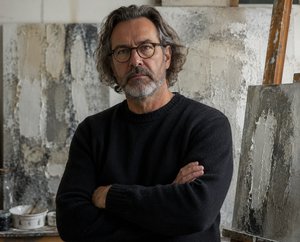 David Moreau
Discover the exquisite textured works of Moreau. AllPaintingsStore offers exclusive access to his master-style plaster and texture art reproductions.


