Iconography, as a branch of art history, studies the identification, description and interpretation of the content of images: the subjects depicted, the particular compositions and details used to do so, and other elements that are distinct from arti...
To look upon a sacred image is to read a language composed of gestures, colors, and light. This practice, known as iconography, goes beyond mere decoration; it is the study of identifying and interpreting the specific content within an image, from the placement of figures to the subtle meaning of their attributes. In the Byzantine tradition, this was not simply art but icon painting, a method of producing images that served as windows to the divine. Every element carries weight. A hand raised in blessing or a specific shade of red holds a predetermined theological truth.
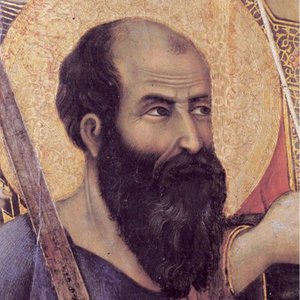
This structured visual language finds a historical echo in the works of scholars like Erwin Panofsky, who sought to move beyond the surface form to understand the deeper meaning behind motifs. Just as early art historians used these symbols to reconstruct the spiritual psyche of an era, we look at contemporary religious works to find the same underlying truths. When we observe a piece like Maestó by Duccio di Buoninsegna, we see how the act of Pontius Pilate washing his hands functions as a visual catechism, teaching the viewer about moral responsibility and the weight of conscience through a single, decisive gesture.
Shadow and Spirit: The Emotional Depth of Baroque Chiaroscuro
Captivating Subject and Religious Significance This exquisite sculpture captures the profound moment of martyrdom, depicting Saint Serapion in a powerful and contemplative pose. Bound and restrained, the saint’s expression conveys a deep sense of suf...
The transition from the balanced clarity of earlier eras to the dramatic intensity of the Baroque brought a new preoccupation with the tension between light and dark. This technique, known as chiaroscuro, uses bold contrasts to create volume and emotional gravity. In the hands of masters like Francisco de Zurbarán, shadow is not merely an absence of light but a presence that defines the spiritual struggle. The darkness presses against the illuminated subject, emphasizing the weight of mortality and the sudden, piercing arrival of grace.
This dramatic use of contrast finds its roots in the Counter-Reformation, where the Church sought to evoke empathy and awe through visceral realism. We see this reflected in the 1628 depiction of Saint Serapion, where the stark light highlights the saint's bound hands and contemplative expression, making his suffering tangible. This same impulse toward emotional intensity is present in the works of Sigismund Christian Hubert Goetze, whose use of light serves as a metaphor for divine grace illuminating the darkness of human existence. The shadow remains a necessary companion to the light, reminding us that spiritual victory is often found in the midst of profound struggle.
Celestial Radiance: The Lasting Legacy of Byzantine Mosaics
Byzantine mosaics are mosaics produced from the 4th to 15th centuries in and under the influence of the Byzantine Empire. Mosaics were some of the most popular and historically significant art forms produced in the empire, and they are still studied ...
There is a specific, otherworldly glow that can only be achieved through the medium of mosaic. By arranging small pieces of colored stone, glass, or ceramic—known as tesserae—artists created surfaces that shimmered with an internal light. In the Byzantine Empire, these mosaics were not merely wall decorations but luminous conduits of faith. The use of gold leaf behind glass tesserae created a celestial atmosphere, particularly in great structures like the Hagia Sophia or the Monreale Cathedral, where the sheer scale of the mosaic cycles could transport a viewer into a state of profound contemplation.
The technical precision required for such work echoes the ancient Greek tradition of pebble mosaics used in road-building and domestic floors. While the materials evolved from simple stones to sophisticated glass enamels, the intent remained consistent: to create an environment that transcends the earthly. In the Monreale Cathedral mosaics, we witness this transition, where the flatter, more decorative Byzantine style begins to incorporate a sense of narrative movement. This enduring fascination with light and texture continues to influence how we perceive sacred spaces today, seeking beauty that feels both permanent and transcendent.
Anatomy of the Divine: Humanism and Perspective in the Renaissance
This article about the development of themes in Italian Renaissance painting is an extension to the article Italian Renaissance painting, for which it provides additional pictures with commentary. The works encompassed are from Giotto in the early 14...
As the focus of art shifted during the Renaissance, the application of scientific principles like linear perspective allowed artists to create a window into a three-dimensional world. This era moved away from the flattened, hierarchical arrangements of the medieval period toward a more naturalistic observation of anatomy and space. Artists such as Piero della Francesca used mathematical precision to define architectural depth, making the sacred scenes feel as though they occupied the same physical reality as the viewer.
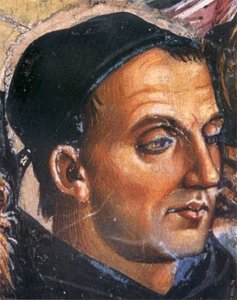
This movement toward realism was not a rejection of the sacred, but a way to ground it in the human experience. In Christ on the Cross Adored by St. Dominic by Fra Angelico, we see the early Renaissance mastery of line and color, where the anatomy of Christ is rendered with a reverence that honors both physical truth and spiritual significance. This period established a standard for how we perceive depth and proportion, a legacy that remains central to our understanding of how art can bridge the gap between the tangible world and the divine narrative.
Liturgical Splendor: Art as a Conduit for Devotional Practice
A Sanctuary of Sacred Splendor In the heart of Valladolid, where the echoes of Spain’s imperial past still linger in the air, lies the National Museum of Religious Carvings—a profound sanctuary dedicated to the spiritual and artistic soul of a nation...
Sacred art has rarely existed in isolation; it is almost always designed for use within a specific liturgical or devotional context. From the intricate carvings found in the National Museum of Religious Carvings in Valladolid to the illuminated manuscripts of the Middle Ages, these objects were intended to facilitate prayer and instruction. The beauty of a silver chalice or the heavy embroidery of a vestment was not for mere display but was an act of worship in itself, where craftsmanship served as a form of praise.
This tradition of art as a functional tool for devotion finds its echo in the meticulous work of Christian Ludwig Stieglitz, who dedicated his career to recreating historical styles for imperial chapels. His work was not about innovation for its own sake, but about using the language of the past to connect the present with the grandeur of tradition. Whether through a large-scale altarpiece or a small, intimate sketch like Victor Vasnetsov’s Savior in the crown of thorns, the purpose remains the same: to provide a focal point for reflection and a tangible connection to the sacred stories that define our shared history.
The Enduring Canon: Preserving Sacred Traditions through the Centuries
A Sanctuary of Spiritual Splendor Nestled within the verdant, tranquil embrace of Villa Ilissia, the Byzantine and Christian Museum serves as a profound gateway to a lost world of devotion and artistic mastery. Located in the heart of Athens, Greece,...
The preservation of Christian art is a story of continuity amidst change. Despite periods of iconoclasm or the shifting tides of political power, the core motifs and techniques of the tradition have been maintained by generations of artists and institutions. Museums like the Byzantine and Christian Museum in Athens or the Keresztény Múzeum in Hungary act as guardians of this legacy, protecting the physical objects that carry the spiritual weight of centuries.
This preservation is not merely about keeping old objects in glass cases; it is about maintaining the integrity of the techniques themselves. The dedication to hand-painted oil on canvas, the use of traditional pigments, and the respect for historical proportions ensure that the conversation between the past and the present remains unbroken. At AllPaintingsStore.com, we honor this continuity by providing high-quality reproductions that allow these profound visions to inhabit modern spaces, ensuring that the depth and meaning of the old masters continue to resonate in a changing world.
Journey through the luminous history of Byzantine art. Unveil the profound symbolism of sacred icons and the breathtaking brilliance of gold-leaf mosaics in this expert cultural retrospective. A soulful exploration for the discerning art lover.
Journey through history with the 25 greatest masterpieces of Madrid's Museo del Prado. From Velázquez to Goya, explore the stories behind these iconic works and find museum-quality art reproductions for your decor. Discover all masterpieces on AllPaintingsStore.com.
Immerse yourself in the dramatic world of Francisco de Zurbarán. Explore 25 iconic Spanish Baroque masterpieces defined by intense tenebrism and spiritual realism. Find inspiration for museum-quality art reproductions and decor. Discover all masterpieces on AllPaintingsStore.com.


 Iconography
 Saint Serapion
 Byzantine mosaics
 Themes in Italian Renaissance painting
 National Museum of Religious Carvings
 Byzantine and Christian Museum