From Flatness to Form: How Naturalism Replaced Medieval Abstraction
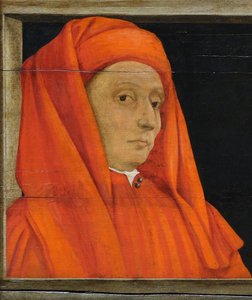
Before the 14th century, religious art functioned primarily as a symbolic language of flat planes and gold backgrounds. These images did not seek to replicate the physical world but to represent a spiritual reality that existed beyond it. Figures were often stylized, their proportions secondary to their theological meaning. This changed when artists like Giotto began to introduce weight and volume into their compositions. By moving away from purely symbolic representations, painters started to ground divine figures in a recognizable space.
This shift mirrors the way we perceive depth in modern architecture or interior design. Just as a well-placed painting provides a sense of scale to a room, the introduction of three-point perspective and solid forms gave the faithful a tangible way to relate to the divine. The transition from the abstract to the naturalistic allowed the viewer to see the sacred not as a distant concept, but as something that occupied the same physical reality as themselves.
The development of this solidity continued through the Early Renaissance. Masaccio, working in the Brancacci Chapel around 1425, pushed these boundaries further by utilizing light and shadow to create a sense of true mass. This evolution from the flat icons of the Middle Ages to the volumetric figures of the Renaissance changed how the public engaged with religious themes, turning passive observation into an immersive experience.
Chiaroscuro and the Drama of Faith: The Evolution of Light in Sacred Art
As artists mastered the ability to depict form, they turned their attention to the medium that defines it: light. The technique of chiaroscuro—the use of strong contrasts between light and dark—became a primary tool for directing the viewer's eye and creating emotional tension. In the hands of painters like Caravaggio, light was no longer a uniform glow but a dramatic, directional force. This harsh illumination could pull a single face or hand out of total darkness, forcing a moment of intense focus on a specific religious event.
We see this same principle applied in modern cinematography and stage lighting, where shadows are used to build suspense or highlight a protagonist. In the Renaissance, this technique served a theological purpose. It emphasized the suddenness of divine intervention and the stark reality of human suffering. The darkness represented the unknown or the weight of sin, while the light acted as a physical manifestation of grace.
This use of light transformed religious narratives into theatrical events. By manipulating shadows, artists could create a sense of movement and urgency that was absent in earlier, more static works. This method of storytelling through contrast ensured that even the most complex theological concepts were accessible through the immediate, visceral impact of visual drama.
Art as a Bulwark: Reinforcing Catholic Identity During the Reformation
During the period of the Reformation, art became a critical tool for institutional stability. As religious divisions spread across Europe, the Catholic Church utilized large-scale works to reinforce traditional doctrines and encourage devotion. In places like Antwerp, the altarpieces produced by Rubens were not merely decorative; they were strategic visual arguments designed to reassert the power of Catholic imagery against the iconoclasm of Protestant movements.
This period of art as propaganda finds a modern parallel in branding and corporate identity, where consistent visual messaging is used to maintain loyalty and recognition. The altarpieces functioned much like a visual manifesto, using scale and complexity to overwhelm the senses and remind the viewer of the continuity of the Church. These works were intended to be unshakeable, providing a sense of permanence during a time of profound social upheaval.
The production of these massive, detailed works required significant resources and patronage, often involving complex networks of artists and financiers. By investing in such high-impact visual storytelling, the Church ensured that its values remained embedded in the physical landscape of Europe, bridging the gap between the sacred liturgy and the secular public square.
The Anatomy of Divinity: Merging Scientific Realism with Religious Truth
The Renaissance was characterized by a unique intersection of scientific inquiry and religious devotion. Artists such as Leonardo da Vinci and Michelangelo did not view the study of anatomy as a distraction from faith, but as a way to honor the complexity of God's creation. By dissecting cadavers and studying musculature, they were able to depict the human body with an unprecedented level of accuracy. This anatomical precision allowed them to portray divine figures with a physical presence that felt undeniably real.
Today, we see this same intersection in medical illustration and digital modeling, where extreme technical accuracy is used to communicate complex biological truths. In the Renaissance, the goal was to use the "truth" of the flesh to point toward a higher spiritual truth. When Michelangelo sculpted a figure with perfectly rendered tendons and muscles, he was demonstrating the perfection of the divine design through the lens of human biology.
This marriage of science and art moved religious figures away from the ethereal and into the realm of the human. It allowed for a more profound empathy; when a saint is depicted with the recognizable strain of a muscle or the weight of a limb, their experience becomes relatable to the viewer. The divinity was no longer hidden behind a veil of abstraction but was revealed through the very mechanics of the human form.
From Communal Piety to Individual Fame: The Changing Purpose of the Image
As the Renaissance progressed, the motivation behind art production underwent a fundamental shift. In the earlier medieval period, art was largely an act of communal piety, created for the glory of God and the service of the Church. However, with the rise of humanism, the focus began to move toward individual achievement and the immortality of fame. The artist emerged from the role of an anonymous craftsman to become a celebrated intellectual, driven by both religious commission and personal prestige.
This transition is reflected in our modern era of celebrity culture and the rise of the "auteur" in film and design. We have moved from valuing the collective message to valuing the unique hand and vision of the creator. In the Renaissance, this meant that the skill and virtuosity of the painter became as much a subject of interest as the religious subject matter itself.
This shift created a new dynamic in the art market, where competitive patronage drove artists to innovate and push technical boundaries. While the core themes remained religious, the engine of production became increasingly tied to the pursuit of excellence and individual recognition. This tension between the sacred subject and the secular artist helped shape the cultural fabric of Europe, creating a legacy where the beauty of the human intellect is inseparable from the depiction of the divine.
At AllPaintingsStore.com, we honor this long history of craftsmanship by providing high-quality, hand-painted reproductions that bring these historical narratives into modern spaces. Whether you are looking for a large-scale mural to transform a hotel lobby or a custom portrait reimagined in a classical style, our artists use traditional techniques on 100% cotton canvas to ensure the depth and texture of the original era are preserved. From professional digital mockups to global shipping via DHL and FedEx, we provide the reliable service required for large-scale decor and private collections alike.
Masaccio (1401-1428) revolutionized Renaissance art with realism, perspective & chiaroscuro. Explore his frescoes like 'The Trinity' and the Brancacci Chapel.
Explore the fascinating history of portraiture, from its origins to the Renaissance's celebration of individuality. Discover symbolism, techniques & the enduring power of art to shape identity. Expert insights at AllPaintingsStore.
Explore the rich history of biblical art from Giotto to the Renaissance masters. Discover symbolism, techniques & enduring legacies with AllPaintingsStore – your source for museum-quality reproductions and expert art insights.
Explore the profound impact of Chiaroscuro and Tenebrism in Baroque masterpieces. Discover how dramatic light and shadow define emotion and volume, and learn to curate these powerful historical techniques for sophisticated, luxury interior design collections.