The Pulse of the Pavement: A Symphony of Urban Motion In the heart of the modern metropolis, where the rhythm of the street meets the precision of contemporary design, exists a singular moment of captured electricity. Urban Pulse: A Singular Symphony...
The city never truly sleeps; it just shifts its frequency. There is a specific, electric vibration that pulses through the heart of a metropolis, a restless rhythm found in the blur of a passing subway train or the frantic stride of a commuter. To witness the city in motion is to experience a symphony of spontaneous movement where the concrete jungle becomes a breathing organism. This kinetic energy isn't something you find sitting quietly in a museum; it is found in the tension of a crowded intersection and the way neon lights reflect off rain-slicked asphalt.
This pulse is what drives contemporary art to look outward rather than inward. We see it in works like Urban Pulse: A Singular Symphony of Crimson Motion and Spontaneous Street Expression by Théo Masson, where the crisp lines of a high-top sneaker collide with the raw chaos of graffiti pop. It is a visual dialogue between structure and chaos, mirroring our own attempt to find clarity within an increasingly fast-paced environment. When we look at art that celebrates this motion, we are celebrating life itself—unfiltered, unscript and perpetually in flux.
Robert Street: A Capturer of 19th-Century American Life Born in Germantown, Pennsylvania, in 1796, Robert Street emerged as a significant figure in the burgeoning art scene of early America. His life story is intertwined with the evolving landscape o...
Long before the spray can redefined the urban landscape, artists were already hunting for the extraordinary within the ordinary. This is the essence of genre painting, a tradition that finds profound meaning in the everyday. From the ancient Egyptian tomb decorations depicting banquets to the 17th-century Dutch masters like Johannes Vermeer and Jan Steen, the goal has always been to portray people engaged in common activities. These works often feature figures without a specific identity, allowing anyone to see themselves within the scene.
In the 19th century, artists like Robert Street began capturing the deeper character of the American experience through domestic interiors and social gatherings. There is a subtle power in these depictions of routine—the simple act of eating, working, or resting. Even when the subject seems low-brow, such as the market-sellers in the works of Pieter Brueghel the Elder, there is an underlying layer of human truth. These scenes prove that you don't need a grand historical battle to create impact; sometimes, the most profound stories are told through the quiet dignity of a portrait or the simple bustle of a village fair.
Captured Motion: The Unscripted Lens of the Street
Street photography is photography conducted for art or inquiry that features unmediated chance encounters and random incidents within public places. It usually has the aim of capturing images at a decisive or poignant moment by careful framing and ti...
As technology evolved, the ability to freeze these fleeting moments became even more visceral. The birth of street photography allowed for unmediated, chance encounters in public spaces. In 1839, Louis-Jacques-Mandué Daguerre recorded the first photographic figures on the Boulevard du Temple in Paris, capturing a moment so transient that the moving subjects appeared as mere ghosts. This paved the way for pioneers like Charles Nègre and John Thomson to document the raw reality of street life in London, turning the sidewalk into a stage for social documentary.
The arrival of the Leica camera in 1925 changed the game entirely. Its compactness allowed photographers to move through busy streets with ease, capturing the decisive moment. This era of photography mirrors the energy of the street itself—unposed and authentic. It shares a DNA with the way we perceive our modern world: a series of snapshots that, when viewed together, create a complete narrative of human existence.
Concrete Narratives: From Graffiti to Gallery Walls
A City Unveiled: Exploring the Global Street Art Foundation London pulses with a restless energy, an urban heartbeat that finds its most immediate expression not within hallowed halls, but splashed across the city’s very surfaces. The Global Street A...
The boundary between rebellion and fine art has blurred significantly in recent decades. What began as a whispered dialogue etched onto subway cars in New York or scrawled on crumbling brickwork in Philadelphia has ascended into the stratosphere of high-end collectibles. This metamorphosis is most evident in the work of artists like Banksy, who utilized the stencil revolution to deliver sharp social commentary. Pieces like Sweep it Under the Carpet use the grit of the street to challenge societal expectations and labor roles, proving that a weathered wall can be just as powerful as a canvas.
This evolution continues in the vibrant corridors of São Paulo, where the city's concrete skin serves as a perpetual canvas for legends like Os Gêmeos and Kobra. In London, the Global Street Art Foundation works to bridge the gap between traditional hierarchies and the unfiltered creativity of public spaces. We see this same spirit in the work of Kirill Kto, whose murals in Moscow act as cartographies of urban decay, translating unspoken narratives onto neglected walls. Whether it is the intricate, paper-like precision of Airborne Mark or the whimsical storytelling of ador in Nantes, street art has moved from the margins to the center of our cultural conversation.
The Evolution of Urban Edge: From Subways to High-End Collectibles Urban Edge: The High-Impact Revolution of Street Art and Modern Pop Culture Trends From Rebellion to Revenue: The Evolution of Street Art into High-End Collectibles From Walls to Gall...
Today, the energy of the street is being integrated into the most sophisticated interior designs. The high-impact revolution of street art and modern pop culture allows us to bring that raw, urban edge into our private spaces. We are seeing a move toward bold, graphic pieces that demand attention—works that use heavy impasto or intentional paint drips to mimic the sensory overload of a city intersection.
This is where the grit of the underground meets the prestige of the gallery. For the modern collector, art is no longer just about decoration; it is about capturing a piece of that electric frequency. Whether through large-scale murals that transform a hotel lobby or a custom-commissioned oil painting that reimagines a personal memory in a pop-art style, the goal is to maintain that connection to the pulse of the pavement. At AllPaintingsStore.com, we celebrate this intersection, providing high-impact pieces that allow you to live within the vibrant, unscripted energy of the world outside your window.
Discover Robert Rauschenberg (1925-2008), a revolutionary American artist famed for his groundbreaking 'Combines' & blurring lines between painting, sculpture & everyday life. Explore his Pop Art & Neo-Dada …
Discover Banksy's iconic street art: satirical stencils & politically charged commentary on war, society & culture. Explore the anonymous England-based artist's impactful work.
Elevate your space with bold, high-impact art. Explore how street art and contemporary masterpieces redefine entryways through custom oil reproductions, large-scale murals, and urban-inspired decor designed to make a powerful first impression.
Discover the high-impact power of genre painting. From Dutch Golden Age intimacy to 19th-century realism, explore how masters captured everyday life and learn how to commission bespoke, hand-painted oil reproductions that bring historical depth to modern interiors.


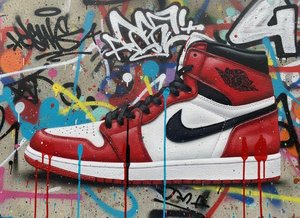 Urban Pulse: A Singular Symphony of Crimson Motion and Spontaneous Street Expression
 Robert Street
 Street photography
 Global Street Art Foundation
 Street Art Unveiled: From Urban Rebellion to High-End Gallery Masterpieces for Modern Interior Design


