Foundational Order: Post-War Fragmentation and the Quest for Stability
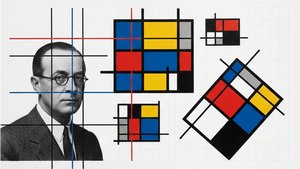
The early twentieth century was defined by profound fragmentation. As empires crumbled and rapid industrialization reshaped the social fabric, the world felt increasingly chaotic. Amidst this upheaval, a group of artists and architects emerged from the Netherlands, seeking a visual language that could transcend the wreckage of war. Founded in 1917, the De Stijl movement was a radical response to this instability, aiming to provide a sense of enduring order through intellectual rigor and visual harmony.
This search for permanence finds a historical echo in the transition from the ornate excesses of the nineteenth century to the structured clarity of modernism. Just as the De Stijl circle sought to move away from the subjective, flowing lines of Art Nouveau toward an objective reality, contemporary design often seeks to provide a sense of calm and stability within complex, high-traffic environments. The movement was not merely an aesthetic trend but a philosophical quest to find a universal truth that remained untouched by temporal decay.
By prioritizing clarity and balance, De Stijl offered a way to navigate a world in flux. This commitment to order remains a fundamental principle for those designing spaces that require a sense of permanence and structural integrity.
The Primary Palette: Geometric Purity in Large-Scale Color Schemes
The visual language of De Stijl is defined by its reductive logic. The movement stripped art down to its most essential elements: straight lines, right angles, and a strict palette of primary colors—red, yellow, and blue—complemented by black, white, and gray. This was not a limitation of choice, but a deliberate attempt to achieve universality. By using these fundamental hues, artists like Piet Mondrian sought to communicate a sense of cosmic order that transcended individual emotion or national identity.
This approach to color finds its echo in the development of modern color theory and its application in large-scale environmental design. The way De Stijl used color to define planes and create tension between intersecting volumes is a direct precursor to how modern designers use color to direct movement and define zones within a large floor plan. The interaction of a bold primary hue against a neutral grid creates a visual rhythm that is both organized and dynamic.
For the modern designer, this mastery of the primary palette provides a blueprint for creating high-impact, high-contrast environments. The precision of these color relationships ensures that even the most minimalist space maintains a sense of intentionality and visual weight.
Spatial Fluidity: From the Rietveld Schröder House to Open-Plan Hospitality
 Gerrit Thomas Rietveld
Explore the iconic designs of Gerrit Rietveld, a Dutch architect & furniture designer known for De Stijl movement contributions like the Red/Blue Chair. Discover his innovative approach to modernism and spatial design.
The ambitions of De Stijl were never confined to the canvas; the movement sought to permeate the very fabric of human habitation. Architects like Gerrit Rietveld and J.J.P. Oud applied the movement's reductive logic to the built environment, treating walls as intersecting planes rather than mere boundaries. The Rietveld Schröder House serves as a primary example, where space becomes an interplay of volumes, emphasizing light, clarity, and a sense of spatial fluidity that broke away from traditional, compartmentalized living.
This concept of the "total work of art" finds a direct parallel in the modern requirement for flexible, multi-functional hospitality spaces. The movement's emphasis on how planes and lines interact to define a room's purpose is a cornerstone of contemporary open-plan architecture. When walls become modular or visual boundaries are defined by color and light rather than physical partitions, the result is an environment that feels both expansive and highly organized.
Integrating these principles allows for the creation of spaces that feel liberated yet structured. The ability to manipulate perceived volume through geometric precision is a vital tool for managing the flow of guests in large-scale commercial projects.
Functional Abstraction: The Legacy of Geometric Furniture Design
De Stijl extended its influence into the realm of industrial design and furniture, where the marriage of form and function became a central tenet. The movement's furniture, such as the iconic Red and Blue Chair, utilized cubist elements and primary colors to emphasize the structural components of the object. These pieces were not merely seating; they were three-dimensional expressions of the movement's geometric principles, designed to exist in perfect balance with the surrounding architecture.
This focus on the honest use of materials and the visibility of structure echoes the modern emphasis on "form follows function" seen in high-end contemporary furniture. The way a chair's frame is treated as a series of intersecting lines rather than a hidden support system is a principle that continues to inform the production of minimalist, high-durability furniture for corporate and hospitality sectors.
By treating furniture as an extension of the architectural grid, designers can achieve a cohesive aesthetic throughout a space. This ensures that every piece, from a lounge chair to a reception desk, contributes to a unified, professional atmosphere.
Visual Cohesion: Typography and the Architecture of Brand Identity
The influence of De Stijl reached into the very way information is organized and consumed. The movement's insistence on clarity and geometric precision naturally flowed into the development of modern typography and graphic design. The use of a strict grid system to organize text and imagery created a sense of visual stability and hierarchy, allowing for a streamlined efficiency that was essential in an increasingly industrial age.
This systematic approach to visual communication is the foundation of modern brand identity and environmental graphics. The way a logo or a wayfinding system is constructed on a mathematical grid to ensure legibility and impact is a direct descendant of the De Stijl ethos. In large-scale hospitality projects, where guest impressions are shaped by everything from menus to signage, this level of typographic discipline is essential for maintaining a premium brand image.
The movement taught us that even the most complex information can be rendered clear through the application of geometric order. This principle remains a cornerstone of effective communication in any professional design context.
The Integrated Environment: Implementing Total Design in Commercial Spaces
Ultimately, De Stijl was a collective enterprise that aimed to create a holistic environment. The movement's proponents envisioned a world where art, architecture, and everyday objects functioned as a single, harmonious entity. This vision of "total design" sought to eliminate the distinction between the fine arts and the applied arts, ensuring that the aesthetic order of a painting was reflected in the very walls and objects that surrounded the individual.
This holistic approach is mirrored in the contemporary practice of integrated interior design for large-scale commercial developments. When the art on the walls, the color of the upholstery, and the geometry of the lighting fixtures all adhere to a single, cohesive design language, the result is a sophisticated and highly controlled environment. This level of detail is what distinguishes a curated space from a merely decorated one.
For professionals managing large-scale procurement and design, the legacy of De Stijl offers a method for achieving absolute visual unity. By applying these principles of geometric harmony and functional clarity, designers can create spaces that are both memorable and profoundly organized. For those seeking to implement these high-standard aesthetics, AllPaintingsStore.com provides a wide selection of hand-painted reproductions and custom commissions designed to meet the rigorous demands of professional architectural projects.