--- title: German expressionism | Tate url: https://www.tate.org.uk/art/art-terms/g/german-expressionism hostname: tate.org.uk description: Tate glossary definition for German expressionism: German early twentieth century stylistic movement in which ...
To understand German Expressionism is to witness a profound departure from the ocular truth. At the dawn of the twentieth century, as Europe teetered on the precipice of unprecedented modern upheaval, a group of visionaries decided that the mere replication of reality was no longer sufficient. They sought something deeper, more visceral—the internal landscape of the human psyche. Unlike the Impressionists, who captured the fleeting dance of light upon a surface, the Expressionists utilized distorted forms and non-naturalistic palettes to externalize the invisible: anxiety, ecstasy, alienation, and spiritual longing.
This movement was not a singular, unified doctrine but rather a shared impulse toward emotional honesty. By rejecting the polished aesthetics of academic tradition, these artists embraced a style characterized by simplified shapes and gestural, often violent, brushstrokes. They understood that to communicate the true weight of human experience, one must sometimes break the object to reveal its essence. This era of art-making was a rebellion against the suffocating pressures of an increasingly industrial and urbanized world, turning the canvas into a site of psychological confrontation where color functioned not as a descriptive tool, but as an emotional conduit.
Die Brücke: Bridging Tradition and Raw Human Emotion
Die Brücke (German pronunciation: [diː ˈbʁʏkə] , "The Bridge"), also known as Künstlergruppe Brücke or KG Brücke, was a group of German expressionist artists formed in Dresden in 1905. The founding members were Fritz Bleyl, Erich Heckel, Ernst Ludwig...
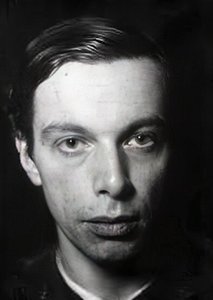
In 1905, within the academic atmosphere of Dresden, a group of architecture students—including Ernst Ludwig Kirchner, Erich Heckel, and Karl Schmidt-Rottluff—formed Die Brücke, or "The Bridge." Their name was a manifesto in itself, signaling their intent to create a link between the past and a radical, liberated future. They looked backward to the rich German heritage of Albrecht Dürer and Matthias Grü Grünewald, yet they reinterpreted these classical influences through a primitive, modern lens. By reviving the raw, graphic intensity of the woodcut, they achieved a jaggedness that mirrored the tension of their era.
The works of Die Brücke are often characterized by an almost aggressive vitality. Their paintings of bustling city streets and intimate, sun-drenched landscapes pulse with high-keyed, clashing colors that jolt the viewer into awareness. In the quiet sanctuary of the Brücke Museum in Berlin, one can encounter the profound depth of Kirchner’s self-portraits, where every bold stroke serves to etch his inner turmoil onto the canvas. This group sought to escape the bourgeois constraints of their time, often exploring themes of nudity and sexuality in nature to reclaim a sense of unadulterated human truth, far removed from the artificiality of modern social conventions.
Der Blaue Reiter: The Spiritual Quest for Abstraction and Color
--- title: Der Blaue Reiter | Tate url: https://www.tate.org.uk/art/art-terms/d/der-blaue-reiter hostname: tate.org.uk description: Tate glossary definition for Der Blaue Reiter: German expressionist group originating in Munich in 1909 sitename: Tate...
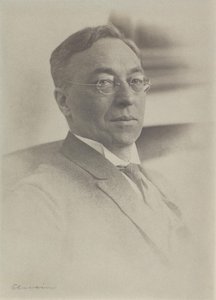
While Die Brücke focused on the visceral and the earthly, another movement emerged in Munich with a more celestial aim. Led by Wassily Kandinsky and Franz Marc, Der Blaue Reiter (The Blue Rider) sought to explore the spiritual and symbolic dimensions of art. For Kandinsky, color was a language capable of bypassing the intellect to speak directly to the soul. His journey from a legal career to the vanguard of abstraction was fueled by transformative encounters with the music of Wagner and the light-drenched canvases of Monet, leading him to believe that art could achieve a state of pure, non-representational transcendence.
In masterpieces such as Study for the Cover of Der Blaue Reiter Catalogue, we see the seeds of Abstract Expressionism. Here, the artist moves away from recognizable figures toward a geometric vocabulary of circles, squares, and triangles. Even in his more colorful works like Aquarell für Violett, there is a meticulous layering of pigment that creates a sense of spiritual vibration. The group’s fascination with "unspoiled" art—including Russian folk art and various global crafts—allowed them to build an aesthetic that knew no borders, emphasizing the idea that color and form could serve as vehicles for the eternal.
Visual Distortions: How Cinema and Architecture Captured Inner Turmoil
--- title: German expressionist cinema - Wikipedia url: https://en.wikipedia.org/wiki/German_expressionist_cinema hostname: wikipedia.org sitename: Wikimedia Foundation, Inc. date: 2004-10-07 --- # German expressionist cinema | This article needs .[m...
The expressive impulse of this era was not confined to the canvas; it bled into the very fabric of German culture, most notably in the realm of cinema. During the late 1910s and early 1s20s, a period marked by the traumatic aftermath of World War I and the economic instability of the Weimar Republic, German Expressionist cinema flourished. Filmmakers rejected cinematic realism in favor of dream-like, often nightmarish, set designs. In iconic films such as The Cabinet of Dr. Caligari and Metropolis, the use of wildly non-realistic, geometrically absurd angles and painted shadows created a world that felt as unstable as the era's political landscape.
This cinematic language relied heavily on visual distortion to reflect the madness, betrayal, and psychological fragmentation experienced by a generation. The architecture of the films—much like the paintings of the period—was intentionally manipulated to represent internal states of fear or obsession. This intersection of moving image, set design, and psychological projection ensured that Expressionism became a total sensory experience, influencing everything from stage design to the foundational structures of the horror genre, proving that the distorted line could be just as powerful in motion as it was in oil.
The Legacy of Distortion: From Post-War Anxiety to Modern Visual Language
German expressionists were bold. Their paintings, prints, and sculptures were direct. They simplified forms, flattened perspective, and got rid ...
Though the formal movements of Die Brücke and Der Blaue Reiter were disrupted by the onset of World War I, their impact on the trajectory of modern art remains indelible. They fundamentally altered our understanding of what a painting could be, moving the focus from the external world to the internal spirit. The bold, emotive techniques they pioneered paved the way for subsequent movements, ensuring that the language of abstraction and emotional intensity would become a permanent fixture in the global art vocabulary.
Today, we see their legacy in the way contemporary artists and designers use color and form to evoke mood and atmosphere. Whether through the monumental scale of modern murals or the intricate textures of custom oil reproductions, the spirit of Expressionism lives on in any work that dares to prioritize feeling over fact. At AllPaintingsStore.com, we honor this tradition of craftsmanship by offering hand-painted recreations that capture the very soul of these masterpieces, bringing the profound emotional depth of the twentieth century's greatest rebels into the modern architectural space.
Delve into the visceral world of German Expressionism. Explore the history, key artists like Kirchner and Kandinsky, and the movement's profound emotional impact through an expert art-history lens. Discover how bold colors and distortion redefined modern aesthetics.
Explore the powerful world of Expressionism with AllPaintingsStore. Discover key artists like Kirchner & Rothko, understand its emotional impact, and learn how to collect this influential art movement. Expert insights for discerning collectors.
Immerse yourself in the raw emotion of German Expressionism with our curated guide to the top 25 Ernst Ludwig Kirchner masterpieces. Explore iconic colors and bold textures through museum-quality art reproductions. Discover all masterpieces on AllPaintingsStore.com.


 Die Brücke