From Romanesque Shadows to Gothic Radiance: The Evolution of Light Gothic Grandeur: Exploring the Spiritual Majesty and Architectural Innovation of Medieval Masterpieces The Dawn of a New Era: From Romanesque Shadows to Gothic Light Shadows & Splendo...
Before the twelfth century transformed the European skyline, the landscape was defined by a sense of heavy, earth-bound permanence. The Romanesque style relied on thick limestone walls and narrow windows, creating interiors of profound shadow and monastic seclusion. These structures functioned almost as stone fortulations, designed to shield the faithful from an uncertain world through sheer mass and impenetrable strength. In this era, the divine was felt through the weight of the architecture itself, a somber stability that mirrored the gravity of existence.
This period of architectural solidity finds its echo in the early foundations of many great cathedrals, where the heavy, defensive masonry remains visible beneath later additions. The transition to the Gothic was not merely a change in construction technique but a theological revolution. Architects sought to bridge the gap between the earthly and the eternal through the medium of light. The heavy shadows of the Romanesque gave way to an ambition where light itself was viewed as a divine presence, transforming dark sanctuaries into luminous vessels.
Engineering the Infinite: Rib Vaults, Flying Buttresses, and the Pursuit of Height
Gothic architecture is an architectural style that was prevalent in Europe from the late 12th to the 16th century, during the High and Late Middle Ages, surviving into the 17th and 18th centuries in some areas. It evolved from Romanesque architecture...
The transition from heavy Romanesque solidity to Gothic aspiration was made possible by a series of engineering triumphs that pushed the boundaries of what stone could achieve. The introduction of the pointed arch provided a mathematical necessity, as it could support heavier loads than its rounded predecessors, creating an impression of soaring height. This was complemented by the development of rib vaulting, where intersecting barrel vaults were divided into webs by a framework of diagonal arched ribs.
These innovations allowed architects to move away from squat, defensive silhouettes and reach toward the heavens. The flying buttress further revolutionized this process by distributing the weight of the stone structures to supports on the outside. This external support system permitted the elimination of traditional thick walls, allowing for unprecedented height and volume. We see this structural ambition clearly in the works of the period, where the heavy weight of masonry seems to dissolve into a rhythmic, flowing canopy of stone.
The Scriptorium as Sacred Crucible: The Art of Illuminated Manuscripts
An illuminated manuscript is a formally prepared document where the text is decorated with flourishes such as borders and miniature illustrations. Often used in the Catholic Church for prayers and liturgical books such as psalters and courtly literat...
While cathedrals were transforming the skyline, a parallel revolution was occurring within the quiet, shadowed halls of monastic scriptoria. These rooms were far more than mere writing offices; they were sacred crucibles where faith, scholarship, and artistry converged. In institutions such as the North Western Italy Scriptorium, the act of copying text was viewed as a liturgical performance. Every stroke of the quill was an exercise in spiritual endurance, a way to etch eternal truths onto the very fabric of history.
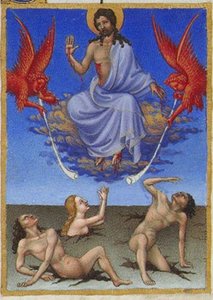
This monastic labor finds its parallel in the meticulous creation of illuminated manuscripts, where the page becomes a miniature cathedral of color and gold. In works like Psalm CXXXVII by the Limbourg Brothers, we see the same pursuit of detail and splendor found in stone. The use of parchment, often vellum made from stretched calf skin, provided a durable surface for these intricate narratives. Just as the cathedral sought to transport the soul through light, the illuminator used gold leaf and vibrant pigments to create a sense of celestial presence within the boundaries of a book.
Windows of Heaven: Stained Glass and the Manipulation of Divine Light
From Shadow to Radiance: The Theological Shift from Romanesque Solidity to Gothic Light Gothic Grandeur: Exploring the Spiritual Majesty and Architectural Innovation of Medieval Masterpieces The Dawn of a New Era: From Romanesque Shadows to Gothic Li...
The reduction of wall density through Gothic engineering permitted the addition of larger windows, which filled the cathedrals with light. This was the primary goal of the Gothique rayonnant phase, where the preference for stained glass over stone walls became paramount. These expansive, traceried windows acted as luminous tapestries, depicting biblical narratives that were visible to all. The light filtering through these colored panes did not just illuminate the space; it sanctified it, transforming the interior into a realm of weightless divinity.
This manipulation of light finds its most famous expression in the windows of Chartres Cathedral and Reims Cathedral. These glass works served as visual sermons for a largely illiterate population, using color to convey complex theological truths. The interplay of sunlight and colored glass created an atmosphere that felt both grounded and divine, much like the way a master illuminator uses light to define form within a manuscript. The window became a bridge between the physical world and the spiritual realm.
The Evolution of Detail: From Gothic Rigidity to Renaissance Naturalism
The Enigma of the Golden Page: The Boucicaut Master In the twilight of the Middle Ages, amidst the flickering candlelight of Parisian scriptoriums, an anonymous hand emerged to redefine the boundaries of visual storytelling. Known to history as the B...
As the Middle Ages progressed, the rigid symbolism of the early Gothic period began to melt into a new naturalism. In the hands of artists like the Boucicaut Master, the flat, iconographic arrangements of the past were replaced by experiments with spatial depth and aerial perspective. This artist, active between 1400 and 1430, brought a sense of atmosphere to his miniatures that made sacred scenes feel remarkably alive and breathable.
This shift toward observation mirrors the broader movement from the Gothic to the Renaissance. In Italy, illuminators such as Belbello da Pavia demonstrated a skillful blending of Gothic elegance with emerging naturalism. While his work remained rooted in the traditions of the 15th-century Lombardy region, he began to incorporate more realistic rendering of figures and landscapes. Similarly, Matteo da Milano utilized the intricate borders characteristic of the Gothic style while moving toward the more refined aesthetics of the early Renaissance, showing that the transition was a gradual evolution rather than an abrupt break.
A Living Chronicle: The Layered History of English and French Cathedral Design
A Tapestry of Stone and Spirit: The Majesty of Exeter Cathedral Rising majestically from the heart of Devon, Exeter Cathedral stands as a breathtaking embodiment of faith, artistry, and human resilience. It is far more than a mere religious edifice; ...
The history of Gothic architecture is rarely a single, uninterrupted line; it is a layered narrative of stone and spirit. Many cathedrals serve as living chronicles of their respective regions. In England, the style evolved through distinct phases: the Early English, the Decorated, and the Perpendicular periods. Exeter Cathedral provides a profound example of this, where medieval craftsmen replaced an earlier Norman structure but thoughtfully preserved the imposing towers, creating a visual dialogue between different architectural eras.
This layering is also evident in France, where the Abbey of Saint-Denis stands as the birthplace of the Gothic style under the direction of Abbot Suger. From the early Gothique primitif to the later, more sinuous Gothique flamboyant, each phase added new complexity to the architectural vocabulary. Whether it is the massive, uninterrupted stone vaults of Exeter or the intricate carvings found in St. Bavo’s Cathedral in Ghent, these structures remain as enduring records of human ambition and the eternal pursuit of the divine.
At AllPaintingsStore.com, we specialize in bringing these historical textures into modern spaces. Whether you require a large-format mural to recreate a cathedral ceiling or a custom oil reproduction of an illuminated manuscript, our artists provide the technical precision required to honor these traditions. We offer professional solutions for decorators and collectors alike, ensuring that every piece—from high-quality prints to bespoke hand-painted commissions—meets the highest academic standards.
Journey through the era of Gothic grandeur. Discover the architectural innovations and spiritual majesty of medieval masterpieces. Explore the transition from Romanesque shadows to Gothic light with our expert guide, featuring museum-quality hand-painted oil reproductions.
Explore the transformative art of the 14th century! Discover Gothic masterpieces, International Style innovations, and the precursors to the Renaissance. Expert insights & historical context at AllPaintingsStore.
Explore the profound transition of Late Gothic art from medieval symbolism to Renaissance naturalism. Discover the elegance of International Gothic, the legacy of Master Theodoric, and the evolution of European courtly masterpieces through an expert art-historical lens.




 Stone and Light: The Structural Legacy of Gothic Architecture in Fine Art
 Gothic architecture
 Illuminated manuscript
 Divine Light and Stone: The Architectural and Artistic Legacy of Gothic Cathedrals and Manuscripts
 Boucicaut Master
 Exeter Cathedral


