The Studio Walls Fall: The Revolutionary Shift from Tradition to Direct Observation Capturing Ephemeral Light: A Comprehensive Exploration of Plein Air Painting's History & Enduring Legacy The Dawn of Direct Observation: From Studio Tradition to En P...
For centuries, the artist’s studio served as a controlled sanctuary, a place where light was not experienced but meticulously recreated through layers of varnish and academic convention. Within these quiet walls, masters labored over compositions born from sketches and memory, striving for an idealized representation of reality that often felt detached from the raw pulse of the living world. The landscape in this era was frequently a concept—a carefully constructed illusion of perfection rather than a breathing entity. This tradition relied on a sense of permanence, where the natural world served as a secondary stage for religious or mythological dramas.
A subtle rebellion began to stir within the nineteenth century, finding its theoretical heartbeat in the writings of Pierre-helri de Valenciennes. As early as 1800, he championed the concept of landscape portraiture, urging his contemporaries to move beyond the confines of the studio and engage directly with the earth. This shift was not merely a change in location; it was a fundamental reimagining of art. By moving the focus from an intellectualized, finished product toward a visceral, sensory experience, artists began to record the subtle, shifting details of nature in situ. The walls were falling, and in their place, a new, unmediated connection to the world was being forged through the practice of en plein air painting.
The Science of Sight: From Layered Glazes to Optical Mixing
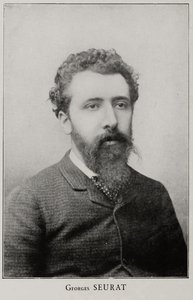
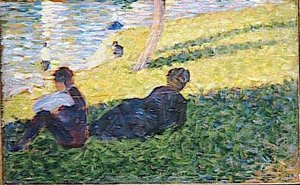
Neo-Impressionism is a term coined by French art critic Félix Fénéon in 1886 to describe an art movement founded by Georges Seurat. Seurat's most renowned masterpiece, A Sunday Afternoon on the Island of La Grande Jatte, marked the beginning of this ...
In the tradition of the Old Masters, color was often achieved through an indirect process. Artists applied thin, transparent glazes over underpaintings, building depth through successive layers that required long drying times and a controlled environment. This method allowed for a smooth, enamel-like finish but relied on the physical blending of pigments on a palette to achieve specific hues. The goal was often a sense of smooth, continuous tone that masked the individual brushstrokes, prioritizing a polished surface over the visible hand of the creator.
The Impressionists approached this differently, looking toward the science of optics to transform how color was perceived. Rather than smoothing colors together, they utilized short, broken brushstrokes of pure, unmixed color. This technique, later refined by Neo-Impressionists like Georges Seurat through Pointillism, relied on optical mixing—the idea that the eye of the viewer would blend adjacent dabs of pigment from a distance. By juxtaposing complementary colors, such as placing a dab of orange near a blue, they achieved an effect of intense color vibration and luminosity. This method moved away from the heavy, dark tones of academic painting toward a brighter, more luminous palette that mimicked the way light actually hits the retina.
Chasing the Sun: From Eternal Landscapes to the Ephemeral Moment
The Breath of Nature: Understanding the Essence of En Plein Air En plein air En plein air (pronounced [ɑ̃ plɛ.n‿ɛʁ]; French for 'outdoors'), or plein-air painting, is the act of painting outdoors. This method contrasts with studio painting or academi...
Before the mid-nineteenth century, the natural world in art was often depicted as an eternal and unchanging backdrop. The landscapes of the Renaissance or Classical eras sought a sense of divine order and permanence. Even within the Barbizon School, while there was a move toward more realistic depictions of nature, the focus remained on the tonal qualities and the weight of the landscape itself. The goal was to capture the essence of a place through a structured, often somiment composition that felt anchored in time.
The Impressionist revolution turned this focus toward the transient. To paint en plein air is to embrace the ephemeral; it is a commitment to chasing the sunlight before it shifts, capturing a moment that will never exist in exactly the same way again. Artists like Claude Monet and Auguste Renoir sought to capture the changing qualities of light, emphasizing the passage of time through the depiction of atmosphere and weather. Whether it was the shimmering reflections on the Seine or the dappled light filtering through foliage, the subject became the sensation of the moment itself. This pursuit of the fleeting transformed the landscape from a static setting into a living, breathing entity characterized by movement and light.
Material Revolutions: From Grinding Pigments to Portable Tubes
The logistical constraints of the past heavily dictated the boundaries of where an artist could work. For much of art history, the act of painting was inextricably linked to the studio because artists had to mix their own paints from raw pigments. This required grinding minerals and oils by hand, a laborious process that made portability nearly impossible. Carrying large quantities of wet, unstable pigments into the field was a significant challenge, effectively tethering the artist to the laboratory-like environment of the workshop.
The advent of the collapsible metal paint tube in 1841, credited to John G. Rand, changed the trajectory of landscape painting forever. This simple technological advancement allowed artists to carry pre-mixed, stable colors easily into the countryside. Alongside the invention of the portable box easel, which could fold into a compact case, the tools for direct observation became accessible. These innovations enabled the rapid execution required to capture a sunset or a passing cloud, providing the physical means for the Impressionist movement to flourish in the open air and move away from the heavy, prepared materials of the academic tradition.
Atmospheric Truths: From Academic Precision to Subjective Vision
Impressionist photography is a term occasionally used to describe certain pictorialist photographs from the late 19th and early 20th centuries that emphasize mood, atmosphere, and subjective vision over sharp detail and realism. While not directly al...
Academic painting emphasized clarity, sharp contours, and a high degree of verisimilitude. Every detail was intended to be legible, with light used primarily to model form and create volume through techniques like chiaroscuro. The artist’s task was to delineate the subject with precision, ensuring that the boundaries between objects were clearly defined and that the composition followed established rules of proportion and perspective. This approach valued a certain objective truth, where the painting acted as a window into a clearly rendered reality.
In contrast, the Impressionist approach embraced a more subjective vision, prioritizing mood and atmosphere over sharp documentation. By using soft focus, blurred edges, and a lack of distinct outlines, artists could evoke the hazy, dreamlike quality of memory or the heavy mist of a morning meadow. This movement sought to recreate the sensation in the eye that views the subject, rather than merely delineating the details of the subject itself. Through the use of light, shadow, and color, they captured the intangible—the way air feels thick with humidity or how sunlight dissolves the edges of a distant tree. It was an art of immediacy, where the true subject was not the object itself, but the light that revealed it.
Immerse yourself in the luminous world of Georges Seurat. Explore 25 iconic Pointillist masterpieces, from color theory to timeless beauty. Find inspiration for museum-quality art reproductions and curated decor. Discover all masterpieces on AllPaintingsStore.com.
Explore how Impressionism revolutionized visual impact through light and color. Discover the movement's legacy from Monet to Van Gogh and learn how to bring this vibrant, high-impact energy into your modern space with premium hand-painted reproductions.
Explore the rich history of plein air painting, from its origins to Impressionism & beyond. Discover key artists, techniques, and the enduring legacy of capturing light in landscape art. Find museum-quality reproductions at AllPaintingsStore.


 Capturing Light: A Journey Through the Soul of Impressionism and the Revolution of En Plein Air
 Neo-Impressionism
 Chasing Sunlight: The Enchanting World of Plein Air Impressionism
 Impressionist photography