The Essence of Reduction: Finding Truth in Minimalist Forms The Power of Less: A Definitive Guide to the Minimalism Movement and Geometric Abstraction The Essence of Reduction: Defining Minimalism and Its Philosophical Roots Minimalism (visual arts) ...
To look upon a minimalist canvas is to engage in a deliberate retreat from the clamor of the visible world. It is not an exercise in emptiness, but rather a rigorous pursuit of essence. In the high-stakes environment of hospitality design, where every square meter must justify its existence, this philosophy of reduction offers a profound clarity. By removing everything that does not serve a purpose, what remains carries a heightened weight. This approach seeks to expose the very identity of a subject by stripping away ornamentation, leaving behind only the vital structures of color, light, and form.
The distinction between an empty room and a minimalist one is found in the editorial precision of the objects present. A well-curated space does not feel unfinished; it feels intentional. This method of distillation allows for a focus on the intrinsic qualities of materials, where the absence of excess detail invites a deeper contemplation of presence. When we remove the superfluous, we allow the fundamental truth of a space to surface, creating an atmosphere that is both calm and commanding.
Geometric Abstraction: The Mathematical Foundation of Visual Order
Introduction Imagine a world stripped bare to its essential forms – lines, colors, and shapes resonating with an almost mathematical purity. This is the realm of Geometric Abstraction, a movement that dared to abandon representational art in favor of...
The architecture of modern visual language is built upon the stability of geometry. This movement, which gained significant momentum in the early twentieth century, dared to abandon representational imagery in favor of a vocabulary rooted in structure. Artists such as Piet Mondrian and Kazimir Malevich began dismantling recognizable forms, reducing their subjects to fundamental geometric elements like intersecting lines, rectangles, and circles. These works were not merely decorative; they were explorations of spatial relationships and the inherent balance found within mathematical purity.
This reliance on geometry provides a sense of predictable, soothing order that is essential when designing large-scale environments. The precision seen in the works of Paul Kelpe or the structural clarity of Friedrich Vordemberge-Gildewart offers a visual anchor. In these compositions, the tension between shape and void creates a rhythmic stability. For the designer, this mathematical poetry provides a framework that can harmonize complex floor plans, using hard edges and simple forms to guide the eye through a space without the distraction of narrative or illusionistic depth.
Materiality and Texture: Beyond the Monochromatic Palette
A Vision of Architectural Serenity Serene Geometry of Morning Light in a Minimalist Terracotta Sanctuary is a breathtaking exploration of stillness and structure. This piece presents a fresh, modern vision that reimagines the principles of Hockney-in...
While minimalism is often associated with a restricted palette of whites, blacks, and greys, its true depth lies in the tactile quality of its materials. The movement emphasizes materiality—the weight, density, and texture of the medium itself. In contemporary practice, we see a shift toward what is known as warm minimalism. This evolution moves away from the coldness of polished chrome and glass, opting instead for the soulful warmth of timber, unglazed ceramic, patinated brass, and undyed textiles.
This focus on texture prevents a minimalist space from feeling sterile. When the color palette is muted, the eye begins to notice the subtle grain of wood or the heavy impasto of an oil painting. The interplay between architectural greys and the soft warmth of a terracotta element can create a meditative atmosphere that feels both grounded and expansive. By selecting well-chosen materials, the designer ensures that even a room with few objects possesses a rich, sensory dimension that rewards close inspection.
Architectural Influence: From Bauhaus Principles to Modern Urbanism
A Sanctuary of Light and Form In the heart of the urban landscape, where the pulse of modernity meets the stillness of contemplation, stands the Instituto Tomie Ohtake —a luminous beacon for contemporary creativity. This is not merely a museum; it is...
The roots of minimalist design are deeply intertwined with the architectural movements of the twentieth century, specifically the Bauhaus, De Stijl, and Russian Constructivism. These traditions arrived at similar conclusions regarding restraint and functionality. The influence of architects like Mies van der Con Rohe, with his "less is more" mantra, established a blueprint for structures that emphasize clean lines, efficient volumes, and abundant natural light. This architectural lineage informs everything from the heavy concrete forms of the Instituto Tomie Ohtake to the streamlined efficiency of modern urbanism.
This structural discipline extends into the realm of fine art, where the boundaries between painting, sculpture, and architecture often dissolve. The works of the Lazar Khidekel Society, for instance, demonstrate how Suprematist visions can move from a two-dimensional canvas into the very fabric of the built environment through architectural models and urban planning sketches. For the professional designer, understanding this connection is vital; it allows for the integration of art that does not merely sit upon a wall but feels like an organic extension of the building's own structural logic.
Curating Space: Integrating Minimalist Art into Large-Scale Hospitality
Explore Richard Hamilton’s ‘Lobby,’ a surreal oil painting featuring geometric shapes, muted tones & unsettling isolation. A unique Pop Art piece – discover its symbolism & technique.
In the design of luxury hospitality spaces, the challenge lies in managing scale without losing intimacy. Large-scale installations require artworks that can command a room without overwhelming it. This is where geometric abstraction and large-format works become essential. A single, monumental piece—perhaps a multi-panel arrangement that splits an image across three or five sections—can transform a wide corridor or a grand lobby into a curated gallery experience.
The integration of art must consider the logistics of durability and guest impression. Works that utilize industrial materials like metal, aluminum, or concrete are particularly suited to high-traffic environments. When selecting pieces for a hotel or corporate headquarters, the goal is to find a focal point that offers intellectual rigor and emotional stillness. Whether it is a large-scale mural or a carefully placed sculpture, the art should act as a stabilizer, providing a moment of contemplation amidst the movement of guests and staff.
The Evolution of Form: From Hard-Edge Painting to Warm Minimalism
Minimalism describes movements in various forms of art and design, especially visual art and music, where the work is set out to expose the essence, essentials or identity of a subject through eliminating all non-essential forms, features or concepts...
As design continues to evolve, we see a fascinating dialogue between different modes of abstraction. On one end of the spectrum lies the "cold" abstraction of hard-edge painting, characterized by sharp lines and flat, unmodulated color. On the other, we find more painterly, lyrical approaches that reintroduce texture and movement. This tension between the rigid and the fluid allows for a diverse range of aesthetic possibilities in modern interiors.
The contemporary landscape is increasingly defined by this ability to blend styles—to pair the structural precision of a geometric print with the organic softness of a textured textile. As we move forward, the most successful spaces will likely be those that embrace this complexity, using the principles of minimalism to strip away the unnecessary while utilizing the richness of form and material to celebrate the essential.
At AllPaintingsStore.com, we specialize in providing these high-impact, visually commanding works for discerning professionals. From hand-painted oil reproductions on 100% cotton canvas to large-scale custom murals, our collection is curated to meet the rigorous demands of modern architectural design.
By the AllPaintingsStore.com Editorial Team
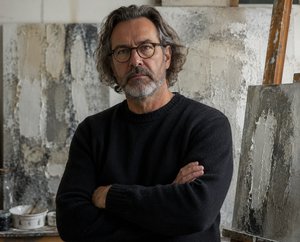
Exclusive ArtistDavid Moreau
b. 1967 · Lyon, France
Discover the exquisite textured works of Moreau. WahooArt offers exclusive access to his master-style plaster and texture art reproductions.
Discover the exclusive collection of Laurent Vionnet at WahooArt. Explore premium minimalist reproductions defined by geometric precision and spatial silence.
Discover the profound serenity of minimalist art. Explore how intentional simplicity and visual silence create tranquil, sophisticated spaces through expert curation and the timeless beauty of refined, understated elegance.
Explore the profound impact of minimalism in art history. From Formalist Abstraction to Neo-Minimalism, our expert guide provides deep academic insight for students and collectors seeking to understand the power of reduction and geometric precision.
Elevate hospitality excellence with contemporary art strategies. Discover how bespoke oil reproductions, large-scale murals, and geometric sculptures redefine luxury hotel interiors through curated, high-impact design.
Explore the profound history of Minimalism and Geometric Abstraction. Discover how the pursuit of essence transformed modern art through pure form, texture, and reduction. An expert guide for art lovers seeking depth, clarity, and timeless aesthetic inspiration.


 The Beauty of Less: A Sophisticated Guide to the Soul of Minimalist Art and Geometric Harmony
 Geometric Abstraction's 10 Defining Masterpieces | Art for Your Home - AllPaintingsStore
 Serene Geometry of Morning Light in a Minimalist Terracotta Sanctuary
 Instituto Tomie Ohtake
 Lobby
Lobby Minimalism (visual arts)