The Indigenous peoples of the Americas, also called Indians, Amerindians, or simply Natives, are the peoples who are native to the Americas or the Western Hemisphere. Their ancestors are among the pre-Columbian population of South or North America, i...
To look upon a portrait is to engage in a silent dialogue with the past, a moment where the gaze of an ancestor meets the curiosity of the present. For those who find beauty in the deep currents of history, Native American portraiture offers more than mere representation; it provides a profound window into the soul of a continent. The Indigenous peoples of the Americas—a vast and diverse tapestry of cultures including the Maya, Aztec, Inca, and countless others—possess a lineage that stretches back through millennia. From the initial peoplings of the Americas approximately 20,000 to 14,000 years ago via ancient East Asian lineages, to the complex, linguistically rich societies that thrived long before European contact, every face captured on canvas tells a story of resilience.
The sheer scale of this history is staggering. While scholars debate the exact numbers, with some estimates placing the pre-Columbian population as high as 100 million and others suggesting more conservative counts around 54 million, the cultural density is undeniable. With at least 1,000 different Indigenous languages in use in the 21st century, including powerful tongues like Quechua, Nahuatl, and Aymara, the Americas were—and remain—a mosaic of human experience. When we study these portraits, we are not just looking at individuals; we are witnessing the dignity of nations that survived immense upheaval, from the devastating population declines following European contact to the modern movements for self-determination and social justice.
Visions of the Frontier: The Artistic Legacy of George Catlin and Karl Bodmer
Explore the captivating art of George Catlin (1796-1872), renowned for his vivid portraits & landscapes documenting Native American life on the frontier. Discover a vanishing world through his stunning paintings!
In the 19th century, a specific movement of artistic documentation emerged, driven by a desire to record the customs of North American tribes before they were irrevocably altered by the tides of westward expansion. Artists like George Catlin and Karl Bodmer acted as both painters and historians, their brushes tracing the intricate details of a world in transition. Catlin, an adventurer and painter of the American School, dedicated much of his life to capturing the essence of the Plains cultures. His work, such as Braves' Dance, Ojibwa, provides a record of the clothing and traditions of the Ojibwa people. Similarly, his portrait Kay a gís gis, a Young Woman offers a window into the realism of Plains life, blending romanticism with an ethnographic precision.
Karl Bodmer brought a different perspective through his application of detailed realism. His works depict figures like the Blackfoot Chief Merkskame with a level of detail that feels startlingly immediate. Through his meticulous rendering of regalia and cultural symbolism, Bodmer provided a visual record that moves beyond simple documentation. These artists did not merely paint faces; they captured the atmosphere of an era. Their ability to portray the strength and dignity of Indigenous leaders and families ensures that their legacy remains a cornerstone of American art history, allowing us to revisit a frontier that was as much about human spirit as it was about landscape.
Technique and Texture: How Impasto and Realism Breathe Life into History
Impasto is a technique used in painting where paint is laid on an area of the surface thickly, usually thick enough that the brush or painting-knife strokes are visible. Paint can also be mixed right on the canvas. When dry, impasto provides texture;...
The power of these historical portraits is often found in the very substance of the paint itself. While many of these works rely on the precision of realism, the application of technique can elevate a portrait from a flat image to a three-dimensional experience. Consider the use of the impasto technique—a method where paint is laid thickly upon the surface so that the strokes of the brush or knife remain visible. This technique, famously utilized by masters like Rembrandt and Vermeer to render the luster of jewels or the heavy folds of cloth, adds a sculptural quality to the canvas. When an artist uses impasto, the light reflects off the raised textures, creating a dynamic play of shadow and brilliance that makes the subject appear to emerge from the canvas itself.
This tactile depth is particularly effective when depicting the intricate textures of Native American regalia—the softness of buckskin, the shimmer of beadwork, or the heavy weight of ceremonial headdresses. Even in more modern interpretations, such as the acrylic works of Randy Kemp, we see a sophisticated layering of glazes and washes that creates a sense of luminosity and depth. By manipulating texture, artists can evoke the physical reality of the materials being depicted, making the historical narrative feel tangible. Whether it is the heavy, expressive strokes reminiscent of Van Gogh’s Irises or the smooth, meticulous realism of the 19th-century masters, the way paint meets canvas is essential to conveying the weight of history.
Preserving a Vanishing Era: Art as a Vital Historical Archive
A Sanctuary of Stories: The Living Spirit of the NMAI To approach the National Museum of the American Indian in Washington, D.C., is to encounter a landscape that feels less like a building and more like an extension of the earth itself. Its sandston...
Art has always functioned as a sanctuary for stories that might otherwise be lost to time. For many Indigenous cultures, whose histories were often suppressed or obscured by colonial narratives, visual art serves as an irreplaceable archive. Institutions like the Smithsonian American Art Museum and the National Museum of the
American Indian act as custodians of this profound narrative, housing collections that span over 12,000 years of human creativity. These museums do more than display objects; they facilitate a process of restorative justice, particularly through the repatriation of sacred items, ensuring that the living traditions of these nations are honored alongside their historical artifacts.
The importance of this preservation cannot be overstated. We live in an era where landscapes and ecosystems are being irrevocably altered by industrialization and climate shift, much like the botanical records left by the intrepid explorer Marianne North. Just as her paintings serve as vital biological archives, the portraits of Native American life serve as cultural anchors. They document a period of immense change—a time when populations were fluctuating wildly due to disease and conflict, yet where cultural identity remained fiercely preserved through art, language, and tradition. To study these works is to participate in the act of remembering, ensuring that the resilience of the ancestors remains a visible part of our global heritage.
From Heritage to Home: Bringing Cultural Masterpieces into Modern Spaces
Randy Kemp: Echoes of Turtle Clan Heritage Randy Kemp (born Tulsa, United States of America, 1956) stands as a prominent figure in contemporary Native American art, recognized for his deeply rooted connection to the Tzo-Ya-Ha Turtle Clan and his mast...
Integrating such profound historical themes into a contemporary home is an act of meaningful decoration. For the modern collector, art is not merely an accessory but a way to infuse a living space with character, depth, and conversation. Whether you are drawn to the bold, textured energy of an impasto-style reproduction or the quiet, dignified realism of a 19th-century portrait, these pieces allow you to surround yourself with the echoes of human history. The beauty of modern art curation lies in the ability to "remix" history—perhaps by choosing a custom commission that brings a personal family milestone into the stylistic realm of a classical masterpiece.
At AllPaintingsStore.com, we believe that discovering art should be an inspiring and accessible journey. We specialize in high-quality, hand-painted oil reproductions that capture the very soul and texture of original works, from the thick, visible brushstrokes of the Impressionists to the detailed realism of historical portraiture. Our artists, trained in the finest academies, work on 100% cotton canvas to ensure every piece is a lasting legacy. Whether you are looking for a large-scale multi-panel arrangement to anchor a grand staircase or a delicate custom portrait to celebrate a loved one, we provide the expertise and digital mockups to help you decorate with confidence. Bringing these powerful stories into your home is more than an aesthetic choice; it is an invitation to live amongst the masterpieces of our shared human journey.
Discover a curated selection of exquisite Native American fine art. From historical portraits to contemporary masterpieces, explore museum-quality oil reproductions and bespoke commissions designed to honor Indigenous heritage with unparalleled artistry and prestige.
Explore the profound beauty of indigenous heritage through fine art. From Karl Bodmer’s ethnographic precision to vibrant Gond traditions, discover how collectors preserve cultural legacies through museum-quality masterpieces and soulful portraiture.
Discover the raw energy of Native American art. From George Catlin’s historical chronicles to contemporary masterpieces, explore vibrant portraits and premium hand-painted reproductions designed for the modern, high-impact art collector.


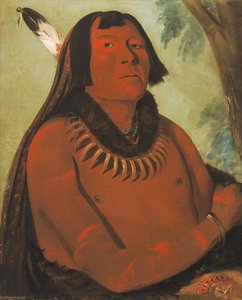

 Indigenous peoples of the Americas
 George Catlin
 Impasto
 National Museum of the American Indian
 Randy Kemp


