Naturalism in Art: A Definitive Guide to Achieving Realistic Detail and Authentic Beauty
Explore the profound beauty of Naturalism in art. From 19th-century Realism to masterfully hand-painted oil reproductions, discover how authentic detail and light define the classics. Expert insights for art enthusiasts and collectors seeking timeless, museum-quality excellence.
Naturalism is resemblance to the “real world,” as we see it around us. The more naturalistic a work, the more it looks like our world, and the less naturalistic ...
To understand the profound impact of naturalism, one must first recognize it as a deliberate gaze directed toward the world exactly as it exists, stripped of the gilded veneers of myth and legend. Unlike the romanticized visions that once dominated the European consciousness, naturalism seeks a resemblance to the real world—a commitment to depicting objects and figures with the least possible amount of distortion. It is an art of presence, where the subject matter is not elevated by supernatural elements or speculative grandeur, but rather grounded in the tangible textures of our shared reality. This movement represents a fundamental shift in the artist's intent: moving away from the pursuit of an idealized perfection toward an embrace of the authentic, even when that truth is found in the mundane or the unvarnably honest.
The essence of this approach lies in its rejection of artificiality. While many viewers often use the terms realism and naturalism interchangeably, a subtle distinction exists for the discerning eye. Naturalism serves as the foundational pursuit of visual accuracy, tied deeply to the development of linear perspective and illusionism that began in the Renaissance. It is the technical drive to replicate the way light hits a surface or how a landscape recedes into the distance. When an artist masters naturalism, they create a window through which the viewer does not merely observe a scene but inhabits it, feeling the weight of the atmosphere and the true scale of the subject.
The Evolution of Technique: From Renaissance Perspective to 19th-Century Realism
Introduction: The Rise of Realism – A Rejection of Idealism Wikipedia: Realism (art movement) Realism was an artistic movement that emerged in France in the 1840s. Realists rejected Romanticism, which had dominated French literature and art since the...
The journey toward naturalistic excellence is a long historical arc, anchored by the rigorous mathematical advancements of the Renaissance. During this era, the mastery of linear perspective allowed painters to construct deep, believable spaces that mimicked the human field of vision. This technical foundation provided the tools necessary for artists to move beyond flat, symbolic representations and toward a more convincing illusion of reality. As centuries progressed, these techniques evolved from the structured compositions of the masters into a more visceral, observational power. By the mid-1s9th century, this evolution reached a fever pitch with the rise of the Realist movement in France, which utilized naturalistic precision to serve a new, often radical, social purpose.
This period witnessed a seismic shift in the artistic landscape. Artists like Gustave Courbet and Théodule Ribot began to turn their brushes away from historical grandeur and toward the grit of contemporary life. They utilized the established language of naturalism—the accurate rendering of light, shadow, and form—to document the lives of laborers, street vendors, and the working class. This was no longer art meant to inspire awe through divinity, but art meant to demand recognition through truth. The technique had become a tool for social engagement, using the very precision of the naturalistic style to force the viewer to confront the unvarnished pulse of a changing, industrializing world.
Mastering the Details: Light, Texture, and the Mechanics of Authentic Representation
Discover 'Poppy Threshing' by Désiré François Laugée – a realistic 1850 oil painting capturing rural French life. Explore its muted tones, impasto texture & Barbizon realism.
At the heart of any truly naturalistic work lies an obsessive attention to the mechanics of sight. To achieve authentic beauty, an artist must master the interplay of light and shadow, often employing dramatic chiaroscuro to give volume and weight to their subjects. Consider the way a single light source can define the rugged texture of a stone wall or the soft, translucent quality of human skin. It is through these meticulous details—the visible brushstrokes that suggest movement, the impasto that provides tactile depth, and the careful layering of oils—that a painting transcends a mere image to become a living presence.
The mastery of texture is perhaps the most vital component in bridging the gap between the canvas and the real world. In the works of artists like Désiré François Laugée, one can observe how muted tones and textured surfaces capture the essence of rural life, making the viewer almost able to feel the dampness of the earth or the coarseness of fabric. This level of detail requires more than just skill; it requires a profound connection to nature and an ability to translate the ephemeral qualities of light into permanent pigment. Whether it is the luminous, dreamlike landscapes of contemporary masters like Jacob Coeman or the stark, dramatic butcher shop scenes of Ribot, the success of the work depends entirely on the artist's ability to render the world with a precision that honors its inherent complexity.
Naturalism vs. Realism: Distinguishing Scientific Observation from Social Commentary
In art, realism is generally the attempt to represent subject-matter truthfully, without artificiality, exaggeration, or speculative or supernatural elements. The term is often used interchangeably with naturalism, although these terms are not necess...
While naturalism provides the technical vocabulary, realism provides the narrative soul. It is essential for the art enthusiast to distinguish between the two: naturalism is often characterized by its quasi-scientific basis, acting as a student of natural history that seeks to document the world with minimal distortion. In contrast, realism is a movement predicated upon a departure from idealization, often motivated by political and social shifts. Realism uses the tools of naturalism to make a statement about the human condition, frequently focusing on the "ugly" or the "sordid" aspects of life that academic traditions sought to ignore.
This distinction allows us to appreciate the breadth of the movement. One can find naturalism in the quiet, breathtakingly accurate landscapes that celebrate the majesty of the natural world, where the goal is pure, unadulterated observation. Simultaneously, one finds realism in the works of Édouard Manet, who used a more experimental and confrontational approach to dismantle mythological veils and replace them with the raw reality of Parisian life. One movement provides the lens through which we see, while the other provides the subject matter that demands we look. Together, they form a complete picture of an era that sought to find dignity in the ordinary and sanctity in the everyday.
The Enduring Legacy: How Naturalistic Principles Shape Contemporary Fine Art
A Beacon of Syrian Realism: Exploring the Atassi Foundation for Art and Culture in Dubai Nestled within the vibrant cultural landscape of Dubai, the Atassi Foundation for Art and Culture stands as a singular institution—a testament to both artistic r...
The principles of naturalism and realism continue to resonate deeply within the contemporary art world, serving as a vital counterpoint to more abstract or conceptual movements. Even in an age of digital reproduction, the human desire for authentic, tactile beauty remains unchanged. We see this legacy in the continued reverence for representational techniques, where artists use the foundations of light, shadow, and perspective to explore modern themes of identity, history, and memory. The ability to capture a moment with unflinching honesty continues to be a cornerstone of fine art, whether through large-scale museum masterpieces or bespoke, hand-painted commissions that bring historical elegance into modern spaces.
Today, the spirit of naturalism lives on in any work that invites contemplation through its connection to the real world. From the preservation of Syrian realism in institutions like the Atassi Foundation to the contemporary landscapes that evoke a sense of profound tranquility, the pursuit of truth through detail remains an essential human endeavor. As we navigate an increasingly virtual existence, the enduring power of art that reflects the "real" serves as a necessary anchor, reminding us of the beauty, the grit, and the unvarnished majesty of the world we inhabit.
For those looking to bring this timeless elegance into their own collections, AllPaintingsStore.com offers an unparalleled catalog of hand-painted oil reproductions and custom commissions, meticulously crafted to honor the masters of naturalism and realism.
Master the use of Realism in professional interiors. This expert guide explores 19th-century masterpieces, offering procurement managers and designers technical insights into selecting authentic, hand-painted oil reproductions for high-end hotel and corporate projects.
Explore the profound impact of Victorian Naturalism. Discover how 19th-century masters rejected Romantic idealism to capture the raw, unvarnished truth of everyday life through unparalleled technical precision and academic mastery.
Discover the profound beauty of Contemporary Realism. Our expert guide explores how masters capture visceral truths through hyperrealism and figurative art, offering collectors deep insights into the power of representational painting and the enduring value of the tangible world.
Explore the captivating world of Impressionism! Discover the techniques, artists (Monet, Renoir, Degas), and enduring legacy of this revolutionary art movement. Expert insights for collectors & enthusiasts.
Explore the captivating world of detailed realism in painting! Discover historical movements, key artists & collecting insights for discerning art enthusiasts. Expert analysis at AllPaintingsStore.


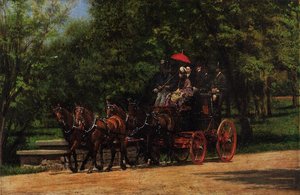


 The Gaze of Reality: Exploring Themes & Techniques in 19th-Century Realist Painting
 Poppy Threshing
 Realism (arts)
 Atassi Foundation for Art and Culture