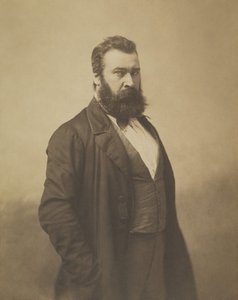
Explore Yves Klein (1928-1962), the French pioneer of post-war art! Discover his iconic International Klein Blue (IKB), monochrome paintings, performance art & Nouveau Réalisme influence. A forerunner to Minimal & Pop Art.
In 1960, a group of artists in Paris decided that the era of traditional easel painting was reaching its limit. They wanted to move away from the idea that art had to be an idealized representation of life. Instead, they sought to bring the actual, physical world into the gallery. This movement, known as Nouveau Réalisme, was officially established through a manifesto written by the critic Pierre Restany. The group gathered in the workshop of the painter Yves Klein to sign a joint declaration that would change the direction of European art.
This shift was a reaction to the rapid industrialization and the rise of consumer culture in post-war France. While many artists were still focused on abstract expressionism, the New Realists were looking at the streets, the trash, and the mass-produced items appearing in every household. They wanted to reconcile art with the lived experience of modern life. This impulse to find art in the immediate surroundings of the city echoes the earlier intentions of the Dadaists, who also sought to disrupt traditional aesthetics by using found objects. However, the New Realists were not just looking for shock value; they were looking for a new way to perceive the reality of a changing world.
Embracing the Ordinary: The Philosophy of the Real
Dadaist pioneer Marcel Duchamp redefined art with his readymades like Fountain. Discover his revolutionary works and philosophical impact today.
The core philosophy of Nouveau Réalisme was the belief that reality itself could serve as an artistic medium. Rather than using paint to represent a tree or a person, these artists used the actual objects that made up the landscape of modern existence. This was a radical departure from the "noble" materials of the past, such as marble or bronze. Instead, they embraced the discarded, the broken, and the mass-produced. They believed that by presenting these objects directly, they could bypass the need for metaphor and speak to the viewer through the sheer presence of the material.
This approach finds its historical echo in the "readymades" of Marcel Duchamp. Duchamp had already proven that an object could become art simply through the artist's choice. The New Realists took this concept and expanded it, moving from the single object to the accumulation of many objects. They were interested in how the sheer volume of consumer goods reflected the psychological state of a society obsessed with production and consumption. By stripping away the need for illusionistic representation, they forced the viewer to confront the physical truth of the objects in front of them.
Accumulation and Compression: Transforming Mass-Produced Goods
One of the most striking ways the movement expressed this philosophy was through the manipulation of volume. Arman, a key member of the group, became famous for his "accumulations." He would take large quantities of identical objects—such as musical instruments, watches, or even dental prosthetics—and group them together in glass cases or containers. This technique did not seek to destroy the objects, but rather to create new aesthetic effects through their repetition. The result was a visual representation of the overwhelming abundance of the modern age.
While Arman focused on the sheer quantity of objects, another artist named César took a different approach to the same material reality. He became known for his "compressions," where he used industrial hydraulic presses to crush automobiles and other metal objects into dense, compact forms. This process turned the vast, sprawling shapes of consumer machines into heavy, sculptural blocks. This practice of physical transformation echoes the way 19th-century sculptors worked with clay and bronze, yet César replaced the hand-modeled form with the violent, mechanical force of the industrial era.
Explore the art of Jacques Mahé de la Villeglé (Jacques Villeglé), a pioneer of décollage & Nouveau Réalisme. Discover his unique mixed-media works focusing on urban ephemera, found objects, and societal remnants.
The urban environment provided a constant source of material for the New Realists, particularly through the technique of décollage. Artists like Jacques Villeglé, Raymond Hains, and Mimmo Rotella looked to the city's advertising hoardings as a canvas. Instead of adding paint to a surface, they practiced the art of removal. They would tear away layers of posters from street walls, leaving behind the jagged, colorful remnants of fragmented advertisements. These works captured the chaotic, layered history of the city itself.
This method of working with the remnants of public life is a direct descendant of the collage techniques used by the Dadaists decades earlier. While Dadaists often used collage to create nonsensical or satirical compositions, the New Realists used décollage to document the passage of time and the decay of urban communication. The torn paper became a record of the city's constant state of flux, turning the ephemeral nature of street advertising into a permanent, textured artwork.
Machines in Motion: Kinetic Sculpture and Self-Destruction
Jean Tinguely (1925-1991) was a Swiss kinetic art sculptor renowned for his satirical, self-destructive machines—'Métamatics'. Explore Dadaist influences & collaborations with Niki de Saint Phalle. A pioneer of New Realism.
For some members of the movement, the focus shifted from static objects to the energy of movement and the inevitability of decay. Jean Tinguely, a Swiss-born artist, became a central figure in this exploration through his kinetic sculptures. He constructed complex, often clunky machines made from scrap metal, bicycle parts, and wires. These "Métamatics" were not designed for efficiency; instead, they were designed to move in unpredictable, often absurd ways. They were a critique of the industrial obsession with perfect, functional machinery.
Tinguely’s work often embraced the concept of destruction. His most famous piece, *Homage to New York*, was a machine designed to self-destruct as it performed. This idea of the "self-destroying machine" was a profound commentary on the cycle of production and obsolescence in a consumer society. This fascination with the life cycle of the machine echoes the mechanical interests of the Futurists, but where the Futurists celebrated the speed and power of the machine, Tinguely highlighted its absurdity and its eventual collapse into junk.
Discover Niki de Saint Phalle's vibrant world! Explore her iconic 'Nana' sculptures, revolutionary shooting paintings, and the fantastical Tarot Garden – a celebration of feminist art & joyful expression.
The movement also expanded the definition of art through physical action and performance, often using the artist's own body as a primary tool. Niki de Saint Phalle developed a technique known as "shooting paintings" or *Tirs*. She would create large canvases filled with bags of paint and then use a rifle to shoot through them, allowing the colors to burst and drip in a spontaneous, violent, and highly physical process. This turned the act of creation into a dramatic event that could not be fully controlled.
This emphasis on the physical act of making art finds its roots in the "happenings" and performance art that were emerging in the mid-20th century. By involving the body and the element of chance, artists like Saint Phalle moved art away from the finished, static object and toward the lived experience of the moment. This approach anticipated the conceptual art movements that would follow, where the idea and the action behind the work became as important as the physical result.
The Legacy of New Realism in Contemporary Spaces
Though the formal movement dissolved around 1970, the impact of Nouveau Réalisme remains visible in how we perceive the relationship between art and the everyday world. The group successfully broke down the barriers between the "high" art of the museum and the "low" materials of the street. They proved that the detritus of modern life—the trash, the posters, and the discarded machines—could hold profound poetic and social meaning.
Today, the influence of these ideas can be seen in contemporary installations that use found objects to comment on environmental issues or consumerism. The movement's legacy is felt in any space where the boundary between life and art is intentionally blurred. For those looking to bring this sense of texture and historical depth into a modern environment, the principles of New Realism offer a way to connect art with the tangible, physical reality of our existence.
At AllPaintingsStore.com, we understand the importance of capturing the specific textures and historical weight of different artistic movements. Whether you are looking for a reproduction of a complex assemblage or a custom piece that reflects a modern aesthetic, our team is here to assist. We offer a wide range of services, from high-quality Giclée prints to bespoke, hand-painted oil reproductions on 100% cotton canvas. If you wish to reimagine a classic work or commission a custom piece that echoes the spirit of the avant-garde, our professional coordinators and artists are ready to help you realize your vision.
Jean Tinguely (1925-1991) was a Swiss kinetic art sculptor renowned for his satirical, self-destructive machines—'Métamatics'. Explore Dadaist influences & collaborations with Niki de Saint Phalle. A pioneer of …


 Yves Klein
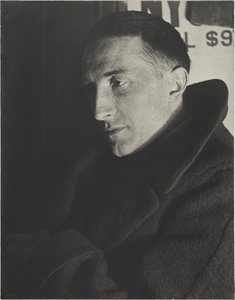 Marcel Duchamp
 Jacques Mahé De La Villeglé
 Jean Tinguely
 Niki de Saint Phalle