


The Genesis of Orphism: Breaking the Monochromatic Code of Cubism
 Orphism Unlocked: The High-Energy Color Revolution That Defined Abstract Art
The Glitch in Cubism: How Orphism Broke the Monochromatic Code Orphism (art) - Wikipedia --- title: Orphism (art) - Wikipedia author: Authority control databases url: https://en.wikipedia.org/wiki/Orphism_%28art%29 hostname: wikipedia.org sitename: W...
To understand the emergence of Orphism, one must first envision the early twentieth century as a high-definition screen suddenly losing its color, trapped in a grayscale loop of analytical Cubism. While titans like Picasso and Braque were meticulously dissecting reality into muted browns, somber greys, and earth tones, a radical new frequency was beginning to broadcast across the Parisian avant-garde. This movement, which the poet Guillaume Apollinaire famously dubbed Orphic Cubism in 1912, was far more than a mere stylistic variation; it was a total system reboot of the visual language. If Cubism provided the structural blueprint for modern art through its fragmentation of form, Orphism acted as the neon light that brought that architecture to life, injecting the bold, unapologetic palette of Fauvism into the geometric rigor of the era.
The movement represented a profound moment of liberation in the history of modern art. For those accustomed to the structured landscapes of Cézanne or the dappled light of Monet, Orphism arrived as a visual glitch that forced the viewer to stop looking at what was being painted and start feeling how it moved. By stripping away narrative and literal representation, the Orphists sought to move beyond the intellectual deconstruction of objects toward something far more visceral: pure sensation. This transition marked the decisive break from academic conventions, paving the way for the pure abstraction that would eventually define much of the twentieth century.
The Science of Sight: Simultanism, Color Theory, and Optical Vibration
 Color theory
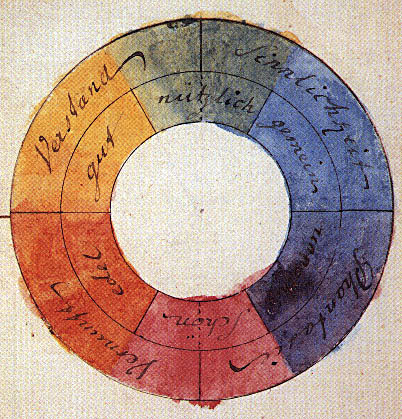
Color theory, or more specifically traditional color theory, is a historical body of knowledge describing the behavior of colors — namely in color mixing, color contrast effects, color harmony, color schemes and color symbolism. Color theory and colo...
At the heart of Orphism lies a fascinating intersection between artistic intuition and scientific discovery. The movement was deeply rooted in the study of light and the physiological effects of color on the human eye. Influenced by the theoretical writings of Paul Signac and the dye chemist Michel Eugène Chebrueul, Orphists embraced the concept of simultaneous contrast. This principle suggests that colors do not exist in isolation but interact dynamically with their neighbors, creating an optical vibration that can make a static canvas appear to pulse with energy. The artists were not merely interested in representing the world; they sought to capture its very essence through a language of luminous hues and geometric shapes.
This fascination with the mechanics of vision led to the development of Simultanism, an artistic ideal striving for endless interrelated states of being. By utilizing complementary color pairings—such as red against green or blue against orange—the Orphists created a sense of chromatic intensity that bypassed the need for recognizable subject matter. This technique allowed them to achieve a remarkable luminosity, where light seemed to emanated from within the painted surface itself. Through the careful orchestration of these hues, the canvas became a stage for the decomposition of spectral light, transforming the act of viewing into an immersive, rhythmic experience.
Masters of Light: The Pioneering Works of Robert and Sonia Delaunay
 Robert Delaunay
Robert Delaunay (French: [ʁɔbɛʁ dəlonɛ]; 12 April 1885 – 25 October 1941) was a French artist of the School of Paris movement; who, with his wife Sonia Delaunay and others, co-founded the Orphism art movement, noted for its use of strong colours and ...
The true architects of this radiant revolution were Robert and Sonia Delaunay, a duo whose collaborative spirit helped forge the very identity of Orphism. Robert Delaunay, born in Paris in 1885, began his journey within the traditions of Neo-Impressionism, absorbing the principles of Divisionism and the application of distinct dots of color to create shimmering effects. However, his artistic odyssey eventually led him away from replicating optical phenomena toward investigating the expressive potential of color itself. His later works, such as the iconic Eiffel Tower series, exemplify this departure, moving from recognizable urban landmarks toward a purely visual language driven by emotion and perception.
Alongside him, Sonia Delaunay brought an equally transformative energy to the movement. Her practice expanded the boundaries of abstraction into textiles, fashion, and design, proving that the rhythms of Orphism could permeate every facet of modern life. Together, they moved away from the monochromatic phase of Cubism to relaunch the use of color as a primary subject. In works like The Joy of Life, painted in 1930, one can witness the culmination of their lifelong exploration—a vibrant distillation of light and form where geometric harmony meets chromatic intensity, creating an experience that transcends mere visual representation.
Beyond Representation: Achieving Pure Abstraction through Geometric Form
 Ciudades. City
Robert Delaunay’s “Ciudades”: A Symphony of Urban Light Robert Delaunay's "Ciudades" (Cities), painted in 1911, isn't merely a depiction of a cityscape; it’s an immersive experience of urban energy captured through the revolutionary lens of Orphism. ...
As Orphism matured, it began to vacate recognizable subject matter entirely, concentrating exclusively on the interplay of form and color. This was not a simple abandonment of reality, but a sophisticated reconstruction of it. The movement utilized a meticulously arranged vocabulary of geometric shapes—circles, squares, triangles, and trapezoids—to create a sense of movement and rhythm. In seminal works like Ciudades (Cities), the artist presents a fragmented, almost chaotic arrangement of forms that captures the raw energy of urban life without needing to depict a single street or building in a literal sense.
This approach allowed for a profound engagement with the intangible essence of experience. By prioritizing color and form over anatomical accuracy or perspective, the Orphists could convey dynamism and emotion directly to the viewer. Even when they did retain traces of the physical world—as seen in the 1915 work Nude Woman Reading—the subject served primarily as a structural anchor for the symphony of blues, greens, and ochres that dominated the composition. This shift toward lyrical abstraction proved that color alone could carry the weight of an entire universe, establishing a foundation for the abstract expressionism that would follow decades later.
Orphism’s Legacy: From Early 20th-Century Innovation to Modern Abstract Expression
 Orphism Unveiled: The Radiant Dance of Color and Light in the Evolution of Abstract Art
The Genesis of Orphism: From Cubist Structure to Lyrical Abstraction Orphism (art) Orphism or Orphic Cubism, a term coined by the French poet Guillaume Apollinaire in 1912, was an offshoot of Cubism that focused on pure abstraction and bright colors,...
The influence of Orphism extends far beyond its short-lived period of intense activity in the early 1910s. By breaking the monochromatic code of Cubism and introducing a high-energy color revolution, the movement acted as a vital bridge between the structured deconstruction of the late nineteenth century and the pure, emotive abstraction of the mid-twenties. The movement’s emphasis on the transformative possibilities of light and motion left an indelible mark on artists ranging from Marcel Duchamp to Morgan Russell.
Today, we see the echoes of Orphism in any art that celebrates the visceral power of color and the rhythmic potential of geometric form. It remains a testament to a period when technology and science collided with artistic passion to redefine what a canvas could achieve. For the modern enthusiast, studying Orphism is not just an exercise in art history; it is an invitation to rediscover the vibrant, pulsing energy that exists within the very light we perceive every day.
For those looking to bring the vibrant energy of historical movements into their own professional or personal spaces, AllPaintingsStore.com offers high-quality, hand-painted oil reproductions of these timeless masterpieces. Whether you are furnishing a hotel, restaurant, or corporate office, our collection provides the depth and texture of authentic fine art in customizable sizes to suit any architectural requirement.


