Narrative vs. Presence: Distinguishing Storytelling from Symbolic Presence
In the study of religious art, a fundamental distinction exists between the depiction of an event and the presentation of a figure. This distinction determines how a viewer interacts with the work. Narrative images function like a visual chronicle, guiding the eye through a chronological sequence of events, such as the specific moments of a saint's life or the drama of a biblical episode. These works rely on movement and time to tell a story.
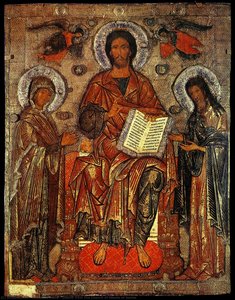
In contrast, the iconic image operates on a different plane. An iconographic portrait of the Virgin Mary or Christ does not seek to tell a story of what happened, but rather to present the presence of the subject itself. There is no beginning or end to the scene; there is only the immediate, spiritual encounter. This shift from "what happened" to "who is present" changes the entire purpose of the artwork, moving it from the realm of history into the realm of contemplation.
This concept of presence finds a modern parallel in how we treat personal photography. Just as a person might frame a portrait of a loved one to keep their essence present in a room, the iconographer creates a visual anchor intended to facilitate a connection with the divine.
The Language of Symbols: Decoding Color, Gesture, and Sacred Imagery
Religious iconography functions as a specialized vocabulary, using simplified visual forms to express complex theological concepts. Because the infinite is difficult to depict with literal accuracy, artists use conceptual abbreviations. A single gesture or a specific hue can represent an entire cosmic order or a profound spiritual truth.
Color is perhaps the most vital component of this visual shorthand. In many traditions, gold is used not as a decorative element, but as a representation of the uncreated light of God, creating a celestial atmosphere that separates the subject from the mundane world. Red often signifies divinity, sacrifice, or the presence of the Holy Spirit, while blue is frequently used to denote teaching or prophecy. Even the proportions of a figure are symbolic; through inverse perspective, figures may appear larger or more prominent based on their spiritual significance rather than their physical scale.
This use of visual shorthand is not a new invention. In the early development of Christian art, the Ichthys—a stylized fish—served as a discreet acronym for "Jesus Christ, Son of God, Savior." Just as ancient believers used the fish to communicate identity under the threat of persecution, modern viewers use these established symbols to instantly recognize deep-seated spiritual truths without needing a written text.
The Materiality of Devotion: Gold, Tempera, and Wood
The creation of a sacred image is often viewed as a religious calling rather than a mere artistic endeavor. In the Byzantine tradition, those who produced these works were known as icon writers, and the act of painting was considered a form of prayer. This spiritual intent is reflected in the physical materials used to construct the object.
The technical requirements of the medium dictate the choice of surface. Because the traditional medium of egg tempera becomes inflexible once it dries, it must be applied to a firm, stable surface, typically a wooden panel. The process often begins with an underwriting, a base drawing similar to a fresco cartoon, which is then etched into a layer of gesso. This meticulous layering ensures the longevity of the image. In some instances, artists even used painted tiles, a technique that harkens back to the elaborate mosaics found in ancient churches.
This dedication to material integrity finds an echo in the way we preserve our most important physical objects today. We choose specific papers, archival inks, and protective frames for our family heirlooms to ensure they survive the passage of time. The iconographer’s choice of wood and tempera is a deliberate attempt to create an object that is as enduring as the truths it represents.
Windows to the Eternal: The Theological Function of the Sacred Image
To gaze upon an Orthodox icon is to encounter what many describe as a window into the eternal. The goal of the iconographer is not to replicate the physical world with photographic accuracy, but to illuminate sacred mysteries. By using stylized features and solemn expressions, the artist directs the viewer's focus away from earthly beauty and toward spiritual essence.
This function is deeply tied to devotional practice. In many traditions, the image is not merely a decoration but a tool for worship. Believers may bow before, kiss, or light candles in front of an icon, with the belief that the devotion offered to the image is directed toward the holy figure represented. The icon serves as a bridge between the visible and the invisible, making the divine perceivable through the senses.
This relationship between the object and the observer is a constant in human history. We use physical tokens—a ring, a photograph, or a monument—to anchor our thoughts to abstract concepts like love, memory, or patriotism. The icon simply formalizes this human impulse into a structured, theological system.
Rupture and Resilience: The Historical Impact of Iconoclasm
The history of sacred imagery is not a continuous line of production; it is marked by periods of profound rupture. One of the most significant was the Byzantine Iconoclasm between the 8th and 9th centuries. During this time, widespread destruction of religious images occurred because some feared that the veneration of icons had crossed the line into idolatry. This was a theological struggle over how humans should interact with the divine.
While much of the original artwork from this era was lost, the eventual resolution of the conflict—often called the Triumph of Orthodoxy—solidified the role of the icon in Eastern Christian traditions. The survival of these images through centuries of conflict and destruction has, in many ways, increased their perceived value. The history of the icon is a cycle of loss and restoration.
This pattern of destruction and subsequent preservation is seen in many cultural movements. We often find that the value of a historical artifact or a piece of heritage increases significantly after it has been threatened by time or conflict. The survival of the image becomes a testament to the resilience of the culture that produced it.
Bridging Traditions: The Stylistic Synthesis of the Cretan School
Artistic styles are rarely static; they evolve through the meeting of different cultures. A primary example of this is the Cretan School, which flourished during the 15th century. Artists like Andreas Ritzos, born in Heraklion, Greece, lived during a period of significant transformation. Their work represents a synthesis of deeply rooted Byzantine iconography and emerging Western European Renaissance techniques.
Ritzos was a master of the maniera greca, a style characterized by elegant, flowing drapery and elongated figures that convey a sense of movement. However, unlike those who strictly adhered to ancient conventions, he was willing to experiment with Venetian influences, particularly regarding perspective and the depiction of natural forms. This allowed his work to bridge the gap between the traditional and the contemporary, creating a new visual language for his era.
This ability to blend the old with the new is a fundamental part of how art progresses. Just as modern designers might blend classical architecture with contemporary materials, the masters of the Cretan School used the tools of their time to ensure that sacred traditions remained relevant to a changing world.
***
For those seeking to bring these historical aesthetics into a modern setting, AllPaintingsStore.com offers a wide range of high-quality options. From professional digital mockups that allow you to visualize a piece on your wall before purchase, to custom handmade oil reproductions that capture the texture of the masters, we provide the tools to curate your space. Whether you require large-format murals for a commercial project or a single, bespoke commission, our team of academic artists is ready to assist. Visit AllPaintingsStore.com to explore our full collection and start your own artistic transformation.
By the AllPaintingsStore.com Editorial Team
Andrei Rublev
b. 1360 · Grand Principality of Moscow, Grand Principality of Moscow
Andrey Rublyov (c. 1360-1428): A master of Russian icon painting, known for his mystical & emotive works like 'Annunciation' & 'Holy Trinity'. Explore spiritual depth & Byzantine influences.
Explore stunning Orthodox icons by Vladimir Manzhos & others! Traditional Eastern Christian art featuring religious figures, symbolism, & rich history. Discover iconic works.
Journey through the spiritual intensity of El Greco's greatest works. From Mannerist drama to iconic religious oil paintings, explore 25 timeless masterpieces and find museum-quality reproductions for your decor. Discover all masterpieces on AllPaintingsStore.com.