The Seine ( sayn, sen; French: [sɛn] ) is a 777-kilometre-long (483 mi) river in northern France. Its drainage basin is in the Paris Basin (a geological relative lowland) covering most of northern France. It rises at Source-Seine, 30 kilometres (19 m...
To observe a river is to witness a continuous state of becoming. Long before the first brush touched canvas, the Seine existed as a sacred entity, a liquid thread woven through the history of France. In the quietude of Burgundy, at the Source-Seine, the water emerges from a humble depression in the earth, guarded by an artificial grotto and the silent presence of a stone nymph. This is the domain of Sequana, the Celtic goddess of the springs, whose ancient influence remains etched into the very geography of the basin. The river does not merely flow; it carries the sediment of antiquity toward the English Channel, acting as a temporal metaphor for the passage of life itself.
This primordial connection between the water and the soul finds its modern echo in the way we perceive landscape today. Just as the ancient pilgrims sought healing at the springs of the Seine, the contemporary viewer seeks a sense of continuity in the works of those who captured its movement. The river remains a constant, even as the world around it undergoes radical transformation.
Foundations of Form: Courbet’s Realism at the Water’s Edge
Young Ladies Beside the Seine (Summer) (French - Les Demoiselles des bords de la Seine (été)) is an oil-on-canvas painting by the French Realist Gustave Courbet, created between late 1856 and early 1857. It is held in the Petit Palais, in Paris. == H...
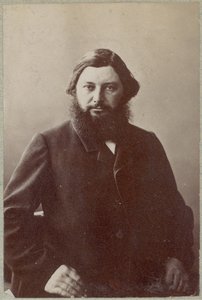
Before the Impressionists sought to dissolve form into light, the foundations of modern riverside painting were laid by the weight of Realism. Gustave Courbet brought an uncompromising honesty to the banks of the Seine, rejecting the idealized landscapes of the Academy in favor of a tangible, physical reality. In his work Young Ladies Beside the Seine (Summer), we find no mythological nymphs, but rather two women resting in the grass beneath the shade of three sturdy oak trees. The scene is grounded by the heavy presence of the riverbank and the moored boat, filled with the mundane objects of daily life.
This commitment to the actual—the texture of a patterned dress or the weight of a summer afternoon—prefigured the radical shifts to come. Courbet’s ability to impose a sense of presence through frankness and scale challenged the established norms of the Salon. It is a precursor to our modern appreciation for authenticity, where the true character of a subject is found not in embellishment, but in its unadorned truth.
The Alchemy of Light: From Studio Shadows to Plein Air Brilliance
A Window into Parisian Impressionism: Camille Pissarro’s “The Banks of the Seine” Camille Pissarro's "The Banks of the Seine in Paris, Pont Marie, Quai d'Anjou," painted in 1875, stands as a quintessential emblem of Impressionist art – a movement tha...
The transition from the controlled environments of the studio to the unpredictable light of the outdoors marked the most significant rupture in nineteenth-century painting. Where earlier masters relied on layered glazes and carefully constructed shadows, the Impressionists embraced the plein air method, seeking to capture the fleeting dance of sunlight upon a current. Camille Pissarro, in his 1875 depiction of The Banks of the Seine in Paris, Pont Marie, Quai d'Anjou, utilized short, broken brushstrokes to mimic the optical interaction of light and surface. There is no attempt at meticulous realism here; instead, there is a prioritization of sensory experience, where greens, blues, and yellows harmonize to recreate a specific moment in time.
This pursuit of luminosity finds its parallel in the way we now value the tactile depth of oil on canvas. The visible brushstroke, much like the dappled light in a Pissarro landscape, provides a structural energy that a flat print cannot replicate. We look for that same atmospheric truth in every carefully rendered layer of paint, seeking the pulse of the artist's hand.
Progress on the Banks: The Industrial Seine and Romantic Vistas
On the Seine near Mantes is an 1825 landscape painting by the British artist Richard Parkes Bonington. Bonington settled in France and painted a number of views of France and Italy. His romantic landscapes enjoyed critical success before his death fr...
The Seine has always been a site of tension between the pastoral and the industrial. While Richard Parkes Bonington’s 1825 work, On the Seine near Mantes, offers a view of the river near Mantes-la-Jolie characterized by the distant towers of Notre Dame de Mantes and Saint-Maclou, the landscape was already beginning to change. The arrival of the train, visible in Pissarro’s urban scenes, introduced a new rhythm of movement—the rumble of progress alongside the steady flow of the water. This duality defines the river's history: it is both a tranquil retreat and a vital artery of commerce and industry.
This interplay between the permanent landscape and the encroaching modern world is a theme that resonates in our contemporary era. We find ourselves navigating a similar landscape of rapid technological change, yet we return to these painted banks to find a sense of stability. The river remains the anchor, even as the tracks are laid and the bridges are built.
Luminosity in Normandy: Honfleur and the Impressionist Horizon
A Luminist of the Seine: The Life and Art of Albert-Charles Lebourg Born in 1849 in the quiet village of Montfort-l'Évêque, France, Albert-Charles Lebourg embarked on an artistic journey that would firmly establish him as a key figure within the Impr...
Further from the bustle of Paris, the Seine reaches toward the sea, passing through the picturesque port of Honfleur. This coastal town became a sanctuary for artists like Claude Monet and Pierre-Augustre Renoir, who were drawn to its unique maritime light. The influence of Eugène Boudin, a master of seascape, can be felt in the way these painters approached the water's edge, capturing the soft, atmospheric haze that characterizes the Normandy coast. The river here is wider, more tidal, and deeply connected to the salt air of the English Channel.
The dedication to this specific light is mirrored in the work of Albert-Charles Lebourg, whose prolific output of over 2,000 landscapes often focused on the Seine and its surrounding regions. His style, while maintaining a degree of structural detail, embraced the luminous qualities of the Impressionist movement. It is a reminder that true mastery lies in the ability to observe nature with precision while remaining open to its most ephemeral beauty.
A Curated Legacy: Preserving the Seine’s Artistic Soul
A Parisian Oasis of Artistic Grandeur: Exploring Musée du Petit Palais Nestled in the heart of Paris, Musée du Petit Palais stands as a testament to Belle Époque elegance and artistic ambition. Constructed for the 1900 Exposition Universelle – an eve...
The preservation of these riverine visions is entrusted to institutions such as the Musées de la Ville de Paris and the Musée du Petit Palais, where the evolution of European art can be traced from antiquity through the Belle Époque. These collections allow us to witness the dialogue between different eras—the heavy realism of Courbet, the structural Impressionism of Pissarro, and the luminous landscapes of Renoir. To walk through these galleries is to participate in a continuous history of observation.
At AllPaintingsStore.com, we honor this tradition of craftsmanship by providing hand-painted oil reproductions that respect the integrity of the original masters. Our artists, trained in the finest academies, use 100% cotton canvas and traditional oils to ensure that the texture, depth, and soul of these river landscapes are preserved for your own collection. Whether through a custom commission or a meticulously recreated classic, we invite you to bring the enduring spirit of the Seine into your home.
Discover Albert-Charles Lebourg (1849-1928), a French Impressionist master of the Rouen School. Explore his serene landscapes & Seine river scenes, featured in major museums like Musée d'Orsay.
Explore the profound connection between Renaissance grandeur and Impressionist light. Discover how the masters' legacy inspires our exquisite, hand-painted oil reproductions of Monet, Renoir, and more. Experience museum-quality artistry tailored for the true connoisseur.
Immerse yourself in the luminous world of Camille Pissarro. Explore 25 iconic Impressionist masterpieces, from breathtaking landscapes to vibrant light studies. Find inspiration for your collection with museum-quality art reproductions at AllPaintingsStore.com. Discover all masterpieces online.
Immerse yourself in the raw beauty of Realism with our curated guide to the top 25 Gustave Courbet artworks. From powerful landscapes to iconic portraits, explore the stories behind these masterpieces and find museum-quality reproductions for your decor. Discover all on AllPaintingsStore.com.
Explore the serene landscapes of Albert Charles Lebourg, a master of the Rouen School Impressionists. Discover his atmospheric paintings of the Seine and enduring legacy in 19th-century French art.


 Seine
Seine Young Ladies Beside the Seine (Summer)
 The Banks of the Seine in Paris, Pont Marie, Quai d'Anjou
 On the Seine near Mantes
 Albert-Charles Lebourg
 Petit Palais