Salvador Domingo Felipe Jacinto Dalí i Domènech, Marquess of Dalí de Púbol (11 May 1904 – 23 January 1989), known as Salvador Dalí, was a Spanish surrealist artist renowned for his technical skill, precise draftsmanship, and the striking and bizarre ...
To encounter the canvases of Salvador Dalí is to witness a deliberate collision between academic rigor and the irrational. While many Surrealists sought to dissolve form through abstraction, Dalí utilized the meticulous draftsmanship of the Renaissance masters to anchor his hallucinations in a tangible reality. He possessed an uncanny ability to render the most unsettling visions with a photographic clarity that makes the impossible feel physically present. This technical precision serves a specific purpose: by painting dreams with the sharpness of a clinical observation, he forces the viewer to accept the logic of the subconscious as if it were a documented fact.
This tension between hyper-realistic detail and distorted subject matter finds an interesting historical echo in the works of the Old Masters, whose mastery of light and anatomy provided the very foundation Dalí would later subvert. Where a Renaissance painter might use light to celebrate divine order, Dalí uses it to illuminate the grotesque and the fluid. The result is a visual language where the texture of a melting clock or the fine grain of a desert rock feels entirely authentic, even as the composition defies every law of physics.
Controlled Delirium: The Paranoiac-Critical Method and Psychoanalytic Roots
--- title: Surrealism and Dreams | MoMA author: Anne Umland url: https://www.moma.org/collection/terms/surrealism/surrealism-and-dreams hostname: moma.org description: Influenced by the writings of psychologist Sigmund Freud, the literary, intellectu...
The engine behind Dalí’s most profound imagery was his invention of the paranoiac-critical method. Unlike the passive "automatism" practiced by early Surrealists—a technique of spontaneous, unguided creation—Dalí sought a more active engagement with madness. He developed a way to induce a state of controlled delirium, allowing him to access irrational associations while maintaining the intellectual discipline required to transcribe them onto canvas. This process was deeply informed by the psychoanalytic theories of Sigmund Freud, particularly the idea that the subconscious is a reservoir of repressed desires and anxieties waiting for a visual outlet.
This structured approach to the irrational mirrors the earlier Dada movement, which rebelled against societal norms through pure absurdity and the rejection of reason. While Dada sought to destroy meaning, Dalí used the tools of psychoanalysis to reconstruct it through a private, symbolic vocabulary. He did not merely present chaos; he organized it, using his method to provoke mental distress and unexpected associations that could be captured with academic excellence.
Liquid Chronology: Decoding the Symbolism of Melting Time
Introduction Step into a world where the boundaries between reality and dreams dissolve into a feverish, technicolor haze. To encounter the works of Salvador Dalí is not merely to view art, but to undergo a psychological expedition through the corrid...
Perhaps no motif in the Surrealist canon is as instantly recognizable as the soft, drooping timepieces found in The Persistence of Memory. These melting clocks are far more than mere visual tricks; they represent the fundamental instability of time and the way it loses its rigidity within the dream state. In Dalí’s universe, the mechanical precision of the clock is surrendered to a state of decay, suggesting that our perception of duration is as fluid and unreliable as our memories.
This preoccupation with the malleability of time finds a parallel in the works of René Magritte, who often used thought-provoking imagery to challenge the viewer's sense of certainty. While Magritte might use a pipe or a landscape to question the relationship between objects and language, Dalí uses the liquefaction of metal to question the very structure of reality. In both cases, the familiar is rendered strange, forcing a reconsideration of the permanence we attribute to the physical world.
Anatomy of Disintegration: Personal Trauma and the Language of Loss
A Life Shaped by Shadows and Dreams In the sun-drenched town of Figueres, Spain, a child arrived into a world already marked by a profound sense of loss. Nine months before his birth, an older brother, also named Salvador, had passed away, leaving be...
Beneath the flamboyant persona of the eccentric artist lay a profound preoccupation with themes of duality, replacement, and mortality. Dalí’s early life in Figueres was marked by a heavy psychological shadow; he was named after an older brother who had passed away nine months before his birth. This sense of being a "replacement" figure fueled a recurring obsession with the fragility of existence and the inevitability of decay. His canvases are frequently populated by symbols of disintegration—ants representing rot, or skeletal figures that serve as reminders of the inescapable truth of death.
This exploration of bodily injury and emotional upheaval finds a poignant resonance in the self-portraits of Frida Kahlo. In works such as The Dream (The Bed), Kahlo utilized Surrealist imagery to visualize her own chronic pain and the porous boundary between sleep and death. Much like Dalí, she used the language of the subconscious to process physical and psychological trauma, turning the canvas into a site of profound personal excavation.
The Catalan Stage: Landscape as a Psychological Mirror
Dalí Meditation on the Harp – A Surrealist Reverie Salvador Dalí’s “Meditation on the Harp,” painted in 1934, stands as a quintessential example of his singular artistic vision—a mesmerizing blend of dreamlike landscapes and meticulously crafted symb...
The desolate, sun-durable landscapes of Catalonia serve as more than just a backdrop for Dalí’s visions; they act as an extension of the artist's psyche. The rocky protrusions and vast, empty plains seen in works like Meditation on the Harp reflect a sense of profound stillness and melancholy. These geological features are often imbued with a sense of transformation, appearing as skeletal hands or distorted limbs that mirror the internal anxieties of the human mind.
This use of landscape as a psychological vessel echoes the way earlier landscape painters used atmosphere to convey mood, though Dalí pushes this into the realm of the hallucinogenic. The terrain is not merely a place, but a state of being. By placing his symbolic objects within these familiar yet distorted Spanish vistas, he creates a sense of "displacement," where the known geography of his homeland becomes an alien territory of the mind.
The Enduring Legacy: From Avant-Garde Provocation to Market Permanence
A Surrealist Sanctuary: Stepping into the Dreamscape To cross the threshold of The Salvador Dalí Museum in Saint Petersburg, Florida, is to abandon the predictable constraints of reality and tumble headfirst into a meticulously crafted dreamscape. Th...
Today, Dalí’s influence extends far beyond the walls of the Dalí Theatre and Museum in Figueres or the Salvador Dalí Museum in St. Petersburg. His ability to manipulate symbols has left a permanent imprint on modern digital design, cinema, and even contemporarypop culture. For the serious collector, his work represents a unique intersection of historical importance and technical mastery, maintaining a significant presence in major auction houses like Sotheby's.
The transition of Surrealism from a rebellious, anti-establishment movement to a cornerstone of the global art market is a phenomenon seen in many avant-garde shifts. Just as the works of the Impressionists eventually found their way into the permanent collections of the world's most prestigious institutions, Dalí’s provocations have achieved a level of market permanence. His ability to render the impossible with such tactile clarity ensures that his dreamscapes remain as vital and intellectually challenging today as they were during the height of the Surrealist movement.
Master the complexities of Salvador Dalí’s genius. Explore an expert analysis of the Paranoiac-Critical Method and the profound symbolism within his Surrealist masterpieces for art students and discerning collectors.
Step into the dreamscape of Salvador Dalí. Explore 25 iconic Surrealist masterpieces, from melting clocks to bizarre visions. Discover the stories behind these timeless works and find museum-quality art reproductions for your decor. Explore the full collection online at AllPaintingsStore.com.
Step into the dreamscape of Salvador Dalí. Explore our curated guide to 25 iconic Surrealist masterpieces, from melting clocks to surreal landscapes. Find inspiration and museum-quality art reproductions for your space. Discover all masterpieces on AllPaintingsStore.com.
Master the complexities of Salvador Dalí's work. Explore the Paranoiac-Critical Method, decode iconic Surrealist symbols, and understand the psychological depth behind his technical brilliance in this expert art history guide designed for students and collectors.
Step into the dreamscape of Salvador Dalí. Explore 25 iconic Surrealist masterpieces, from melting clocks to haunting landscapes. Discover the stories behind these timeless works and find museum-quality art reproductions for your decor. Explore the full collection on AllPaintingsStore.com.


 Salvador Dalí
 Mastering the Subconscious: The 25 Most Iconic Salvador Dalí Artworks
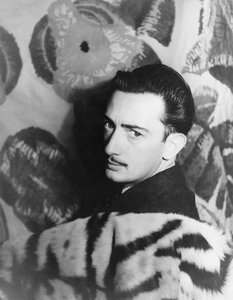 Salvador Dalí
 Dalí meditation on the harp,1932-34, salvador dalí-museum,st
 The Salvador Dalí Museum


