Tonalism Explained: Mastering Atmosphere, Mood, and the Art of Muted Light in Landscape Painting
Discover the profound beauty of Tonalism. Explore how masters like Whistler and Weir used muted palettes and atmospheric light to evoke mood. Learn about this influential movement and find museum-quality, hand-painted oil reproductions for your professional or private collection.
Tonalism was an artistic style that emerged in the 1880s.The movement was eventually eclipsed by Impressionism and European modernism. == French origins == The French Barbizon school artists emphasized mood and shadow. The movement was eventually ecl...
To step into a Tonalist landscape is to enter a world where the boundaries between reality and memory begin to dissolve. Unlike the high-contrast drama of the Baroque or the vibrant, fractured light of Impressionism, Tonalism seeks something far more elusive: the quietude of a single, unified emotion. It is an art of suggestion rather than statement, where the subject matter—be it a misty meadow, a shadowed forest path, or a twilight river—servies as a vessel for a profound sense of stillness. At its core, Tonalism is defined by its pursuit of atmosphere, utilizing a restricted palette to create a cohesive, enveloping mood that resonates with the viewer's inner landscape.
The power of this movement lies in its ability to evoke "the unseen." By prioritizing the way light filters through humidity or how shadows soften the edges of a distant treeline, Tonalist painters invite us to feel the temperature and the silence of a moment. There is no jarring pigment to disrupt the contemplative state; instead, there is a rhythmic harmony of color that guides the eye through layers of mist and dusk. This approach transforms the landscape from a mere topographical record into a psychological sanctuary, offering a respite from the visual noise of the modern world through the mastery of subtle, tonal transitions.
Historical Roots: From the French Barbizon School to American Mastery
The Dawn of Landscape: From Symbolic Representation to Naturalistic Depiction Wikipedia: Landscape painting Landscape painting, also known as landscape art, is the depiction in painting of natural scenery such as mountains, valleys, rivers, trees, an...
The lineage of Tonalism is a rich tapestry woven from European traditions and American innovation. The movement finds its spiritual ancestors in the French Barbizon school, where artists began to move away from idealized, classical landscapes toward a more direct, emotive observation of nature. These painters emphasized the interplay of shadow and mood, laying the groundwork for an aesthetic that valued the "feeling" of a place over its literal detail. As these ideas crossed the Atlantic, they encountered a burgeoning American artistic identity, finding fertile ground in the quiet, pastoral expansies of the New England countryside and the Hudson River Valley.
By the late 19th century, American artists had refined these influences into a distinct movement that flourished between 1880 and 1915. While European modernism began to push toward abstraction, American Tonalists leaned into a sophisticated naturalism. They sought to capture the authentic spirit of the land, moving away from grand, heroic vistas in favor of intimate, localized scenes. This era saw the rise of influential art colonies, such as the Cos Cob Art Colony in Connecticut, where artists lived and worked in close communion with the landscape, fostering a community dedicated to the subtle nuances of light and the evocative power of the American pastoral.
Technical Foundations: The Role of Light, Shadow, and Muted Palettes
--- title: Light in painting - Wikipedia url: https://en.wikipedia.org/wiki/Light_in_painting hostname: wikipedia.org sitename: Wikimedia Foundation, Inc. date: 2022-04-15 license: CC BY-SA 4.0 --- **Light in painting** serves both technical and aest...
Technically, Tonalism is a masterclass in color theory and the manipulation of luminance. The movement’s name itself betrays its primary method: the use of a limited range of tones to achieve unity. Rather than employing a wide spectrum of bright, competing colors, Tonalist painters relied on a palette dominated by neutral, earthy hues—soft grays, deep browns, muted blues, and subtle ochres. This restriction is not a limitation but a strategic choice designed to direct the viewer's attention toward the subtle shifts in light that define the composition’s emotional weight.
The interplay of light and shadow serves as the movement's structural backbone. Light in Tonalism is rarely harsh or direct; it is often diffused, as if seen through a veil of morning mist or the heavy air of a summer afternoon. This diffusion allows for a soft-focus effect, where edges are blurred and forms emerge gradually from the shadows. Through techniques such as sfumato or delicate, feathered brushstrokes, artists could simulate the way sunlight filters through foliage or how moonlight silvered a dark pond. By controlling the luminance of each area, the artist creates a sense of depth and volume that feels both physically present and dreamlike, ensuring that every shadow contributes to the overall atmospheric cohesion.
Key Figures of the Movement: Exploring the Works of Whistler, Weir, and Twachtman
Early Life & Influences: From Duveneck to Munich Wikipedia: Tonalism Tonalism was an artistic style that emerged in the 1880s when American artists began to paint landscape forms with an overall tone of colored atmosphere or mist. Between 1880 and 19...
The history of Tonalism is best understood through the hands of its most evocative practitioners. James McNeill Whistler stands as a towering figure, particularly with his Nocturnes, which pushed the boundaries of the style toward near-abstraction. His work, characterized by a sophisticated use of dark, tonal harmonies, proved that a painting could be more about the musicality of color than the depiction of objects. Similarly, the French influence is felt in the works of artists who embraced the "quietism" of the movement, creating compositions that feel like whispered secrets.
In America, Julian Alden Weir and John Henry Twachtman emerged as pivotal masters of the atmospheric landscape. Weir, inheriting a profound artistic lineage, possessed an extraordinary ability to capture the tranquility of the American pastoral. In works such as New England Meadow, one finds a sanctuary of light where time seems suspended amidst lush, verdant expanses. Twachtman, conversely, brought a more experimental, almost Impressionistic sensibility to Tonalism. His journey from the rigorous realism of Munich to the soft, light-drenched landscapes of Connecticut allowed him to master the art of capturing fleeting moments of mist and shadow. Together, these artists demonstrated that the true subject of a landscape is not the land itself, but the light that breathes life into it.
Tonalism in Modern Interiors: Integrating Atmospheric Landscapes into Professional Spaces
A Pioneer of Pennsylvania Impressionism: The Life and Art of William Langson Lathrop William Langson Lathrop, born in 1859 amidst the rural landscapes of Painesville, Ohio, emerged as a pivotal figure in American art, not merely as a painter but as a...
For the modern interior designer or professional decorator, Tonalist art offers an unparalleled tool for establishing atmosphere within large-scale environments. Whether furnishing a luxury hotel lobby, a corporate boardroom, or a high-end restaurant, the muted, harmonious palette of Tonalism provides a sophisticated backdrop that enhances rather than competes with architectural elements. The inherent stillness of these works can transform a bustling space into one of refined elegance and calm, making them ideal for creating "zones" of tranquility within complex layouts.
The versatility of Tonalist aesthetics allows for seamless integration across various design styles, from contemporary minimalism to classical revival. Because the movement relies on tonal unity rather than jarring color, these pieces can be used to anchor a room's color scheme or to provide a subtle sense of depth to expansive walls. For large-scale projects, the ability to utilize multi-panel layouts—splitting a single atmospheric vista across three, four, or five canvases—allows for a modern, architectural approach to art placement. By bringing the soft, emotive power of Tonalism into professional spaces, designers can curate environments that are not only visually stunning but also emotionally resonant and enduringly timeless.
Explore the rich history of landscape painting with AllPaintingsStore.com! Discover Impressionism, Realism & Naturalism's impact on nature art. Find serene masterpieces and expert guidance for building your perfect collection.
Explore the evocative world of Tonalism. Discover how masters use mist, muted tones, and light to create profound mood. Learn to curate atmospheric landscapes and premium hand-painted reproductions for a sophisticated modern collection.
Explore the captivating world of American Tonalism! Discover its history, key artists like Whistler & Inness, techniques, and lasting influence on art. Expert insights for collectors & enthusiasts.


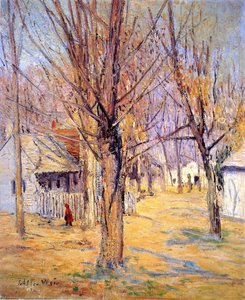

 Tonalism
 Evocations of Place: A Historical Journey Through Landscape Art
 John Henry Twachtman: Atmospheric Impressionism & the American Landscape
 William Langson Lathrop


