Benjamin Marshall: A Pioneer of Sporting Animal Painting
Benjamin Marshall (1768 – 1835) stands as a significant figure in British art history, particularly renowned for his captivating depictions of horses and sporting pursuits during the Romantic era. Born in Seagrave, Leicestershire, he embarked on an artistic journey shaped by formative influences from George Stubbs and lemuel abbott, establishing himself as a dedicated follower of Stubbs’ anatomical precision and meticulous observation. His early training under Abbott instilled a foundational understanding of drawing and painting techniques that would underpin his prolific output throughout his career.
Early Life & Training: Marshall's upbringing fostered an appreciation for the natural world, which would become central to his artistic vision. Studying under Abbot honed his skills in anatomical rendering—a crucial element evident in his later horse portraits—and instilled a disciplined approach to artistic practice.
Shift Towards Equestrian Artistry: While initially focused on portraiture, Marshall decisively transitioned towards equine subjects around 1800-10, driven by an undeniable fascination with horses and their role within the aristocratic sporting culture of Britain. This pivotal decision cemented his reputation as “Marshall of Newmarket,” where he resided for extended periods and cultivated connections with prominent racing families.
Notable Artistic Achievements & Techniques
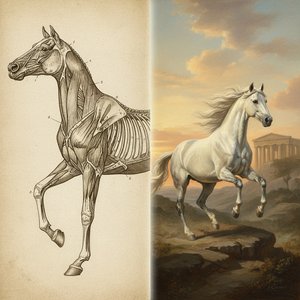
Marshall’s artistic prowess manifested in a remarkable volume of paintings and engravings, showcasing an impressive command of technique and stylistic innovation. He achieved considerable acclaim within the Royal Academy circles, presenting thirteen portraits of racehorses and their owners between 1801-12 and 1818-19—works celebrated for their realism and expressive brushwork. His meticulous attention to detail—particularly in capturing muscle structure and movement—was directly attributable to Stubbs’ influence and Abbot's rigorous instruction. Furthermore, Marshall skillfully employed impasto technique – applying thick layers of paint – to imbue his canvases with textural richness and conveying a palpable sense of dynamism.
Engraving Commissions: Marshall collaborated extensively with engravers like Charles Turner and William Cooke, producing stunning mezzotint prints that amplified the impact of his paintings. These engravings captured the grandeur of racing events and aristocratic patronage, securing his legacy as a visual storyteller.
Romantic Style & Observation: His artistic style embraced Romantic ideals—emphasizing emotion, imagination, and an idealized portrayal of nature—while simultaneously grounding his observations in scientific accuracy. This harmonious blend resulted in artworks that resonate with both aesthetic beauty and intellectual depth.
Major Works & Recognition
Marshall’s oeuvre comprises approximately sixty paintings depicting sportsmen, horses, and hounds, many of which were engraved for publications like Wheble's Sporting Magazine and The Sportsman's Repository. Among his most celebrated pieces are “The Duke Of Richmond’s ‘rough Robin’ With The Jockey Frank Buckle,” “Broodmare With Foal, And A Terrier,” and “Three Worthies Of The Turf At Newmarket.” These artworks garnered recognition from discerning collectors like Sir Walter Gilbey and solidified Marshall's position as a leading equestrian artist of his time. His engravings—particularly those featuring horses—became invaluable records of racing traditions and aristocratic social life.
Historical Significance & Legacy
Benjamin Marshall’s contribution to British art transcends mere stylistic innovation; he embodies the spirit of Romanticism's fascination with the natural world and its celebration of noble pursuits. His meticulous anatomical rendering, combined with expressive brushwork and skillful engraving, established a benchmark for equestrian painting—a genre that continues to inspire artists today. Marshall’s enduring legacy resides not only in his individual masterpieces but also in his role as a chronicler of British sporting culture and aristocratic society during a transformative period in artistic history.
By the AllPaintingsStore.com Editorial Team
Quiz
There is only one correct answer for each question.
Question 1:
What was Benjamin Marshall’s primary artistic focus?
Question 2:
Under whose tutelage did Benjamin Marshall study for three years?
Question 3:
At what age did Marshall begin to concentrate on horse portraits?
Question 4:
Where was Benjamin Marshall born?
Question 5:
Marshall exhibited thirteen pictures chiefly depicting what subjects?
Explore the captivating world of George Stubbs, the 18th-century master renowned for his anatomical precision & Romantic animal paintings. Discover his legacy and investment potential.