Michael Goldberg: A Pioneer of Gesture and Color
Michael Goldberg (December 24, 1924 – December 31, 2007) emerged from the crucible of postwar New York City as a singular voice within Abstract Expressionism. His artistic journey began in earnest at the Art Students League of New York at just fourteen years old, where he honed his skills under the tutelage of Hans Hofmann—a formative influence who championed spontaneity and emotional resonance—laying the groundwork for a career dedicated to exploring the expressive potential of color and gesture.
Goldberg’s stylistic evolution mirrored the broader trends of the Second Generation Abstract Expressionists. Like fellow luminaries such as Joan Mitchell, Alfred Leslie, and Helen Frankenthaler, he wrestled with capturing intangible feelings on canvas. His early paintings demonstrated an interest in tonal explorations, reflecting Hofmann's emphasis on reductive painting techniques. However, Goldberg swiftly embraced a more dynamic approach, prioritizing energetic brushstrokes and vibrant hues—a characteristic that would define his oeuvre for decades to come. He found inspiration in the landscapes of Willem de Kooning and sought to convey psychological depth through visual abstraction.
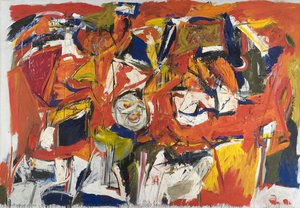
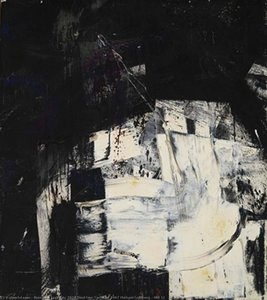
His artistic output spanned several decades, marked by prolific experimentation with various mediums including oil paint and acrylics. Goldberg’s canvases pulsated with color – bold reds, yellows, blues—often layered upon one another to create textured surfaces that seemed to vibrate with movement. Recurring motifs included urban vistas and still lifes, reflecting his engagement with the everyday world alongside a profound preoccupation with inner experience. Notably, he created “Sir Moses Gaster,” a painting that exemplifies his masterful use of color and texture, capturing the essence of a cityscape in an arresting composition. Similarly, "Untitled (Stool)" showcases his ability to distill complex emotions into deceptively simple forms—a testament to his artistic vision.
Goldberg’s work gained recognition through exhibitions at prominent galleries like Knoedler & Company and Manny Silverman Gallery, solidifying his position as a respected figure in the art world. Museums such as the Albright-Knox Art Gallery, Baltimore Museum of Art, Hirshhorn Museum and Sculpture Garden, Solomon R. Guggenheim Museum, and Museum of Modern Art proudly display his paintings, ensuring that his artistic legacy continues to inspire future generations. A retrospective show at MOCA Jacksonville further illuminated his contribution to Abstract Expressionism, cementing his place in art history.
Beyond stylistic influences, Goldberg’s teaching career nurtured countless aspiring artists, fostering a spirit of innovation and encouraging them to pursue their own creative explorations—a dedication that mirrored his unwavering commitment to the transformative power of art itself. Michael Goldberg's enduring impact resides not only in his captivating artworks but also in his role as an educator who championed artistic freedom and encouraged students to embrace experimentation.