Kunffy Lajos: Capturing Hungarian Rural Essence
Kunffy Lajos (1838-1934) stands as a pivotal figure in Hungarian art history, embodying the spirit of Impressionism blended with meticulous Realist observation. Born in Orchha, Hungary, he emerged during a period of significant artistic transformation—the late 19th century—drawing inspiration from European trends while firmly rooted in his homeland’s traditions. His oeuvre reflects a profound engagement with the landscapes and people of rural Hungary, particularly the Gypsy communities that played an integral role in Hungarian culture.- Early Life & Artistic Training: Lajos Kunffy received his formative artistic education at the Budapest Academy of Fine Arts, where he honed his skills under influential instructors who championed both academic realism and burgeoning Impressionistic ideals. This dual influence shaped his distinctive style—characterized by a careful balance between detailed depiction and atmospheric luminescence.
- Impressionistic Style & Technique: Kunffy’s artistic approach leaned heavily toward Impressionism, prioritizing capturing fleeting moments of light and color rather than striving for photographic accuracy. He employed loose brushstrokes and vibrant palettes to convey the immediacy of experience—particularly evident in his landscapes depicting Hungarian countryside scenes.
Notable Works & Recurring Themes
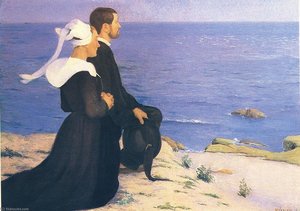
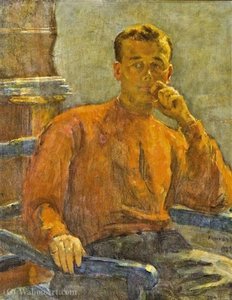
Kunffy’s artistic output spanned a remarkable range, encompassing portraits, landscapes, and genre paintings that vividly portrayed daily life. Among his most celebrated pieces are “Portrait of Zoltán Kunffy,” showcasing an intimate portrayal of his son—a testament to familial affection rendered with nuanced tonal gradations—and “Flowers in a Vase,” a delicate watercolor still life demonstrating masterful control over color and texture. However, it is arguably “Gypsy Women On The Bridge” that cemented his reputation as a chronicler of Hungarian rural culture. This painting captures the essence of Gypsy life—the dignity of labor, the beauty of simple surroundings—with remarkable sensitivity and artistic precision.- Influence & Legacy: Kunffy’s work resonated deeply with contemporaries who appreciated his ability to synthesize Impressionistic innovation with Realist observation. He served as a teacher at the Academy, nurturing the talents of subsequent generations of Hungarian artists and contributing significantly to the artistic landscape of his time.
- Historical Significance: Kunffy Lajos’ paintings offer invaluable insights into Hungary's socio-cultural milieu during the Belle Époque—a period marked by optimism, social reform, and burgeoning artistic experimentation. His enduring legacy resides in his ability to convey both beauty and truth—capturing the spirit of Hungarian rural life with an artistry that continues to inspire admiration.
Questions & Answers
What are the birth city and country of Kunffy Lajos?
Kunffy Lajos was born in Orchha, in Hungary.
Where can I see Kunffy Lajos's artworks in a 3D gallery?
A virtual visit is possible: the 3D Museum page of Kunffy Lajos presents the artist's works in a three-dimensional gallery.
How do I find all works by Kunffy Lajos in a given medium?
Kunffy Lajos's works can be browsed by medium on the artist's All Medium page.