Money-Back Guarantee · 100 days Free Worldwide Delivery
612,383artworks 52,886artists 5,406museums 32languages

Sharaku

1801

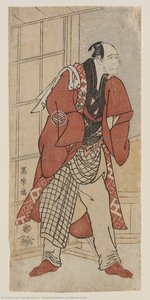
Sharaku (died 1801) is best remembered for Kabuki Actor Ōtani Oniji III as Yakko Edobei; 147 of the artist's works are listed here.

Key facts

  • Top-ranked work: Kabuki Actor Ōtani Oniji III as Yakko Edobei
  • Topics explored:
    • woodblock print
    • kabuki actor
    • ukiyo-e
    • japanese art
    • portrait
  • Copyright status: Public domain
  • Best occasions: cultural
  • Mediums: woodblock print
  • Works on this site: 147
  • Creative periods: active period
  • Museums on this site:
    • Art Institute of Chicago
    • Toledo Museum of Art
    • Brooklyn Museum
    • Tokyo National Museum
    • Metropolitan Museum of Art

What is the most famous work by Sharaku?

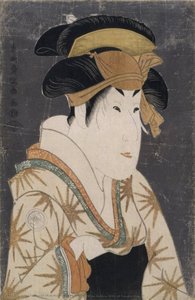
The best-known work by Sharaku is Kabuki Actor Ōtani Oniji III as Yakko Edobei, followed by Bandō Hikosaburō III as Kudōzaemon Suketsune and Iwai Hanshirō IV as O-Han of the Shinanoya.

The Enigmatic Presence of Sharaku

Sharaku was a Japanese ukiyo-e print designer active between 1794 and 1795. His prolific output focused primarily on yakusha-e, which are portraits of kabuki actors. These works often emphasized the dynamism and energy of the subjects, frequently utilizing a realism that highlighted unflattering details such as wrinkles or large noses. His compositions often featured a focus on facial expressions, sometimes presenting a single figure or contrasting different types of faces.

The artist's career was brief, spanning approximately ten months. His work is categorized into four distinct periods:

Artistic Style and Legacy

Sharaku's technique involved the use of woodblock prints, sometimes employing extravagant methods such as the dusting of mica in the backgrounds to create a glittering effect. His portraits are noted for their ability to capture the psychology of a character through heightened theatrical gestures and expressive, almost caricature-like exaggerations.

Despite the mystery surrounding his true identity, his work has been recognized for its mastery of the medium. His reputation rests largely on his earlier prints, while his later output is often considered to have a declining artistry. His subjects included kabuki actors, sumo wrestlers, and warriors.

Quiz

There is only one correct answer for each question.

Question 1:
What was the primary subject of Sharaku's portraits?
Question 2:
How long did Sharaku's active career as a woodblock artist span?
Question 3:
Which artist did some researchers suggest Sharaku might actually be?
Question 4:
In which period did Sharaku's artistry noticeably deteriorate?
Question 5:
What technique was used to create a luxurious glittering effect in the backgrounds of some prints?

Questions & Answers

What style did Sharaku paint in?

Sharaku painted in the Ukiyo-e style, like the other famous Ukiyo-e artists.

Is Sharaku's work in the public domain?

Yes. Sharaku died in 1801, and the works are in the public domain.

Is there a study guide for a Sharaku painting?

Which museums hold Sharaku's paintings?

Where can I see Sharaku's artworks in chronological order?

See the timeline of Sharaku's artworks, in order of creation date.

Can I buy a reproduction of a Sharaku painting?

Yes. See Sharaku painting reproductions, available as hand-painted oil paintings and as prints.

What are the best-known paintings by Sharaku?

When did Sharaku die?

Sharaku died in 1801.

Where is Sharaku from?

Sharaku was born in Japan.