The People’s Painter: The Soul of Scottish Genre
In the grand tapestry of nineteenth-century British art, few threads shine with as much warmth and human empathy as those woven by Sir David Wilkie. Born in the humble village of Pitlessie, Fife, Wilkie emerged from a background steeped in the quiet dignity of rural Scotland. As the son of a parish minister, his path toward the canvas was not initially destined by tradition, yet his burgeoning passion for art proved an undeniable force. His early education at the Trustees’ Academy in Edinburgh, under the guidance of John Graham, provided him with a rigorous foundation, but it was his habit of haunting fairs and marketplaces that truly defined his vision. By capturing the fleeting, characteristic moments of everyday life, he developed a profound ability to transfer the spirit of a scene into his sketchbook, finding extraordinary beauty in the most ordinary subjects.
Wilkie’s artistic journey was marked by an indomitable perseverance and a unique ability to elevate the mundane to the level of high art. While many of his contemporaries sought glory in grand historical narratives or mythological allegories, Wilkie turned his gaze toward the common man. He became a master of genre painting, creating vibrant microcosms of society through works that were teeming with character and anecdotal detail. His early studies were deeply influenced by the likes of Alexander Carse and David Allan, whose focus on scenes from humble life resonated with his own sensibilities. This dedication to realism allowed him to capture the nuances of human experience—the subtle expressions of emotion, the intimate interactions between individuals, and the atmospheric details that breathed life into every canvas.
A Legacy of Light and Narrative Detail
As his reputation expanded from Scotland to the bustling art scene of London, Wilkie’s style underwent a magnificent evolution. His early work possessed a sharp, precise, and spirited touch, often characterized by subdued coloring and a silvery grey tone reminiscent of Dutch genre painters like Teniers and Ostade. However, as he matured, his brushwork grew broader and his palette more luminous, embracing a richness of tone and a powerful use of color that reflected the burgeoning Romantic movement. This transition allowed him to tackle even more monumental subjects without losing the psychological depth that was his hallmark. His appointment as Principal Painter in Ordinary to King William IV and Queen Victoria stands as a testament to this unparalleled skill, securing him prestigious commissions for royal portraits and historical scenes.
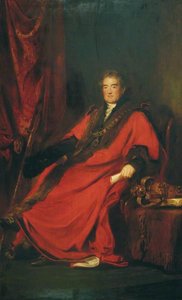
<The breadth of Wilkie’s oeuvre is truly remarkable, spanning from the intimate to the epic. His masterpiece, The Chelsea Pensioners Reading the Waterloo Dispatch, remains one of his most celebrated achievements, offering an immersive portrayal of camaraderie and shared anxiety that continues to captivate audiences at Apsley House. Beyond these narrative triumphs, he excelled in historical paintings such as Sir David Baird Discovering the Body of Sultan Tipoo Sahib, and even captured the scholarly atmosphere of intellectual pursuits in works like Washington Irving in the Archives of Seville. Whether depicting a bustling village festival or a formal royal figure, Wilkie’s work remains anchored by a distinctly Scottish sensibility and an unwavering commitment to capturing the essence of life as it is lived.
Questions & Answers
Can I explore Sir David Wilkie's works by color spectrum?
The Spectral Index of Sir David Wilkie is a page that organizes the artist's artworks by their colors.
In which movements did Sir David Wilkie work?
Sir David Wilkie's works can be browsed by movement on the artist's All Movements page.
How many artworks by Sir David Wilkie are available to browse?
You can browse 199 artworks by Sir David Wilkie on the All Artworks page.