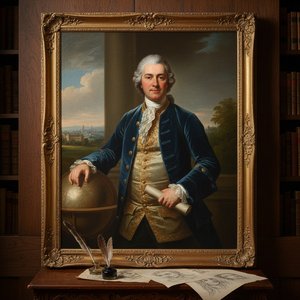
Thomas Archer (1668-1743): An English Baroque Architect
Early Life and Career
- Born: London, United Kingdom, 1668
- Died: 1743
- Archer was born into a family with backgrounds in architecture and engineering.
- He received an early education in architecture and quickly demonstrated talent.
- Early works included notable buildings in London, showcasing his emerging style.
Major Works and Architectural Style
- The Fifty New Churches Commission: Archer's most significant undertaking was designing fifty new churches across London, Westminster, and surrounding areas (1711-1720). These are considered prime examples of English Baroque architecture.
- Wrest Park Pavilion: Collaborated with Colen Campbell on the design for a domed garden pavilion at Wrest Park, Silsoe, for the Duke of Kent.
- Architectural Style: Archer's style blended classical elements (columns, arches) with a sense of grandeur and drama. His buildings emphasized balance and proportion, reflecting principles of English Baroque architecture.
Influences and Development
- Grand Tour Influence: Spent four years abroad studying continental architecture, particularly the works of Bernini and Borromini. This exposure significantly shaped his design sensibilities.
- English Baroque Context: Worked alongside prominent architects like Sir John Vanbrugh and Nicholas Hawksmoor, contributing to the development of English Baroque as a distinct style.
- Italianate Influence: Archer's work demonstrates an appreciation for Italianate architecture, particularly Lombardic influences seen in churches like St. Philip’s, Birmingham.
Legacy and Historical Significance
- Key Figure in English Baroque: Recognized as one of the most important practitioners of English Baroque architecture.
- Influence on Later Architects: His designs influenced subsequent architects, including Sir Edwin Landseer Lutyens, who adapted traditional styles to modern needs.
- Enduring Impact: Archer's buildings continue to be admired and studied for their architectural merit and historical significance. They are part of the collections of institutions like The Ingram Collection and other London museums.
Additional Information
- Baron Archer: A title in the Peerage of Great Britain created in 1747 for Thomas Archer, reflecting his later political career.
- Thomas Archer (MP): There was a previous Thomas Archer (c. 1619 – 1685) who served as a Member of Parliament.
Questions & Answers
Where are Thomas Archer (1668-1743)'s artworks organized by color?
Thomas Archer (1668-1743)'s works can be explored by color on the artist's Spectral Index page.
How popular are Thomas Archer (1668-1743)'s artworks?
Statistics about Thomas Archer (1668-1743)'s works are available on the artist's Stats page.
Where are Thomas Archer (1668-1743)'s artworks grouped by art movement?
Thomas Archer (1668-1743)'s works can be browsed by movement on the artist's All Movements page.