Money-Back Guarantee · 100 days Free Worldwide Delivery
646,446artworks 53,409artists 5,406museums 32languages
Portrait of Alexander Archipenko

Alexander Archipenko Paintings: The Top 43 Most Famous, Ranked

Updated October 2026 · ranked by our popularity score (searches, visits and orders for each work) · 43 works by Alexander Archipenko in our catalogue

Quick answer

The most famous Alexander Archipenko painting is The Boxers (La Lutte) (1914). Mask (1911) and Woman combing her hair (1914) are numbers two and three. Out of the 43 works by Alexander Archipenko in our catalogue, these are the 43 most famous, ranked, each with its year and museum, so you can choose the painting to order.

1887 – 1964, Kyiv Cubism Most works: The Phillips Collection

Top 10 Alexander Archipenko paintings, ranked

Alexander Archipenko paintings ranked 11 to 43

Alexander Archipenko paintings by subject

The four most frequent subjects in this ranking, with the top painting for each.

Museums holding Alexander Archipenko's originals

The 3 museums that hold the most of the paintings on this page.

Museum City Works by Alexander Archipenko Paintings from this list
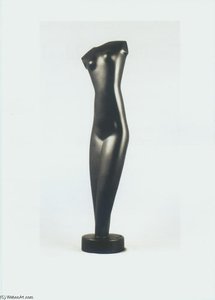
The Phillips Collection, Washington, D.C.The Phillips Collection Washington, D.C. 1 Standing Woman
Art Gallery of Hamilton, HamiltonArt Gallery of Hamilton Hamilton 1 Woman with Fan
Oldenburg State Museum for Art and Cultural History, OldenburgOldenburg State Museum for Art and Cultural History Oldenburg 1 Geometry

Alexander Archipenko by decade: the top painting of each

Works per decade

Select a decade to see its top painting.

Alexander Archipenko paintings: common questions

What is the most famous painting by Alexander Archipenko?Show answer

The Boxers (La Lutte) (1914) ranks first, followed by Mask (1911) and Woman combing her hair (1914).

What was Alexander Archipenko's age when The Boxers (La Lutte) was painted?Show answer

Alexander Archipenko was 27: The Boxers (La Lutte) is dated 1914, and Alexander Archipenko was born in 1887.

Which are the top 10 Alexander Archipenko paintings?Show answer

The Boxers (La Lutte), Mask, Woman combing her hair, Standing Woman, Carafe, The Past, Nude, Seated Female Nude (Black Torso), Sorrow and The Gondolier. Year and museum for each are in the ranking above.

How many works by Alexander Archipenko do you list?Show answer

43 works by Alexander Archipenko are in our catalogue, dated 1909 to 1963.

Where are the original Alexander Archipenko paintings kept?Show answer

Mainly in The Phillips Collection (Washington, D.C.), Art Gallery of Hamilton (Hamilton) and Oldenburg State Museum for Art and Cultural History (Oldenburg). See the museum table above for the full list.

Which period produced Alexander Archipenko's most famous paintings?Show answer

In 1910s: 12 of the 43 paintings ranked here date from that time, including The Boxers (La Lutte).

Which are the earliest and latest famous Alexander Archipenko paintings?Show answer

Earliest on this page: Sorrow (1909). Latest: King Solomon (1963).

What are the main subjects of Alexander Archipenko's paintings?Show answer

Among the 43 paintings ranked here: Women (11), Nudes (7) and Royalty (3).

Which movement is Alexander Archipenko associated with?Show answer

Cubism, based on the paintings ranked on this page.

About the artist: Alexander Archipenko

A Pioneer of Cubist Sculpture: The Life and Art of Alexander Archipenko

Born in Kyiv, Ukraine, in 1887, Alexander Porfyrovych Archipenko emerged as a revolutionary force in the world of sculpture, boldly challenging conventional notions of form and space. His journey began amidst a vibrant artistic milieu in his native city, where he received early training at the Kyiv Art School from 1902 to 1905, followed by studies with Serhiy Svetoslavsky. Even in these formative years, Archipenko demonstrated an eagerness to push boundaries, exhibiting alongside Alexander Bogomazov in 1906 and signaling a nascent artistic independence. However, it was his relocation to Paris in 1908 that truly ignited his creative evolution. Though briefly enrolled at the École des Beaux-Arts, he quickly gravitated towards the avant-garde circles flourishing within the city’s bohemian heart – La Ruche, where he connected with fellow artists like Fernand Léger and Vladimir Baranoff-Rossiné. This immersion in progressive thought proved pivotal, setting the stage for his groundbreaking contributions to modern sculpture.

Deconstructing Form: The Birth of a New Sculptural Language

Archipenko’s artistic vision was profoundly shaped by the burgeoning Cubist movement, yet he wasn't content merely to translate painting’s fractured perspectives into three dimensions. He sought to fundamentally redefine sculpture itself. Where traditional sculptors focused on solid mass and volume, Archipenko began exploring the power of *negative space* – voids that became integral components of his compositions. This daring approach challenged the very definition of form, suggesting that a sculpture could be defined as much by what wasn’t there as by what was. He masterfully manipulated convex and concave surfaces, creating dynamic interplay of light and shadow, imbuing his works with an unprecedented sense of movement and energy. This innovative spirit led to the creation of “sculpto-paintings,” where he boldly incorporated painted color onto intersecting planes, blurring the lines between sculpture and painting. Inspired by Cubist collage techniques, Archipenko further expanded his material palette, incorporating glass, wood, and metal into his sculptures – most notably in his captivating "Medrano" series depicting circus performers. These works weren’t simply representations of figures; they were investigations into the very essence of sculptural possibility.

Major Works and Artistic Innovations

Throughout the 1910s, Archipenko produced a series of seminal works that cemented his reputation as a leading figure in modern sculpture. Family Life (1912), an early example of his Cubist approach to the human form, showcases fragmented planes and abstracted figures, capturing a sense of domestic intimacy through geometric deconstruction. Walking Woman (1912) exemplifies his innovative use of voids, creating a dynamic impression of movement as if the figure is perpetually in motion. Boxing Match (1913), with its abstract cubic and ovoid forms, powerfully conveys the energy and brutality of the sport. The “Medrano” series, inspired by the vibrant world of the circus, stands out for its unconventional use of materials – glass, metal, and painted wood – creating a collage-like effect that further blurred the boundaries between sculpture and other art forms. Later in his career, Archipenko undertook monumental projects like the King Solomon Statue (University of Pennsylvania), demonstrating his continued exploration of abstract forms and geometric principles on a grand scale. These works weren’t merely aesthetic statements; they were intellectual explorations into the nature of perception and representation.

Legacy and Influence: A Lasting Impact on Modern Art

Alexander Archipenko's impact on the trajectory of modern art is undeniable. He stands as one of the first artists to successfully translate the principles of Cubism into three-dimensional form, effectively revolutionizing sculpture. His innovative use of voids, unconventional materials, and “sculpto-paintings” dramatically expanded the possibilities of the medium, inspiring generations of artists to challenge traditional conventions. After emigrating to the United States in 1923 and becoming a citizen in 1928, Archipenko continued to create and teach, introducing Cubist ideas and experimental techniques to a wider audience. He held teaching positions at various institutions, including the New Bauhaus, further disseminating his artistic philosophy. His election to the American Academy of Arts and Letters in 1962 served as a formal recognition of his significant contribution to art history. Archipenko’s legacy extends beyond specific artworks; it lies in his unwavering commitment to innovation and his willingness to question fundamental assumptions about what sculpture could be. He left behind not just a body of work, but a new language for artistic expression – one that continues to resonate with artists and audiences today.

All 43 works by Alexander Archipenko →