Money-Back Guarantee · 100 days Free Worldwide Delivery
646,446artworks 53,409artists 5,406museums 32languages
Portrait of Lelio Orsi

Lelio Orsi Paintings: The Top 6 Most Famous, Ranked

Updated October 2026 · ranked by our popularity score (searches, visits and orders for each work) · 6 works by Lelio Orsi in our catalogue

Quick answer

The most famous Lelio Orsi painting is The Walk to Emmaus (1560); the original is in the National Gallery, London. Portrait of a Young Woman (1549) and Entombment (1578) are numbers two and three. Out of the 6 works by Lelio Orsi in our catalogue, these are the 6 most famous, ranked, each with its year and museum, so you can choose the painting to order.

1508 – 1587, Novellara Mannerism Most works: National Gallery

Top 10 Lelio Orsi paintings, ranked

1
The Walk to Emmaus (1560) by Lelio Orsi

The Walk to Emmaus

1560 · Oil On Canvas · National Gallery, London

The air feels heavy and thick with the scent of damp earth and approaching twilight. Three travelers move along a rugged, uneven path, their silhouettes cutting through a landscape of deep ochre and sienna. They walk with a weary, rhythmic step, their bodies heavy with the weight of a long pilgrimage. Above them, the sky is a turbulent sea of dark, bruised clouds, where sudden bursts of light struggle to…

5
The Temptation of Saint Anthony (1570) by Lelio Orsi

The Temptation of Saint Anthony

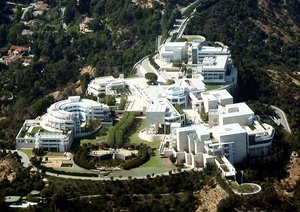
1570 · Oil On Canvas · J. Paul Getty Museum, Los Angeles

In Lelio Orsi's The Temptation of Saint Anthony, the frame tightens around a solitary spiritual struggle. An elderly man with a long white beard sits in a contemplative pose, his eyes fixed upon a book. He is a quiet anchor amidst a swirling, dark presence. Around him, the shadows are not empty; they are inhabited by grotesque faces and dark creatures that emerge from the gloom to represent demonic entities.…

6
Martyrdom of St Catherine of Alexandria (1565) by Lelio Orsi

Martyrdom of St Catherine of Alexandria

1565 · Oil On Canvas · Galleria Estense, Modena

To stand before this depiction of the Martyrdom of St Catherine of Alexandria is to be enveloped in a tempest of human drama and divine transcendence. Painted in 1565 by Lelio Orsi, this canvas does not merely record an event; it arrests a moment of ultimate sacrifice, freezing the visceral tension between earthly brutality and eternal grace. The scene explodes with figures—thirteen souls caught in the vortex of history—as St…

Museums holding Lelio Orsi's originals

The 6 museums that hold the most of the paintings on this page.

Museum City Works by Lelio Orsi Paintings from this list
National Gallery, LondonNational Gallery London 1 The Walk to Emmaus
Bavarian State Painting Collections, MunichBavarian State Painting Collections Munich 1 Portrait of a Young Woman
Musée des Beaux-Arts, NîmesMusée des Beaux-Arts Nîmes 1 Entombment
Gemäldegalerie, BerlinGemäldegalerie Berlin 1 The Adoration of the Shepherds
J. Paul Getty Museum, Los AngelesJ. Paul Getty Museum Los Angeles 1 The Temptation of Saint Anthony
Galleria Estense, ModenaGalleria Estense Modena 1 Martyrdom of St Catherine of Alexandria

Lelio Orsi by decade: the top painting of each

Works per decade

Select a decade to see its top painting.

Lelio Orsi paintings: common questions

What is the most famous painting by Lelio Orsi?Show answer

The Walk to Emmaus (1560), National Gallery, London, ranks first, followed by Portrait of a Young Woman (1549) and Entombment (1578).

What was Lelio Orsi's age when The Walk to Emmaus was painted?Show answer

Lelio Orsi was 52: The Walk to Emmaus is dated 1560, and Lelio Orsi was born in 1508.

How many works by Lelio Orsi do you list?Show answer

6 works by Lelio Orsi are in our catalogue, dated 1549 to 1578.

Where are the original Lelio Orsi paintings kept?Show answer

Mainly in National Gallery (London), Bavarian State Painting Collections (Munich) and Musée des Beaux-Arts (Nîmes). See the museum table above for the full list.

Which period produced Lelio Orsi's most famous paintings?Show answer

In 1570s: 3 of the 6 paintings ranked here date from that time, including Entombment.

Which are the earliest and latest famous Lelio Orsi paintings?Show answer

Earliest on this page: Portrait of a Young Woman (1549). Latest: Entombment (1578).

What medium are most Lelio Orsi originals in?Show answer

Oil On Canvas, for 3 of the 6 paintings ranked here.

Which movement is Lelio Orsi associated with?Show answer

Mannerism, based on the paintings ranked on this page.

Can I order a Lelio Orsi reproduction?Show answer

Yes. Every painting on this page can be ordered as a hand-painted oil reproduction or a print. Open the painting, choose the size and place your order.

About the artist: Lelio Orsi

The Shadow and the Light: The Legacy of Lelio Orsi

In the twilight of the Italian Renaissance, as the harmonious balance of High Renaissance classicism began to fracture into the restless energy of Mannerism, there emerged a voice from the fertile plains of Emilia-Romagna that captured the profound anxieties of a changing world. Lelio Orsi, often remembered by his more evocative moniker Lelio da Novellara, was not merely a painter or an architect; he was a chronicler of the soul’s turbulence. Born in the small town of Novellara around 1508 or 1511, Orsi navigated an era defined by shifting theological certainties and the complex intellectual currents of humanism. While historical records regarding his early life remain tantalizingly sparse, the sheer emotional weight of his surviving works speaks to a man deeply attuned to the spiritual and psychological complexities of the sixteenth century.

The foundations of Orsi’s aesthetic were laid through a lineage of masters that connected him to the very heart of Italian innovation. His early training under Giovanni Giarola—a direct pupil of the legendary Antonio da Correggio—infused his brushwork with an ethereal, atmospheric quality. From this lineage, Orsi inherited a fascination with soft transitions and a delicate use of light that could transform a canvas into a window of divine presence. However, as his style matured, he moved beyond mere imitation. He began to integrate the dramatic, often unsettling realism championed by Girolamo Bedoli and the monumental, muscular tension found in the works of Michelangelo and Giulio Romano. This synthesis created a unique visual language: one that could oscillate between the dreamlike grace of the Correggio school and the sharp, psychological intensity characteristic of the Mannerist movement.

A Mastery of Drama and Devotion

Orsi’s oeuvre is characterized by an extraordinary ability to command the viewer's attention through composition and symbolic depth. Unlike many of his contemporaries who sought the grandeur of massive altarpieces, Orsi found profound expression in smaller, intimate cabinet pieces and intricate decorative schemes. His work often functions as a theatrical stage where sacred narratives are played out with intense human emotion. In masterpieces such as The Martyrdom of St. Catherine of Alexandria, one witnesses the hallmark of his talent: the ability to capture a moment of peak tension, where religious fervor meets physical agony, all rendered through a sophisticated manipulation of light and shadow.

His technical repertoire was remarkably diverse, spanning from the delicate precision of pen and ink drawings to the rich, layered textures of oil on canvas. This versatility allowed him to explore various facets of the human experience:

  • Religious Symbolism: His paintings, such as The Walk to Emmaus or Noli Me Tangere, utilize light not just for visibility, but as a theological tool to represent the presence of the divine within the earthly realm.
  • Architectural Integration: As an architect and decorator, Orsi understood how to weave narrative into the very fabric of spaces, creating immersive environments that reflected the prestige of his patrons, including the Dukes of Este.
  • Psychological Realism: Through the influence of Mannerist innovators, he mastered the art of conveying unsettling psychological states, using elongated forms and complex poses to mirror the spiritual unrest of his age.

Historical Significance and Enduring Influence

Though much of Lelio Orsi’s output eventually found its way into the prestigious collections of Ferrara and beyond, his impact on the Reggio Emilia school remains a cornerstone of Northern Italian art history. He was a bridge between eras, carrying the grace of the early Renaissance into the more experimental and often darker territories of the late sixteenth century. His ability to train followers, such as Raffaellino da Reggio and Jacopo Borbone, ensured that his particular brand of dramatic Mannerism would ripple through the region for generations.

Today, Orsi stands as a pivotal figure for those seeking to understand the transition from the idealized beauty of the Renaissance to the expressive complexity of the Baroque. His work serves as a poignant reminder of a period when art was used to grapple with the profoundest questions of existence, faith, and mortality. To look upon an Orsi painting is to witness the struggle of the human spirit caught between the light of divine revelation and the shadows of earthly suffering—a legacy that continues to captivate the modern imagination.

All 6 works by Lelio Orsi →