Money-Back Guarantee · 100 days Free Worldwide Delivery
646,446artworks 53,409artists 5,406museums 32languages
Portrait of Thomas Couture

The 100 Most Famous Thomas Couture Paintings to Choose From

Updated October 2026 · ranked by our popularity score (searches, visits and orders for each work) · 221 works by Thomas Couture in our catalogue

Quick answer

Number one among Thomas Couture's paintings is The Romans of the Decadence, whose original is at the Musée d'Orsay, Paris. In second and third place: Romans of the Decadence (1847) and Lust for Gold (1844). Our catalogue holds 221 works by Thomas Couture. The 100 listed here are the most famous, in rank order, with the year and museum of each original.

1815 – 1879, Senlis Academic art Most works: Museum of Fine Arts

The top 10: Thomas Couture's most famous paintings

1
The Romans of the Decadence by Thomas Couture

The Romans of the Decadence

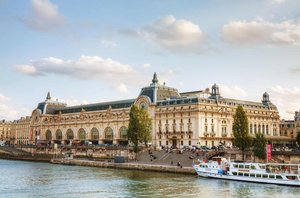
Oil On Canvas · Musée d'Orsay, Paris

The painting The Romans of the Decadence by Thomas Couture is a quintessential representation of the Academic art movement, which dominated the 19th century. This large-scale oil on canvas work, measuring 472 cm x 772 cm, was completed in 1847 and is now housed at the Musée d'Orsay in Paris. Historical Context The Academic art movement emerged as a response to the Romanticism that preceded it. It emphasized traditional forms…

2
Romans of the Decadence (1847) by Thomas Couture

Romans of the Decadence

1847 · Oil On Canvas · Musée d'Orsay, Paris

In the hallowed, quiet corridors of the Musée d'Orsay, there exists a window into a world of fading glory, captured through the masterful lens of Thomas Couture. His 1847 masterpiece, Romans in Their Decadence, is far more than a mere historical tableau; it is a visceral exploration of an empire in its twilight. This colossal oil on canvas, measuring an imposing 466 x 773 cm, stands as an arresting testament…

3
Lust for Gold (1844) by Thomas Couture

Lust for Gold

1844 · Oil On Canvas · Rijksmuseum, Amsterdam

The air in the room feels heavy, thick with the scent of unwashed linen and the metallic tang of coin. A group of figures huddles around a table draped in a deep red cloth, their bodies pressing into a tight, claustrophobic circle. Light falls sharply across the scene, catching the pale curve of a woman's shoulder and the glint of yellow metal, while the rest of the room dissolves into…

4
The Young Drummer (1857) by Thomas Couture

The Young Drummer

1857 · Oil On Canvas · Wallace Collection, London

The Young Drummer is an oil on canvas painting by the French artist Thomas Couture. Created in 1857, this work is also recognized by the alternative title Drummer Boy. It belongs to the genre of painting, capturing a specific, quiet moment of focus.

9
The Prodigal Son (1850) by Thomas Couture

The Prodigal Son

1850 · Oil On Canvas · Walters Art Museum, Baltimore

The heavy atmosphere of the scene centers on The Prodigal Son, a work by the French artist Thomas Couture. This painting, dating to 1850, captures a moment of profound emotional weight. It exists as a replica of a previous composition that once appeared before the public at the Paris Salon of 1841. The figures remain frozen in their dramatic tension, caught in a cycle of shadow and light that defines…

10
Timon of Athens (1857) by Thomas Couture

Timon of Athens

1857 · Oil On Canvas · Wallace Collection, London

The oil on canvas known as Timon of Athens emerges from the brush of Thomas Couture, a painter who captures a heavy, dramatic moment of human frailty. Created in 1857, this work presents a profound allegory of greed. The scene draws its lifeblood from the themes of Shakespeare's play, transforming a literary tragedy into a visual meditation on the corrupting nature of wealth. Every figure within the frame seems caught…

Ranks 11 to 100: more Thomas Couture paintings

11Drummer Boy (1857) by Thomas CoutureDrummer Boy1857 · Detroit Institute of Arts 12A Zouave (1859) by Thomas CoutureA Zouave1859 · Yale University Art Gallery 13Female Head (Study of a Model) (1853) by Thomas CoutureFemale Head (Study of a Model)1853 · Bavarian State Painting Collections 14Alice Ozy (1855) by Thomas CoutureAlice Ozy1855 · Toledo Museum of Art 15Study Made After Jules Michelet (1843) by Thomas CoutureStudy Made After Jules Michelet1843 · Petit Palais 16Detail Study for "Les Romains de la décadence": The Two Philosophers (1847) by Thomas CoutureDetail Study for "Les Romains de la décadence": The Two Philosophers1847 · Petit Palais 17Head of a Woman, Study by Thomas CoutureHead of a Woman, StudyFinnish National Gallery 18Two Soldiers (1848) by Thomas CoutureTwo Soldiers1848 · Museum of Fine Arts 19Horace and Lydia (1843) by Thomas CoutureHorace and Lydia1843 · Walters Art Museum 20Jules Michelet (1845) by Thomas CoutureJules Michelet1845 · Musee des Beaux-Arts 21The Love of Gold (1844) by Thomas CoutureThe Love of Gold1844 22Portrait of Elisa Rachel Félix (1821-1858) (1850) by Thomas CouturePortrait of Elisa Rachel Félix (1821-1858)1850 · The Mesdag Collection 23Paul Barroilhet (1810-1871) (1849) by Thomas CouturePaul Barroilhet (1810-1871)1849 · Fogg Museum 24Gamin (1855) by Thomas CoutureGamin1855 · Rhode Island School of Design Museum of Art 25Portrait of a Seated Woman (1850) by Thomas CouturePortrait of a Seated Woman1850 26Portrait Study of the german Painter Anselm Feyerbach (1853) by Thomas CouturePortrait Study of the german Painter Anselm Feyerbach1853 · National Museum of Art, Architecture and Design 27The Supper After the Masked Ball (1855) by Thomas CoutureThe Supper After the Masked Ball1855 28Head of a youth (1855) by Thomas CoutureHead of a youth1855 · The Mesdag Collection 29Portrait of Marie-Dominique Sibour (1792-1857), Archbishop of Paris from 1848 to 1857 (1856) by Thomas CouturePortrait of Marie-Dominique Sibour (1792-1857), Archbishop of Paris from 1848 to 18571856 · Carnavalet Museum 30Harlequin and Pierrot (1857) by Thomas CoutureHarlequin and Pierrot1857 · Wallace Collection 31A Sleeping Judge (1859) by Thomas CoutureA Sleeping Judge1859 · National Gallery of Ireland 32Nymph and Cupids (1860) by Thomas CoutureNymph and Cupids1860 · Museum of Fine Arts 33Head of a Woman in Profile (1857) by Thomas CoutureHead of a Woman in Profile1857 · Museum of Fine Arts 34Daydreams (1859) by Thomas CoutureDaydreams1859 · Walters Art Museum 35Portrait of La Marquise Magon de Boisgarin (1860) by Thomas CouturePortrait of La Marquise Magon de Boisgarin1860 · Alte Nationalgalerie 36La Peinture Réaliste (1865) by Thomas CoutureLa Peinture Réaliste1865 · National Gallery of Ireland 37Family Group (1866) by Thomas CoutureFamily Group1866 · Museum of Fine Arts 38Pifferaro (1877) by Thomas CouturePifferaro1877 · National Gallery of Ireland 39Young Italian Street Musician (1877) by Thomas CoutureYoung Italian Street Musician1877 · Minneapolis Institute of Art 40The Thorny Path by Thomas CoutureThe Thorny Path 41The Realist 1 by Thomas CoutureThe Realist 1 42Female Head by Thomas CoutureFemale Head 43Young Italian Girl (1877) by Thomas CoutureYoung Italian Girl1877 · Bristol Museum - Art Gallery 44Engaged volunteer and his father. (Study for a father and his son) by Thomas CoutureEngaged volunteer and his father. (Study for a father and his son)Mudo 45Horace and Lydia (1843) by Thomas CoutureHorace and Lydia1843 · Wallace Collection 46Caught by the Tide (1875) by Thomas CoutureCaught by the Tide1875 · National Gallery 47The Enrollment of the Volunteers of (unfinished) (1792) by Thomas CoutureThe Enrollment of the Volunteers of (unfinished)1792 48Romans of the Decadence (detail) (1847) by Thomas CoutureRomans of the Decadence (detail)1847 · Musée d'Orsay 49Jardin du presbytère (1848) by Thomas CoutureJardin du presbytère1848 · Musée Salies 50A Widow (1840) by Thomas CoutureA Widow1840 · Museum of Fine Arts 51A Volunteer (1848) by Thomas CoutureA Volunteer1848 · Burrell Collection 52An Allegory of Pilgrimage (1850) by Thomas CoutureAn Allegory of Pilgrimage1850 · Brooklyn Museum 53Antoine Etex (1808–1888) (1855) by Thomas CoutureAntoine Etex (1808–1888)1855 · Birmingham Museum and Art Gallery 54Richard Morris Hunt (1849) by Thomas CoutureRichard Morris Hunt1849 · National Portrait Gallery 55Portrait of a Lady (1852) by Thomas CouturePortrait of a Lady1852 · Scottish National Gallery 56Soap Bubbles (1859) by Thomas CoutureSoap Bubbles1859 · Metropolitan Museum of Art 57Horace and Lydia (1843) by Thomas CoutureHorace and Lydia1843 · Wallace Collection 58Study of an Arm (1875) by Thomas CoutureStudy of an Arm1875 59Country Road in French Mountainous Region (1874) by Thomas CoutureCountry Road in French Mountainous Region1874 · Museum Gouda 60Head of a Woman (1877) by Thomas CoutureHead of a Woman1877 · Davis Museum and Cultural Center 61Le Petit Gilles (1879) by Thomas CoutureLe Petit Gilles1879 62Odalisque by Thomas CoutureOdalisqueBavarian State Painting Collections 63Boy with a Falcon by Thomas CoutureBoy with a Falcon 64A Portrait Study by Thomas CoutureA Portrait Study 65Girl by Thomas CoutureGirlBurrell Collection 66The Little Confectioner by Thomas CoutureThe Little ConfectionerRhode Island School of Design Museum of Art 67A girl's head by Thomas CoutureA girl's headFitzwilliam Museum 68A Soldier (study for The Enrollment of the Volunteers of 1792) by Thomas CoutureA Soldier (study for The Enrollment of the Volunteers of 1792)Museum of Fine Arts 69Portrait of a Woman by Thomas CouturePortrait of a WomanMuseum of Fine Arts 70Study of a Girl's Head by Thomas CoutureStudy of a Girl's HeadHenry E. Huntington Library 71A party, Gelage by Thomas CoutureA party, Gelage 72Henri Didier by Thomas CoutureHenri DidierMusée Des Beaux 73The Prodigal Son by Thomas CoutureThe Prodigal Son 74The Bird Catcher by Thomas CoutureThe Bird CatcherArt Institute of Chicago 75Self Portrait by Thomas CoutureSelf Portrait 76Portrait of Zelie Courbet by Thomas CouturePortrait of Zelie Courbet 77Jocondo by Thomas CoutureJocondo 78Autumn by Thomas CoutureAutumn 79Study of a Lame Man by Thomas CoutureStudy of a Lame Man 80Head of a Woman 2 by Thomas CoutureHead of a Woman 2 81Young Venetian after an Orgy by Thomas CoutureYoung Venetian after an Orgy 82Portrait of a Man 1 by Thomas CouturePortrait of a Man 1 83The Madman by Thomas CoutureThe Madman 84Study of a Nude by Thomas CoutureStudy of a Nude 85GEORGE SAND (1804 1876) by Thomas CoutureGEORGE SAND (1804 1876) 86Portrait de Mlle Florentin de l'Opéra by Thomas CouturePortrait de Mlle Florentin de l'Opéra 87Le Baptême du Prince impérial by Thomas CoutureLe Baptême du Prince impérial 88La Princesse Mathilde by Thomas CoutureLa Princesse Mathilde 89L'Amirale Bruat by Thomas CoutureL'Amirale Bruat 90DIACRE AGENOUILLE by Thomas CoutureDIACRE AGENOUILLE 91CROIX by Thomas CoutureCROIX 92ETUDE POUR LA NOBLESSE by Thomas CoutureETUDE POUR LA NOBLESSE 93L'Amirale Bruat by Thomas CoutureL'Amirale Bruat 94Napoléon III by Thomas CoutureNapoléon III 95Soudard et femme by Thomas CoutureSoudard et femme 96ETUDE DE NU by Thomas CoutureETUDE DE NU 97Saint Rieul by Thomas CoutureSaint Rieul 98Portrait d'homme by Thomas CouturePortrait d'homme 99The Thorny Path 1 by Thomas CoutureThe Thorny Path 1Philadelphia Museum of Art 100Horace and Lydia by Thomas CoutureHorace and Lydia

Thomas Couture paintings by subject

The four most frequent subjects in this ranking, with the top painting for each.

Museums holding Thomas Couture's originals

The 8 museums that hold the most of the paintings on this page.

Museum City Works by Thomas Couture Paintings from this list
Museum of Fine Arts, BostonMuseum of Fine Arts Boston 8 Two Soldiers, Nymph and Cupids, Head of a Woman in Profile
Wallace Collection, LondonWallace Collection London 6 The Young Drummer, Timon of Athens, Harlequin and Pierrot
Musée d'Orsay, ParisMusée d'Orsay Paris 6 The Romans of the Decadence, Romans of the Decadence, Romans of the Decadence (detail)
Walters Art Museum, BaltimoreWalters Art Museum Baltimore 4 The Prodigal Son, Horace and Lydia, Daydreams
National Gallery of Ireland, Dublin CityNational Gallery of Ireland Dublin City 3 A Sleeping Judge, La Peinture Réaliste, Pifferaro
Rhode Island School of Design Museum of Art, ProvidenceRhode Island School of Design Museum of Art Providence 4 Gamin, The Little Confectioner
Petit Palais, ParisPetit Palais Paris 3 Study Made After Jules Michelet, Detail Study for "Les Romains de la décadence": The Two Philosophers
Bavarian State Painting Collections, MunichBavarian State Painting Collections Munich 2 Female Head (Study of a Model), Odalisque

Each decade's top Thomas Couture painting

Works per decade

Select a decade to see its top painting.

Thomas Couture paintings: FAQ

Which is Thomas Couture's most famous work?Show answer

The Romans of the Decadence, Musée d'Orsay, Paris, ranks first, followed by Romans of the Decadence (1847) and Lust for Gold (1844).

What are the ten most famous Thomas Couture paintings?Show answer

The Romans of the Decadence, Romans of the Decadence, Lust for Gold, The Young Drummer, Reverie, La Noblesse, Portrait de jeune fille, La commandite, The Prodigal Son and Timon of Athens. Year and museum for each are in the ranking above.

How many paintings by Thomas Couture are listed?Show answer

221 works by Thomas Couture are in our catalogue, dated 1840 to 1879.

Which museums hold Thomas Couture's most famous originals?Show answer

Mainly in Museum of Fine Arts (Boston), Wallace Collection (London) and Musée d'Orsay (Paris). See the museum table above for the full list.

When were the top Thomas Couture paintings made?Show answer

In 1850s: 22 of the 100 paintings ranked here date from that time, including The Young Drummer.

What are the oldest and the most recent famous Thomas Couture paintings?Show answer

Earliest on this page: A Widow (1840). Latest: Le Petit Gilles (1879).

Which subjects appear most in Thomas Couture's paintings?Show answer

Among the 100 paintings ranked here: Woman (7), Man (5) and Portraits (5).

Which medium is most common in Thomas Couture's paintings?Show answer

Oil On Canvas, for 16 of the 100 paintings ranked here.

What movement do Thomas Couture's paintings belong to?Show answer

Academic art and Romanticism, based on the paintings ranked on this page.

Which famous Thomas Couture paintings does the Museum of Fine Arts have?Show answer

The Museum of Fine Arts, Boston holds 7 of the paintings ranked here, including Two Soldiers, Nymph and Cupids and Head of a Woman in Profile.

Can I buy a Thomas Couture painting as a reproduction?Show answer

Yes. Every painting on this page can be ordered as a hand-painted oil reproduction or a print. Open the painting, choose the size and place your order.

Thomas Couture: the artist behind the paintings

A Rebel in the Atelier: The Life and Legacy of Thomas Couture

Born in 1815 in Senlis, France, Thomas Couture emerged as a pivotal figure bridging Romanticism and Realism—a painter who dared to challenge academic convention while simultaneously mastering its techniques. His early life saw a relocation to Paris with his family, where he initially pursued studies at the École des Arts et Métiers before gravitating towards the prestigious École des Beaux-Arts. However, Couture’s path wasn't paved with immediate acceptance; he faced repeated rejection in the competition for the Prix de Rome, an honor that would have secured a coveted residency at the Académie de France in Rome. Rather than accepting defeat, these setbacks fueled his conviction that the established system itself was flawed, prompting him to forge his own artistic path and eventually establish an independent atelier—a haven for those seeking an alternative to traditional instruction.

The Decadence of Empires and a New Artistic Vision

Couture’s breakthrough arrived with *Romans During the Decadence* (1847), a monumental work that ignited both praise and controversy at the Paris Salon. This painting wasn't merely a historical depiction; it was a scathing social commentary, inspired by the satirical writings of Juvenal, portraying the moral decay and opulent excess within Roman society. The scene pulsates with a sense of unrestrained indulgence, figures draped in luxurious fabrics amidst classical ruins—a deliberate juxtaposition meant to mirror the perceived decadence of contemporary French society under the Second Republic. Couture’s masterful use of tonal contrasts, employing rich dark hues punctuated by striking highlights, further intensified the dramatic impact and symbolic weight of the composition. The painting's success cemented his reputation as a leading artist and established him as a formidable force within the art world. It was more than just technical skill; it was a bold statement about the state of civilization itself.

A Teacher of Titans: Shaping Future Generations

Beyond his own artistic achievements, Couture’s influence extended profoundly through his role as an educator. He opened his atelier to a diverse group of aspiring artists, rejecting the rigid constraints of the École des Beaux-Arts and fostering an environment of experimentation and critical thinking. Among his most celebrated pupils were names that would become synonymous with modern art: Édouard Manet, whose revolutionary approach to painting owed much to Couture’s emphasis on tonal values and expressive brushwork; Henri Fantin-Latour, renowned for his still lifes and portraits of fellow artists; Pierre Puvis de Chavannes, a pioneer of Symbolism; and John La Farge, an innovator in stained glass. Couture’s teaching methods were unconventional, encouraging students to develop their individual voices while grounding them in the fundamentals of draftsmanship and composition. He championed “quick painting,” anticipating techniques later embraced by the Impressionists, and stressed the importance of direct observation from life.

Later Years and Enduring Influence

In 1860, disillusioned with the Parisian art scene, Couture retreated to his hometown of Senlis, where he continued to teach and paint. He codified his artistic philosophy in *Méthode et entretiens d'atelier* (Method and Workshop Interviews), published in 1867—a treatise that offered a radical critique of academic dogma and advocated for a more intuitive and expressive approach to art-making. This work, later translated into English as *Conversations on Art Methods*, provided invaluable insights into his pedagogical principles and artistic beliefs. Though he faced criticism throughout his career for challenging established norms, Couture’s impact on the development of modern art is undeniable. He fostered a generation of artists who dared to break free from convention, paving the way for the radical innovations that would define the late 19th and early 20th centuries. His legacy endures not only through his own compelling paintings but also through the enduring influence he exerted on some of the most important figures in art history.

All 221 works by Thomas Couture →