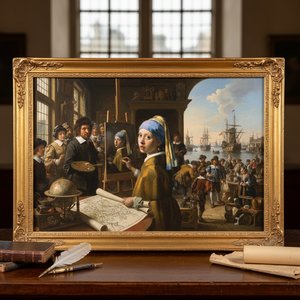
A Grand Symphony of Stone and Spirit: The Musée des Beaux-Arts de Bordeaux
To step into the Musée des Beaux-Arts de Bordeaux is to cross a threshold between the vibrant pulse of modern France and the gilded echoes of its royal past. Nestled within the magnificent Palais Rohan , the museum serves as much more than a mere repository for canvas and clay; it is an architectural masterpiece that breathes life into the art it protects. As one wanders through this baroque palace, the very walls seem to whisper tales of grandeur, from the opulent decorative schemes of the 18th century to the refined elegance of the Belle Équoia. The museum’s location within a UNESCO World Heritage Site ensures that every corridor offers a dialogue between the structural splendor of the building and the creative brilliance of the masterpieces housed within its halls.
The collection itself is a sweeping chronicle of European artistic evolution, offering a journey that spans from the meticulous precision of the 15th century to the emotive revolutions of the 20th. For the connoisseur, the museum provides an unparalleled opportunity to trace the stylistic metamorphosis of French painting, moving through the dramatic tension of Romanticism into the luminous, fleeting moments of Impressionism. The museum’s strength lies in its profound diversity; visitors can find themselves lost in the intricate realism of the Flemish Masters or captivated by the soulful depth of Dutch oil paintings. The presence of luminaries such as Rubens, Rembrandt, Vermeer, and Frans Hals creates a prestigious lineage of talent that allows for a deep contemplation of technique, light, and the human condition.
Beyond the classical masters, the museum offers a window into the more enigmatic and experimental realms of art history. The works of Odilon Redon , particularly his Symbolist explorations like The Green Death or Oannes , provide a dreamlike counterpoint to the more structured academic traditions. These pieces, characterized by their use of metaphor and surreal imagery, invite collectors and enthusiasts to explore the depths of the human psyche through color and form. This tension between the established tradition—exemplified by the rigorous standards of the Académie des Beaux-Arts —and the avant-garde spirit of movements like Fauvism or Symbolism is what gives the Bordeaux collection its unique, pulsating energy.
For the interior designer or the lover of fine aesthetics, the museum serves as an infinite source of inspiration. The interplay between the Art Deco design of the Galerie des Beaux-Arts and the baroque flourishes of the Palais Rohan demonstrates how historical layers can coexist to create a sophisticated atmosphere. Whether one is drawn to the monumental scale of religious Baroque works or the delicate, floral intimacy of early 20th-century portraits, the Musée des Beaux-Arts de Bordeaux stands as a beacon of cultural heritage. It is a place where history is not merely studied but felt, making it an essential pilgrimage for anyone seeking to understand the enduring power of the visual arts.