


A Sanctuary of Faith and Art: Unveiling the Vatican Pinacoteca
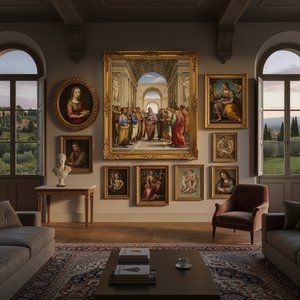
Nestled within the vast and awe-inspiring halls of the Vatican Museums – a space often overshadowed by the monumental grandeur of the Sistine Chapel – lies a gallery of profound beauty and quiet contemplation: the Pinacoteca Vaticana. More than simply an adjunct to this celebrated complex, it represents a deliberate pilgrimage through centuries of artistic achievement, primarily focused on the blossoming brilliance of the Italian Renaissance and its subsequent developments. Inaugurated in 1932, the Pinacoteca’s very existence speaks volumes about a fundamental shift in how art was understood – not merely as decorative embellishment or royal display, but as a potent vehicle for conveying devotion, narrating historical events with breathtaking detail, and ultimately, capturing the essence of human experience. Stepping through its doors is akin to entering a hushed realm where time seems to subtly slow, inviting intimate encounters with masterpieces crafted by some of history’s most revered artists – masters who wrestled with faith, power, and the very core of what it means to be human.
The building itself, designed by the understated elegance of Luca Beltrami, is a testament to thoughtful integration; it doesn't impose upon the surrounding papal palaces; instead, it seamlessly blends into their architectural fabric, creating an airy, light-filled environment perfectly suited for showcasing these sacred works. Every detail – from the soaring ceilings that draw the eye upwards to the meticulously restored walls – contributes to a palpable sense of reverence and tranquility, fostering contemplation of the beauty and significance held within each piece. The Pinacoteca’s story is inextricably linked to the spirit of papal patronage during the early 20th century. Founded by Pope Pius XI, it embodies a commitment to preserving artistic heritage and fostering cultural enrichment – a desire to safeguard and celebrate the legacy of those who had shaped Western art for generations.
Giotto's Vision: A Dawn of Narrative Art
At the heart of the Pinacoteca’s collection resides Giotto di Bondone’s *Stefaneschi Triptych* (c. 1313-1320), a work that marks a pivotal moment in artistic history. This isn't simply a painting; it’s a visual narrative, demonstrating a nascent understanding of perspective and storytelling that would fundamentally shape the era to come. Giotto’s figures possess a newfound weight and emotional resonance – they are no longer stylized icons but individuals grappling with profound human experience. Consider the masterful use of color: a deliberate choice to draw the viewer’s eye upwards toward Christ’s radiant visage, mirroring the spiritual aspiration inherent in the scene. The faces of St. Peter and Paul, rendered with startling vulnerability and sorrow, reflect the very essence of the human condition alongside divine grace. The triptych's composition – a carefully balanced arrangement of figures and drapery – further underscores Giotto’s mastery of artistic principles, solidifying his position as a pioneer who laid the groundwork for Western art. Notice how he abandons the flattened, symbolic figures of Byzantine art in favor of three-dimensional forms with expressive faces and gestures. The use of color is equally significant – vibrant hues are employed to draw attention to key elements within the scene, guiding the viewer’s eye through the complex composition.
Renaissance Brilliance: Raphael's Masterpieces
Moving beyond Giotto, the gallery unfolds into a breathtaking sequence of Renaissance masterpieces, culminating in the profound explorations of faith and beauty embodied by Raphael Sanzio. Raphael dominates this section of the Pinacoteca’s narrative. A master of composition, color, and idealized form, his works like *The Madonna of Foligno* (c. 1504-1506) and *The Transfiguration* (c. 1513-1520) exemplify an ability to imbue religious scenes with a profound sense of both human tenderness and divine grace. Raphael captures the very essence of faith in a way that is simultaneously beautiful and deeply moving, elevating the spiritual through sheer artistic skill. His meticulous attention to detail – from the delicate folds of drapery to the luminous skin tones – creates an illusion of palpable reality, despite its idealized nature. Observe how he skillfully employs light and shadow to sculpt form and convey emotion; this technique is particularly evident in *The Transfiguration*, where Christ’s radiant halo illuminates his face and body, symbolizing divine illumination and spiritual transcendence. Raphael's work demonstrates a remarkable ability to blend classical ideals with Christian iconography, creating images that are both timeless and deeply resonant.
Beyond the Masters: A Dialogue Across Time
Alongside Raphael’s devotional pieces, the Pinacoteca houses Leonardo da Vinci’s *Saint Jerome in the Wilderness* (c. 1473-1475), though unfinished, offers a tantalizing glimpse into the artist’s relentless pursuit of anatomical accuracy, dramatic lighting, and psychological depth – qualities that would become hallmarks of his enduring legacy. The painting’s haunting beauty and profound introspection continue to captivate viewers centuries later, hinting at the genius contained within its incomplete form. Da Vinci’s groundbreaking use of sfumato—a technique involving subtle gradations of tone—creates an ethereal atmosphere that envelops Saint Jerome, conveying a sense of contemplative solitude and spiritual yearning. In more recent decades, the Pinacoteca has broadened its scope to include works by modern masters who engaged with faith and spirituality in new, often challenging ways. This collection – featuring contributions from artists as diverse as Carlo Carrà, Giorgio de Chirico, Vincent van Gogh, Paul Gauguin, Marc Chagall, Paul Klee, Salvador Dalí, and Pablo Picasso – represents a surprising yet compelling counterpoint to the earlier pieces, prompting reflection on the enduring power of religious themes and the evolving language of art. It’s a testament to the Pinacoteca's commitment to showcasing the breadth and depth of artistic expression across centuries.