



A Sanctuary of Renaissance Spirit
In the golden heart of Florence, where the echoes of the Quattrocento still linger in the cobblestone streets, lies a sanctuary of profound spiritual and artistic significance: the Museo Nazionale di San Marco . This is not merely a repository for relics; it is a living chronicle of the Florentine Renaissance, a place where the boundaries between monastic devotion and humanistic innovation dissolve. Originally established as a Dominican monastery, this architectural jewel served as a crucible for the religious and political fervor of the 15th century. It was within these very walls that the charismatic friar Girolamo Savonarola delivered his thunderous sermons, challenging corruption and calling for a moral purification of the city. To walk through its ancient gates is to step into a world where art was never a mere decoration, but an essential vessel for faith, contemplation, and the social struggles that shaped the Florentine soul.
The architectural fabric of the complex is a testament to the genius of Michelozzo , the celebrated son of Donatello. With a profound understanding of the relationship between space and the human spirit, Michelozzo infused the monastery with the ideals of Renaissance humanism. He designed a space where light and geometry work in tandem to foster tranquility; the grand halls are bathed in a soft, natural radiance that flows through expansive windows, inviting the visitor into a state of quietude. Every element, from the meticulously planned cells—engineered for ergonomic prayer and solitary reflection—to the magnificent historical library, reflects a mastery of balance and harmony. The architecture does not merely house art; it provides a rhythmic, breathing environment that prepares the soul for the aesthetic and spiritual encounters found within its corridors.
The Luminous Legacy of Fra Angelico
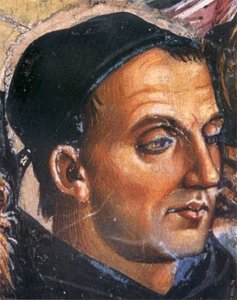
The true heartbeat of San Marco resides in its breathtaking collection of frescoes, most notably those by Fra Angelico , the master of light and divine grace. These works are far more than religious illustrations; they are luminous windows into the celestial realm. In masterpieces such as the Coronation of the Virgin , one witnesses a revolutionary use of chiaroscuro and composition that captures the very essence of spiritual ecstasy. The artist’s ability to manipulate light creates an illusion of depth and volume that was transformative for his era, pulling the viewer into a sacred narrative that feels both physically present and eternally transcendent. For the art lover or the collector of fine aesthetics, these frescoes represent the pinnacle of Early Renaissance technique, where every brushstroke serves to bridge the gap between the earthly and the divine.
Beyond the walls of the monastery, the legacy of this era is further enriched by works like the San Domenico Altarpiece , a profound meditation on faith and family. This tempera painting on panel reveals Fra Angelico's unique ability to fuse technical mastery with deeply felt spiritual conviction. For interior designers and connoisseurs of historical elegance, San Marco offers an unparalleled study in how art can define a space. The museum stands as a unique monument where the weight of history—the turbulent era of Savonarola and the intellectual rebirth of the Renaissance—meets the delicate beauty of monastic simplicity. It remains a place where the past and present converge, offering a profound lesson in how architecture and painting can coalesce to create an atmosphere of enduring peace and intellectual depth.


