



Origins and History of San Rocco
The history of San Rocco is rooted in the communal response to the shadows of the plague. Established in 1478, the Scuola Grande di San Rocco was founded by a confraternity dedicated to Saint Roch, the protector against disease. This institution was built to manifest the devotion of a community seeking resilience in an era of hardship. The site is situated immediately adjacent to the church of San Rocco, which houses the relics of the saint. Together, these structures form a center of spiritual and social significance in Venice, Italy.
The mission of the confraternity was deeply tied to social welfare. Rather than existing solely as a religious entity, the members focused on providing aid to those suffering from the afflictions that the patron saint was called to ward off. This commitment to charity remains a defining characteristic of the institution. While many similar organizations faded as the centuries passed, the Scuola Grande remains the only active scuola in the city, maintaining its original purpose and presence through the ages.
The Architecture of the Building
The structure follows a design similar to other scuole in Venice, organized around two primary levels. The building was constructed between 1489 and 1508, establishing a presence that has endured through centuries of Venetian history. While the core of the edifice belongs to the late 15th and early 16th centuries, the façade reflects a later period, having been designed by Bernardino Maccarucci between 1765 and 1771.
Inside, the layout is defined by two distinct halls. The lower level, known as the Sala Terra, features a nave and two aisles. Movement between the levels is facilitated by a stair with a landing surmounted by a dome, which leads the way to the upper storey. This vertical progression creates a sense of transition from the ground-level sanctuary to the more elevated spaces of the first floor.
The Tintoretto Collection
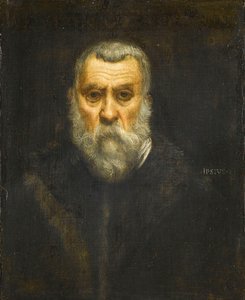
The upper hall contains sixty-two paintings by Jacopo Tintoretto, a collection widely regarded as one of the most significant cycles of work by a single artist in existence. Often called Il Furioso, the painter utilized a revolutionary technique of chiaroscuro to define these spaces. Figures emerge from deep, velvety shadows, caught in moments of intense psychological depth and spiritual ecstasy. The rapid, energetic movement of his brushwork captures the fleeting essence of human emotion, from suffering to compassion.
The scale of the work transforms the upper hall into a cinematic experience of biblical proportions. Light acts as a silent protagonist, filtering through arched windows to bathe the sacred spaces in an ethereal glow. This deliberate interplay of illumination and shadow prepares the viewer for the dramatic encounters found within the canvases. The way light dances across muscular forms and textured fabrics creates a visual presence that feels remarkably modern.
The cycle includes several significant compositions:
- The Miracle of the Loaves and Fishes
- The Adoration of the Shepherds
Masterpieces of the Collection
The presence of Jacopo Tintoretto dominates the space, particularly through his intense handling of light and shadow. In The Adoration of the Shepherds (about 1578), the shadows deepen to create a sense of sudden, divine intrusion. This dramatic tension is echoed in The Crucifixion (1565), where the composition focuses on the weight of the moment. Smaller, intimate details offer a different perspective on the life of the patron saint. St Roch in the Hospital (about 1549) and St Roch in Prison Visited by an Angel (about 1567) provide quiet, focused studies of suffering and spiritual visitation.
Other works within the halls offer a shift in style and era. Giovanni Antonio De Sacchis Oril Pordenone’s St Martin and St Christopher (about 1528) brings a different energy to the collection, predating the heavy Baroque influence seen in later additions. Later, in 1733, Sebastiano Ricci contributed St Francis of Paola Resuscitating a Dead Child, a work that reflects the evolving aesthetic of the eighteenth century. These paintings exist in their original setting, maintaining the atmosphere of the confraternity's sacred space.
- The Adoration of the Shepherds, 1578 - Jacopo Tintoretto
- The Crucifixion, 1565 - Jacopo Tintoretto
- St Roch in Prison Visited by an Angel (detail), about 1567 - Jacopo Tintoretto
- St Roch in the Hospital (detail), about 1549 - Jacopo Tintoretto
- St Martin and St Christopher, about 1528 - Giovanni Antonio De Sacchis Oril Pordenone
- St Francis of Paola Resuscitating a Dead Child, 1733 - Sebastiano Ricci


