Money-Back Guarantee · 100 days Free Worldwide Delivery
449,587artworks 30,613artists 4,660museums 32languages
Catalogue entry

The Studio Wall

1872. Oil On Canvas, 111.0 x 79.0 cm. Hamburger Kunsthalle.

Fig. 1. Adolph von Menzel, The Studio Wall, 1872. Shown as the reproduction you are specifying: , .

§ 1Catalogue data

Dimensions
111.0 x 79.0 cm

§ 2Abstract

Collectible Description

Admire Adolph Menzel's 'The Studio Wall' (1872). A captivating oil painting showcasing plaster casts, reflecting the artist’s unique realism and a glimpse into his creative world.

Artist Biography

Adolph von Menzel (1815-1905) was a leading German Realist painter, celebrated for his detailed depictions of 19th-century life & industrial scenes. Discover his masterpieces and influence on artists like Degas.

§ 3Commentary

The Studio Wall: A Window into Menzel’s Soul

Adolph von Menzel's "The Studio Wall," painted in 1872, isn’t merely a depiction of a cluttered artist’s workspace; it’s a profoundly layered meditation on mortality, memory, and the very nature of artistic creation. At first glance, it presents a seemingly simple scene: a red-walled studio bathed in the soft glow of lamplight, populated by an array of plaster casts – busts, torsos, even a dog – arranged with meticulous care. Yet, beneath this surface lies a complex tapestry of symbolism and emotional resonance, reflecting Menzel’s own life and artistic philosophy.

The painting emerged during a pivotal period in Menzel's career, following the death of his close friend and fellow artist, Friedrich Eggers. This loss profoundly impacted the artist, fueling a preoccupation with themes of transience and remembrance. The studio itself becomes a symbolic space – a repository of fragments, echoes of those who have passed, and a testament to the enduring power of artistic legacy. Menzel’s meticulous attention to detail, honed through decades of experience in lithography and painting, is immediately apparent; each cast is rendered with astonishing realism, capturing not just their physical form but also a sense of individual character.

A Symphony of Materials and Light

Menzel masterfully employs the techniques of oil on canvas to create an atmosphere of both intimacy and drama. The red wall serves as a dramatic backdrop, intensifying the effect of the lamplight that illuminates the plaster casts. This strategic use of light is crucial – it doesn’t simply illuminate; it seems to breathe life into the inanimate objects, suggesting a ghostly presence within the studio. The artist's choice of materials—the smooth, polished surfaces of the casts contrasting with the rough texture of the wall—further enhances the visual impact, creating a dynamic interplay between form and space.

Notably, Menzel’s approach to composition is unconventional for his time. Rather than presenting a traditional still life, he arranges the casts in a seemingly random yet carefully orchestrated manner. This deliberate asymmetry contributes to the painting's unsettling beauty, mirroring the fragmented nature of memory and the elusive quality of truth. The inclusion of figures like Dante and Schiller, alongside more contemporary portraits, suggests a blurring of temporal boundaries – past, present, and future converge within the confines of the studio.

Decoding the Symbols: Faces of Remembrance

The plaster casts themselves are laden with symbolic meaning. Each figure represents a facet of human experience—beauty, wisdom, mortality, love, loss. The inclusion of portraits of friends, family members, and even classical figures speaks to Menzel’s desire to create a memorial to those he held dear. The prominent placement of Friedrich Eggers' death mask is particularly poignant, suggesting that the artist was grappling with his own grief while simultaneously attempting to immortalize the memory of his friend through art.

Beyond individual portraits, the arrangement of the casts can be interpreted as a visual metaphor for the creative process itself. Like an artist assembling disparate elements into a cohesive whole, Menzel has brought together fragments of human experience—the tangible and the intangible—to create a work that transcends mere representation. The dog, often associated with loyalty and companionship, adds another layer of emotional depth to the composition.

A Timeless Reflection on Art and Life

"The Studio Wall" is more than just a painting; it’s an invitation to contemplate the complexities of human existence. Menzel's masterful use of light, color, and symbolism creates a work that is both visually stunning and emotionally resonant. It remains a powerful testament to the enduring legacy of art as a means of confronting mortality, preserving memory, and exploring the profound mysteries of the human soul. Reproductions capture this depth and detail beautifully, offering a window into Menzel’s world for generations to come.

Questions & Answers

How saturated is the palette of "The Studio Wall"?

"The Studio Wall" by Adolph von Menzel is recorded with a muted saturation.

What mood and emotion does "The Studio Wall" by Adolph von Menzel express?

The recorded mood of "The Studio Wall" by Adolph von Menzel is calm, and its emotional tone is reflective.

What color intensity does "The Studio Wall" by Adolph von Menzel have?

The colors in "The Studio Wall" by Adolph von Menzel have a monochromatic intensity.
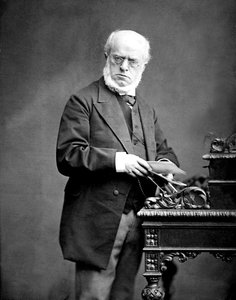
§ 4The artist

Adolph von Menzel

Adolph von Menzel

1815 - 1905, Poland

Quick facts about Adolph von Menzel

  • Full Name: Adolph Friedrich Erdmann von Menzel
  • Nationality: German
  • Date Of Birth: 1815
  • Date Of Death: 1905
  • Place Of Birth: Wrocław, Poland
  • Notable Artworks:
    • Iron Rolling Mill
    • Market-place at Verona
    • German Kanzelpredigt
  • Artistic Movement Or Style: Realism
  • Artists Or Movements Influenced By This Artist: ['Edgar Degas']

Artist Biography

A Life Etched in Realism: The World of Adolph von Menzel

Adolph Friedrich Erdmann von Menzel, a name synonymous with German Realism, was more than just a painter; he was a visual chronicler of 19th-century life. Born on December 8, 1815, in Breslau (now Wrocław, Poland), his journey began not amidst the hallowed halls of artistic academies, but within the practical world of his father’s lithographic workshop. This early immersion in reproduction and detail would profoundly shape his aesthetic sensibilities. Though initially intended for a professorial path by his father, young Adolph's passion for art proved undeniable, leading to brief studies at the Berlin Academy of Art in 1833 before embracing a largely self-taught approach. He quickly distinguished himself through meticulous draftsmanship and an uncanny ability to capture the essence of everyday scenes, initially through lithography, but soon expanding into painting and etching—media he would master with unparalleled skill. Menzel’s life was one dedicated to observation, to translating the world around him onto canvas and paper with a precision that bordered on photographic realism, yet always imbued with a subtle emotional depth.

From Historical Grandeur to Intimate Moments

Menzel's artistic output was remarkably diverse, spanning historical paintings, genre scenes, portraits, and landscapes. Early success came through his illustrations for historical works, notably those depicting the reign of Frederick the Great, showcasing a dedication to accuracy and narrative detail that resonated with a burgeoning national pride in Prussia. These large-scale compositions established him as a leading history painter, satisfying public demand for patriotic imagery during a period of significant political and social change. However, it was his later work—the seemingly unassuming genre paintings and intimate studies of modern life—that truly cemented his legacy. The Iron Rolling Mill, completed between 1872 and 1875, stands as a monumental achievement, not merely for its scale but for its unflinching depiction of industrial labor. It’s a scene teeming with energy and grit, capturing the raw power and human cost of the burgeoning Industrial Revolution. This wasn't romanticized industry; it was honest, visceral, and profoundly modern in its approach. Alongside grand historical narratives, Menzel found beauty and significance in quieter moments: a glimpse through a French window, a scene in a palace garden, or a simple portrait revealing character through subtle gestures and expressions.

Influences and Artistic Development

While largely self-taught, Menzel was not immune to artistic influences. He admired the Dutch Masters—their mastery of light and shadow, their ability to elevate everyday life to artful significance—and elements of this influence can be seen in his compositions and use of color. However, he forged a distinctly German path, rejecting the overt romanticism prevalent in some contemporary circles in favor of a more objective, analytical approach. His work resonated with French artists as well; Edgar Degas, famously, deeply admired Menzel’s skill, even copying his works and declaring him “the greatest living master.” This mutual respect highlights a shared commitment to realism and observation, despite differing national contexts. Menzel's development wasn't linear. He continually experimented with technique and subject matter, moving from the grand historical canvases of his early career to the more intimate and psychologically nuanced scenes that characterized his later work. His etching skills were particularly noteworthy, allowing for a level of detail and tonal range that further enhanced his realistic style.

Legacy and Historical Significance

Adolph von Menzel’s impact on German art is undeniable. He bridged the gap between traditional historical painting and modern realism, paving the way for future generations of artists to explore new subjects and techniques. His posthumous reputation rests not only on his paintings but also on his extensive graphic work—drawings and etchings that reveal a remarkable sensitivity and observational skill. He was knighted in 1898, becoming Adolph von Menzel, a recognition of his immense contribution to the cultural landscape of Germany. His influence extended beyond painting, impacting illustration and printmaking as well. Museums across Germany—the Museum Georg Schäfer and the Städtische Galerie im Lenbachhaus among them—proudly display his works, ensuring that his vision continues to inspire. Menzel’s art serves as a powerful reminder of the beauty and complexity inherent in everyday life, and his dedication to capturing reality with honesty and precision ensures his enduring place as one of the most important German artists of the 19th century. His work remains relevant today, offering insights into a pivotal period of social and industrial transformation, and reminding us of the power of art to illuminate the human condition.

§ 5Comparanda

§ 6Questions

Quick Facts

  • Artist: Adolph Menzel
  • Title: The Studio Wall
  • Medium: Oil on canvas
  • Notable elements: Plaster casts, red wall
  • Subject or theme: Studio scene, faces

Art Quiz

There is only one correct answer for each question.

Question 1:
What is the primary subject depicted in Adolph von Menzel’s ‘The Studio Wall’?
Question 2:
In what year was ‘The Studio Wall’ painted?
Question 3:
What artistic movement is ‘The Studio Wall’ most closely associated with?
Question 4:
According to the description, what is a key characteristic of the arrangement of objects in ‘The Studio Wall’?
Question 5:
What medium was primarily used by Adolph von Menzel to create ‘The Studio Wall’?

§ 7Cite this entry

AllPaintingsStore.com, “Adolph von Menzel, The Studio Wall (1872)”, https://allpaintingsstore.com/en/art/adolph-von-menzel-the-studio-wall-8XZRDF-en/ArtistReproduction/ (accessed 3 October 2026).

§ 8The reproduction

Hand Made Oil Reproduction

Hand-painted oil on canvas in your size and frame, made to order by our artists. ( Switch to Print Switch to Digital Image)

It is specified on the order sheet in the margin; the present state of that sheet reads as follows.

The Studio Wall

Reproduction Medium

Reproduction Size

-

Elite Senior Artist

More detail, finesse, and extra production time

-

Reproduction Frame

-

-

For artworks or reproductions larger than 105 cm (approximately 41 inches) on any side, the frame will be shipped as a kit, disassembled. This method ensures safe delivery and prevents damage during transport.

Professional assembly required - this is not a DIY product.
The kit must be assembled and the canvas stretched by an experienced professional framer, using wood glue (not supplied), a canvas stretching plier and clamps to hold the bars square while the glue dries. Incorrect assembly or uneven canvas tension can permanently damage the artwork and is not covered by our warranty.

  • All solid wood bars are included, precisely cut to size.

  • Assembled with the screws provided, plus wood glue for the corner joints, which is not supplied and must be sourced by your framer.

  • Professional tools are required and not included: a canvas stretching plier (tensioner) and clamps to hold the bars square while the glue dries.

Important:
The corner joints require wood glue, the bars must be held with clamps until the glue is fully dry, and tightening the canvas on the assembled frame requires a canvas stretching plier. None of these are included in the kit. Please arrange an experienced professional framer before ordering this size.

Nameplate

-

-

Protective Varnish

Glossy Varnish (enhances colors, protects against light/moisture)

-

Customize My Artwork

Examples of what can be changed: Replace face with customer photo; Add pet (e.g., replace cat with dog); Include hidden message in background; Change background landscape or elements.

-

Urgent

Worldwide Delivery () in 3/4 weeks instead of standard 5 weeks. (31 October). No compromise on quality.

-

Express Shipping

Worldwide Delivery () in 5 weeks. (7 November).

Included

Total Price

$ 258

Included with every order

  • Free Worldwide Express Shipping
  • High-Quality Linen Canvas
  • Full Shipping Insurance
  • Customs Tax Refund Guarantee
  • True Color Matching Guarantee
  • 100-Day Return Policy (Defects Only)
  • 100% Money-Back Guarantee
  • Bulk Discount Offer
Order sheet