


 Preview
 Send
Send Share
Share
 Details
 Guide
Guide

 Download
 Similars
 X-Ray
X-Ray Diaporama
 Q&A
Q&A Stats
StatsJean Alexandre

- 81.0 x 60.0 cm


 Read More
Get a print-ready file that goes far beyond the web preview. Every digital image we sell comes from a high-resolution master in our stock database — usually 5,000 to 15,000 pixels wide — so you can print large, crop tightly, or reproduce fine detail with confidence.
No file leaves our studio untouched. A digital expert checks the colors against the original painting and corrects them if needed, then improves clarity and detail with professional retouching tools — always staying faithful to the artist's brushwork and style. The result is an image that looks like the painting, not like a filtered scan.
You approve before you're done: our expert sends the image by e-mail within 72 hours for your review. Not satisfied? Ask for improvements or corrections, or request a refund if the quality falls short.
This is the quality relied on by publishers, design studios, galleries and print shops.
Digital Image
Download a high-resolution file for personal display, printing, and creative projects. ( Switch to Print Buy Hand Made Painting)
Included in Every Digital Image Order
Expert Digital Delivery, Guaranteed
When you choose AllPaintingsStore.com, you're not just getting an image - you're receiving a professionally enhanced digital artwork, crafted with precision and backed by a satisfaction guarantee. Here's everything that comes with your order, automatically:

Fast Email Delivery
Your high-resolution digital image file will be emailed to you within 72 hours of ordering - ready for immediate use.

AI-Enhanced Digital File
Your artwork is professionally optimized using advanced AI tools and manual editing, ensuring maximum detail, clarity, and color accuracy.

Free Lifetime Re-Delivery
Accidentally deleted or lost your file? No worries - we'll resend it to you anytime, free of charge.

No Import Fees - Ever
Enjoy your artwork instantly with zero customs, duties, or delivery fees - digital downloads are always tax-free.

Color Accuracy Guarantee
We ensure your digital image reflects the original colors as closely as possible using professional tools and color management.

100-Day Satisfaction Guarantee
If you're not satisfied with your digital image, we'll revise it or refund 100% within 100 days - no questions asked.

100% Money-Back Guarantee
Not satisfied? Get a full refund within 100 days of receiving your digital file - no questions asked.

Bulk Order Discounts
Buy 3 images, save 10% - Buy 5, save 15% - Buy 10+, save 20%. Great for creative projects, galleries, and agencies.
A Glimpse into Modern Contemplation: Modigliani’s ‘Jean Alexandre’
This captivating portrait, *Jean Alexandre*, painted in 1909 by Amedo Modigliani, offers a compelling window into the burgeoning artistic landscape of early 20th-century Paris. It's more than just a likeness; it’s an exploration of mood and psychological depth rendered with striking stylistic boldness.Subject & Composition
The artwork presents a close-up depiction of Jean Alexandre, a friend and art dealer who was instrumental in supporting Modigliani during his financially challenging years. The subject is seated, dominating the canvas with his presence. His hand rests thoughtfully against his head – a gesture immediately evocative of contemplation, weariness, or perhaps even quiet desperation. The composition deliberately minimizes background detail, focusing all attention on Alexandre’s face and upper body, intensifying the intimacy and emotional weight of the portrait.Style & Technique: Echoes of Expressionism
Modigliani's style in *Jean Alexandre* is firmly rooted in the emerging currents of Expressionism, though it retains a uniquely personal character. The lines are not precise or descriptive but rather expressive and gestural, defining features with bold strokes that convey emotion over anatomical accuracy. The forms are organic and simplified, eschewing rigid geometry for a more fluid, almost sculptural quality. Crucially, the application of paint is thick and textured – an *impasto* technique – creating a tactile surface that invites close inspection. Visible brushstrokes contribute to the artwork’s dynamism and sense of immediacy.Historical Context & Modigliani's Journey
Painted during a pivotal period in Modigliani’s artistic development, *Jean Alexandre* reflects his exposure to avant-garde movements in Paris after relocating from Italy in 1906. He was deeply influenced by artists like Pablo Picasso and Constantin Brâncuși, absorbing elements of Cubism and primitive sculpture while forging his own distinctive path. This period saw Modigliani experimenting with form and expression, moving away from traditional portraiture towards a more psychologically charged representation of the human figure. His early works, including this one, demonstrate a search for a visual language that could convey inner states rather than merely external appearances.Symbolism & Emotional Resonance
The pose adopted by Alexandre – head in hand – is laden with symbolic weight. It suggests introspection, melancholy, or perhaps the burden of thought. While not overtly dramatic, the painting exudes a quiet intensity. The muted color palette and expressive brushwork contribute to this mood, creating an atmosphere of subdued emotion. The artwork doesn’t tell us what Alexandre is thinking; it invites us to contemplate his inner world alongside him.Impact & Considerations for Collectors/Designers
*Jean Alexandre* exemplifies Modigliani's ability to imbue portraiture with a profound sense of psychological depth. Its expressive style and intimate scale make it a compelling focal point in any collection. For interior designers, the painting’s muted tones and textured surface offer versatility – it would complement both modern and traditional settings, adding a touch of sophisticated introspection. The artwork's emotional resonance ensures it will spark conversation and contemplation for years to come. Its size (81 x 60 cm) makes it suitable for a variety of spaces, from intimate studies to larger living areas.Questions & Answers
What does "Jean Alexandre" by Amedeo Clemente Modigliani bring to an interior?
The nostalgic atmosphere of "Jean Alexandre" by Amedeo Clemente Modigliani matches its recommended space: a living room.
From which era does "Jean Alexandre" date?
"Jean Alexandre" belongs to the Modern era.
Where and for what purpose is "Jean Alexandre" recommended?
"Jean Alexandre" is suggested for focal, and the recommended space is a living room.
Related Artworks


Artist Biography
Early Life, Family and Training
Amedeo Clemente Modigliani was born on July 12, 1884, in the port city of Livorno, Italy. He was the fourth child of Flaminio Modigliani, a merchant, and Eugénie Garsin. His family's fortunes were tied to the shifting economic tides of the time, and a sudden downturn in the price of metals led to a period of financial difficulty for his father. Legend suggests that the family's most precious belongings were piled onto the bed where Eugénie lay in labor, protecting them from creditors who arrived just as the child was born. His mother was a highly intelligent and resourceful woman who played a significant part in his early years.
Health was a constant struggle for the young boy. He faced serious illness from a very early age, including a bout of pleurisy at age 11 and typhoid fever at 14. These physical challenges often forced him to pause his studies or seek periods of recovery. Despite these setbacks, his interest in visual expression grew. In 1898, he began to study drawing and painting at a local artist's studio. This early training provided the foundation for a formal education that would take him across Italy.
His formal training became more structured as he entered his teenage years. In 1902, he enrolled in courses at the Academy of Fine Arts in Florence. Seeking to expand his technical skills, he moved on to continue his studies at the Academy in Venice the following year. These years of study in Florence and Venice helped shape the fundamental understanding of form that he would carry with him when he eventually left Italy.
The Move to Paris and Artistic Development
In 1906, the pull of Paris became too strong to resist. Modigliani arrived in the city and settled in Montmartre, renting a studio on rue Caulaincourt. This was a time of intense connection and discovery. He found himself part of the École de Paris, moving through a landscape of new ideas and faces. In 1907, he met the German Expressionist painter Ludwig Meidner, and his social circle continued to expand through encounters with the writer Blaise Cendrars and the critic Adolphe Basler. These meetings were part of a life lived in the heart of a changing art scene.
His artistic path was shaped by the people he shared space and ideas with. He became close friends with the Romanian sculptor Constantin Brâncuși, a relationship that would influence his own approach to form. In 1907, he also attended the Paul Gauguin retrospective at the Salon d'Automne, an event that left a mark on his developing vision. While he experimented with different mediums, his time in Paris was defined by this constant search for a way to express the human spirit through line and shape.
Patrons, Workshop and Commissions
Life in Paris was often a struggle for stability. By 1908, Modigliani was living in a group of artists' studios at 7, rue du Delta in Montparnasse. It was a modest existence, shared with others navigating the same bohemian uncertainty. During these early years, Paul Alexandre became a close friend and a vital source of support. Alexandre did more than offer companionship; he acted as a patron, providing a sense of footing while Modigliani found his way through the city's intense artistic circles.
As the years passed, the nature of his support shifted. In 1914, Paul Guillaume began to purchase his work, a move that encouraged him to return to painting after a period focused on sculpture. However, the onset of war brought new financial pressures. When his stipend from Italy ceased because of the conflict, Leopold Zborowski stepped in. By 1916, Zborowski had become his patron and dealer, providing a necessary daily allowance that helped him sustain his practice during some of his most difficult times.
Technique and Style
Modigliani was a rare talent who moved with ease between three different media: painting, sculpture, and drawing. His approach to the human form was never about strict realism. Instead, he sought a modern way to capture the essence of his subjects through a surreal elongation of faces, necks, and figures. This stretching of the silhouette gave his work a rhythmic, almost musical quality. In his portraits of women, this style often manifested in almond-shaped eyes that seemed to look inward rather than at the viewer. He stripped away the unnecessary, focusing on the essential lines that defined a person's presence.
His visual language was a quiet conversation between different eras and cultures. He drew strength from the archaic grace of Greek sculpture and the simplified, powerful shapes of African masks. At the same time, he remained deeply connected to the traditions of his youth, finding inspiration in the works of the Italian Renaissance masters. This blend of the ancient and the modern allowed him to create nudes and portraits that felt both grounded and otherworldly. He did not merely paint a likeness; he used line and form to reach for a deeper psychological truth.
- Portrait of Jeanne Hebuterne, 1918
- Portrait of Moise Kisling, 1915
- Chaim Soutine, 1916
Circle, Rivals and Pupils
Life in the bohemian quarters of Paris meant Modigliani was never truly alone. He moved through a social landscape of poets and painters who shared his restless energy. He found a kindred spirit in the poet Guillaume Apollinaire, and his circle included the artist Juan Gris. These connections were more than mere acquaintances; they were the threads that held the community together. He also shared close ties with the artist Pablo Picasso and the English painter Nina Hamnett, who would often purchase his drawings for small sums. Even the artist Maurice Utrillo was part of this interconnected world, a fellow traveler in the studios of Montmartre.
His friendships often crossed the boundaries of art and literature. He was romantically involved with the poet Beatrice Hastings, a relationship that added to the complexity of his daily existence. In the studio, he took a younger artist, Chaim Soutine, under his wing. The two men rented a space together in 1916 at the Cité Falguière, working side by side. Modigliani saw a specific talent in Soutine, even telling a mutual friend that he was leaving a man of genius behind. This mentorship was a quiet, steady presence amidst the more turbulent aspects of his life.
Later Years and Death
In 1917, Modigliani met Jeanne Hébuterne, a young art student who would become the central figure in his life. Their connection was deep and intense, providing a sense of stability amidst his ongoing struggles. Much of 1918 was spent in the South of France, where he worked alongside the Zborowskis. This period proved to be a productive time for his output, even as his physical health continued to decline.
The end came quickly in Paris. On January 24, 1920, Modigliani died at the age of 35 from tubercular meningitis. The loss was devastating for Jeanne. Only one day after his death, she took her own life. The two remain buried together in the Père Lachaise Cemetery in Paris.
Where to See the Works Today
To encounter the physical presence of his work, one must travel to several major institutions across the globe. In the United States, the Metropolitan Museum of Art in New York holds significant pieces, including a portrait of Jeanne Hebuterne from 1918. The Art Institute of Chicago also maintains a presence in his legacy, housing works such as Madame Pompadour from 1914. These collections allow viewers to see the specific way he handled color and form in person.
The reach of his art extends far beyond North America. In London, the Tate Gallery preserves his output, while the Musée d'Art Moderne de la Ville de Paris holds works that reflect his time in the French capital. His influence is felt in the Southern Hemisphere as well, with the Museu de Arte in São Paulo and the National Gallery of Victoria in Melbourne both keeping his paintings and sculptures in their permanent collections. These various locations ensure that his specific, elongated vision remains accessible to a global audience.
- Portrait of Jeanne Hebuterne, 1918
- Madame Pompadour, 1914
- Portrait of Juan Gris, 1915
- Victoria, 1916
- Chaim Soutine, 1916
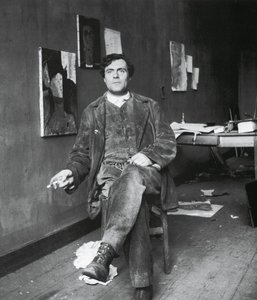
Amedeo Clemente Modigliani
1884 - 1920 , Italy
Quick Facts
- Artistic Movement Or Style: Expressionism
- Artists Or Movements Influenced By This Artist: ['Expressionism']
- Artists Who Influenced This Artist:
- Pablo Picasso
- Constantin Brâncuși
- Full Name: Amedeo Clemente Modigliani
- Nationality: Italian
- Notable Artworks:
- Nude Bust
- Reclining Nude with Loose Hair
- Seated Female Nude
- Portrait of Jeanne Hebuterne
- Place Of Birth: Livorno, Italy
- Date Of Birth: 1884
- Date Of Death: 1920