


 Preview
 Send
Send Share
Share
 Details
 Guide
Guide

 Download
 Similars
 X-Ray
X-Ray Diaporama
 Q&A
Q&A Stats
StatsMick Jagger


 Read More
The artwork displayed on this page is protected by copyright law, which means we cannot legally create or sell an identical reproduction. This protection is enforced under international agreements such as the Berne Convention and by national laws, including those outlined by the U.S. Copyright Law - Title 17.
This method fully complies with copyright regulations because it does not involve copying or duplicating the protected artwork. Instead, it is a creative reinterpretation - a new painting that is influenced by the original but not identical to it.
Giclée / Art Print
Museum-quality giclée or canvas print with fast production and flexible finish options. ( Buy Hand Made Painting Switch to Digital Image)




P118B $10

P118H $10

P118W $10

P438Z $10

P508JH $12

P508YH $12

P805H $10

P805Z $10

P919BZ $10

P919G $10

P919XJ $10

P959ZH $10

P968JZ $12

W106C $8

W218G $10

W218JH $8

W218Y $10

W307PJ $10

W316G $10

W316PJ $8

W316Y $10

W398PJ $8

W4111J $10

W500HY $15

W500JH $15

W692G $12

W849H $8

W940BG $15

W953PJ $8




Pick from our preset sizes that match the artwork's original proportions.

Type the width and the height you need, to fit your frame or your wall. A print can only be cut, never made bigger than the picture, so a size with a different shape loses a part of the image. We send you a digital mockup to approve before we print anything. The picture shown on this page does not show the real cut — only the mockup does.
Worldwide Delivery () in 2 weeks instead of standard 4/5 weeks. (12 November)

Free Worldwide Express Shipping

High-Quality Linen Canvas

Full Shipping Insurance

Customs Tax Refund Guarantee

True Color Matching Guarantee

100-Day Return Policy (Defects Only)

100% Money-Back Guarantee

Bulk Discount Offer
 Glass option is only available in size under 110 CM

Mick Jagger
Giclée / Art Print
Reproduction Size
-


Total Price
$ 65
Introduction to Pop Art and Andy Warhol
Pop art is an art movement that emerged in the United Kingdom and the United States during the mid- to late-1950s. The movement presented a challenge to traditions of fine art by including imagery from popular and mass culture, such as advertising, comic books and mundane mass-produced objects. One of its aims is to use images of popular culture in art, emphasizing the banal or kitschy elements of any culture, most often through the use of irony. It is also associated with the artists' use of mechanical means of reproduction or rendering techniques. In pop art, material is sometimes visually removed from its known context, isolated, or combined with unrelated material. Andy Warhol, one of the most famous pop artists, was an American artist who was a leading figure in the visual art movement known as pop art. His works explore the relationship between artistic expression, advertising, and celebrity culture that flourished by the 1960s, and span a variety of media, including painting, silkscreening, photography, film, and sculpture.Andy Warhol's 'Mick Jagger'
Andy Warhol: Mick Jagger is a pop art style painting that was created by Andy Warhol in 1975. The painting features the lead singer of the rock and roll band Rolling Stones, Mick Jagger. Warhol loved Jagger’s ‘bad boy’ image and was commissioned to create the album cover art for the Rolling Stones. The painting is an oil on canvas and measures 81 x 61 cm. It is currently held in a private collection, but it has been exhibited in various museums and galleries around the world, including the Museum Ludwig Cologne (Germany) and Tehran Museum of Contemporary Art (Iran). The painting is a representation of Jagger's face, with bright colors and bold lines. Warhol used his signature style of repetition and exaggeration to create an image that is both iconic and thought-provoking. The use of oil paint on canvas gives the painting a sense of depth and texture, making it a striking example of pop art.Conclusion
Andy Warhol's 'Mick Jagger' is a prime example of pop art and its exploration of popular culture and celebrity. The use of bright colors and bold lines creates an image that is both iconic and thought-provoking, while the use of oil paint on canvas gives the painting a sense of depth and texture. This painting is a must-see for any fan of pop art or the Rolling Stones, and it is a valuable addition to any art collection. Museum Ludwig Cologne, Tehran Museum of Contemporary Art and AllPaintingsStore.com are great resources for learning more about this painting and other works by Andy Warhol. Note: This article is a work of art analysis, it's not intended to be used as a source of financial or investment advice. The value of an artwork can change over time and it's influenced by many factors such as the artist's reputation, the condition of the piece, and the market demand.Questions & Answers
From which era does "Mick Jagger" date?
The historical period of "Mick Jagger" by Andy Warhol is Modern. This classification situates the work in art history.
What national origin stands behind the Pop Art of "Mick Jagger"?
"Mick Jagger" connects the Pop Art movement with United States through its creator's birthplace.
What is "Mick Jagger" made with, and in which style?
In "Mick Jagger", the acrylic on canvas technique meets the Pop Art movement.
Related Artworks


Artist Biography
The Early Life of Andy Warhol
To understand the mechanics of the modern image, one must look back to the industrial grit of Pittsburgh, Pennsylvania. Andy Warhol was born Andrew Warhola Jr. on August 6, 1928, into a working-class environment that lacked any pretense of high culture. He was the youngest of three sons, born to Andrej Warhola and Julia Zavacky Warhola. His parents were immigrants from the European region that is now Slovakia, a background that anchored him in a specific, unvarnished American reality. This lineage provided the foundational tension between the immigrant experience and the consumerist explosion he would later document.
The stability of his early years was cut short by the realities of industrial labor and disease. His father worked in a coal mine, a job that defined the family's economic landscape until his death in 1942 from tubercular peritonitis. This loss occurred when Warhol was only fourteen, a period that stripped away the domestic security of his youth. The household was shaped by the harshness of the Pittsburgh landscape and the sudden absence of a primary provider. These early years were not a prelude to fame, but a period of stark, material necessity.
Childhood Illness and Early Creativity
The visual language that would eventually define a century began with the forced stillness of a sickroom. A childhood bout with Sydenham's chorea, also known as St. Vitus’ Dance, kept him indoors for long stretches. This confinement was not a void; it was a period of intense, focused observation. He spent these days drawing and constructing scrapbooks from Hollywood magazines, absorbing the glossy, manufactured faces of a distant celebrity culture. His mother provided the essential raw material: comic books and movie magazines. These were the first images he learned to decode, establishing a preference for the mass-produced over the unique.
This early immersion in printed media created a specific way of seeing. He did not look at the world through classical lenses but through the saturated, repetitive imagery of the magazine page. His fascination with the camera emerged alongside this visual training. He enjoyed using the family's Kodak Baby Brownie Special camera to capture his surroundings. This interest was taken seriously by his family; his father and brothers built a darkroom in the basement for him. This setup allowed him to move from mere observation to the technical manipulation of images, a skill that would later underpin his entire approach to reproduction.
Formal Training and Commercial Success
Warhol’s transition from a student to a professional was driven by a technical precision learned through formal education. After attending Holmes Elementary School and Schenley High School, he moved into higher studies at the Carnegie Institute of Technology. He graduated in 1949 with a Bachelor of Fine Art in Pictorial Design. This specific training provided the structural foundation for a career that would eventually dismantle the distinction between high art and commercial imagery. He moved to New York City in 1949, carrying the discipline of a designer into the competitive landscape of Manhattan.
His early professional years were defined by high-stakes commercial illustration. He did not start by challenging the status quo; he mastered it. Working for major names like Tiffany & Co., Vogue, and Harper's Bazaar, he learned how brands manufacture desire. His client list was a map of mid-century American consumption, including The New York Times, I. Miller Shoes, Bonavit Teller, Columbia Records, Fleming-Joffe, and NBC. This period of service was not a detour. It was a rigorous apprenticeship in the mechanics of mass distribution and visual branding. He understood the lifecycle of a product before he ever attempted to deconstruct it on a canvas.
The Rise of Pop Art and The Factory
By the 1960s, the shift from illustrating products to treating the products themselves as subjects changed everything. Warhol stopped drawing the brand and started presenting the object. He adopted the silkscreen printing process to mirror the repetitive nature of consumer culture, a method that stripped away the traditional hand of the artist in favor of a mechanical aesthetic. This wasn't about craft; it was about the logic of the assembly line applied to the canvas.
His studio, known as The Factory, functioned as a central point for a specific New York social circle. It was a hub for avant-garde experimentation that pulled together drag queens, poets, bohemians, musicians, and wealthy patrons. This space blurred the lines between private life and public persona, creating a controlled environment where culture was manufactured alongside the art. Between 1963 and 1968, he expanded this experimentation into film, producing over 600 works that challenged how audiences consumed moving images.
- Marilyn Diptych (1962)
- Campbell's soup cans (1962)
- Triple Elvis (1963)
Themes of Consumerism and Celebrity
Warhol’s fascination with the pervasive influence of celebrity culture on American society was not a passive observation; it was a dissection of how fame is manufactured and consumed. He understood that a person could be turned into a product through repetition and media saturation. This logic applied equally to the supermarket shelf and the silver screen. By treating the faces of stars like Marilyn Monroe and Elizabeth Taylor with the same mechanical detachment used for commercial goods, he exposed the artificiality of the public persona. He did not merely paint people; he documented the construction of the modern idol.
This obsession with the repetitive nature of consumption extended into the mundane. His depictions of Campbell’s Soup Cans from 1962 turned everyday objects into subjects of high art, mirroring the mass-produced reality of the mid-century American experience. He saw the supermarket as a landscape as significant as any gallery. However, his gaze was not always bright or colorful. He also interrogated the darker, more violent facets of the American experience, producing series that focused on car crashes and electric chairs. These works stripped away the glamour of the media age to reveal the grim reality of the sensationalism that drives public attention.
His influence even bled into the music industry through his management of the rock band The Velvet Underground. This connection further blurred the lines between high art and the gritty, underground pulse of popular culture. He was interested in the way everything—from a soup can to a rock star—could be packaged, branded, and sold to the masses.
- Campbell's Soup Cans (1962)
- Marilyn Diptych (1962)
Technique and Artistic Methods
Warhol’s impact stems from his deliberate rejection of the traditional artist's hand. He embraced the silkscreen printing process to achieve a flattened, mechanical aesthetic that mirrored the mass production of the consumer goods he depicted. This method allowed for a detachment from manual brushwork, favoring a repetitive, industrial look. In his earlier work, he utilized the 'blotted line' technique, a method that emphasized the graphic quality of his drawings. His approach was never about the singular touch of a creator, but about the efficiency of the machine.
His experimentation extended into the temporal realm through film. He utilized long, unblinking takes in works like Sleep and Empire to challenge how an audience consumes moving images. These static, extended durations forced a confrontation with the medium itself. He also moved through various photographic and cinematic methods, including 35 mm photography and single-frame cinematography. He frequently used a Polaroid Big Shot to capture his subjects, a practice that informed his visual language of immediacy and repetition.
- Sleep (1963)
- Empire (1964)
The Attempted Assassination and Later Career
The trajectory of Warhol's career shifted permanently in 1968 when Valerie Solanas entered his Manhattan studio and shot him. This violent intrusion did more than leave lasting physical injuries; it fundamentally altered the mechanics of his operation. The chaotic, social energy of the early Factory era hardened into a more structured, business-oriented enterprise. He moved away from the unpredictable fringes of the underground and toward a more calculated management of his own brand and media presence.
His later years were defined by an aggressive expansion into publishing and television. He founded Interview magazine, a publication that focused on the intersection of film, fashion, and popular culture. This move mirrored his lifelong obsession with the mechanics of fame. He also moved into the living rooms of the public through television shows, including Andy Warhol's TV (1980–83) and Andy Warhol's Fifteen Minutes (1985–87). These projects were not mere diversions; they were extensions of his interest in how images are consumed and broadcast.
Even as he solidified his commercial standing, he maintained a connection to the emerging avant-garde through significant collaborations. He worked alongside young artists Jean-Michel Basquiat and Keith Haring, bridging the gap between his established Pop Art legacy and the next generation of visual expression. This period proved that his influence was not a static relic of the 1960s, but a continuous, evolving force in the media landscape.
The Final Years and Death
By the end of his life, Warhol had long since abandoned the singular identity of a painter. He had become a multi-media entity, moving through photography, publishing, and television with the same mechanical efficiency he once applied to silkscreening. This expansion was not a departure from his interests but a logical progression of his obsession with the image. He was no longer just making art; he was managing a brand that occupied every available screen and page.
The end came abruptly in New York City. Following surgery to remove his gall bladder, he died on February 22, 1987. The cause was cardiac arrhythmia. He was 58 years old. His death marked the conclusion of a career that had successfully merged the high-brow gallery with the mass-produced reality of the supermarket shelf and the television screen.
- Beethoven (1987)
- Last Supper paintings (1986/1987)
The Enduring Legacy of Warhol
Warhol remains the most important artist of the second half of the 20th century. He did not merely observe the media age; he interrogated the very nature of what it means to be seen within it. By turning the repetitive textures of consumerism into a visual language, he predicted a reality defined by digital saturation and constant visibility. He is the man who popularized the expression "15 minutes of fame," a concept that has transitioned from a prediction to a fundamental rule of modern existence. His work anticipated the way celebrity and commodity become indistinguishable in a hyper-connected society.
The market recognizes his influence through sheer economic weight. He has been described as the bellwether of the art market, a figure whose output dictates the direction of high-stakes collecting. His ability to bridge the gap between the supermarket shelf and the gallery wall changed how value is assigned to imagery. He moved art away from the internal soul and toward the external, mass-produced object. This shift ensured that his presence would be felt in every corner of contemporary visual culture, from high-end auctions to the filtered aesthetics of social media.
- Marilyn Diptych (1962)
- Campbell's soup cans (1962)
- Mao (1972–73)
- Shot Sage Blue Marilyn (1964)
Where to See His Works Today
To encounter the physical reality of his output, one must look to the institutions that preserved his presence. The Andy Warhol Museum in Pittsburgh holds the most significant concentration of his work, standing as the largest museum in the United States dedicated to a single artist. It remains the primary site for those seeking to understand the scale of his production. Beyond the American landscape, his influence is anchored in major international collections. The Tate Modern in London and the Museum of Modern Art in New York City each hold two works, providing essential touchpoints for the study of his visual language. In Europe, the Lentos Kunstmuseum Linz also maintains two pieces in its collection.
These collections offer more than mere viewing; they provide the specific context of his engagement with mass media and celebrity. Seeing his work in these settings allows for a direct confrontation with the mechanical textures he utilized to mirror consumer culture. The presence of his imagery in such diverse geographic locations confirms the reach of his aesthetic. His work exists in these spaces as a record of a specific, media-saturated era.
- Marilyn Diptych
- Campbell's soup cans
- Mao
- Elvis Presley
- Mick Jagger
- Superman
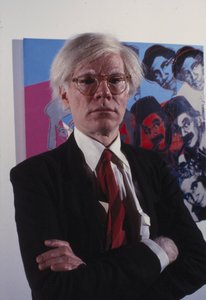
Andy Warhol
1928 - 1987 , United States
Quick Facts
- Artistic Movement Or Style: Pop Art
- Artists Or Movements Influenced By This Artist: ['Pop Art']
- Full Name: Andrew Warhola Jr.
- Nationality: American
- Notable Artworks:
- Marilyn Diptych
- Campbell's soup cans
- Triple Elvis
- Mao
- Place Of Birth: Pittsburgh, United States of America
- Date Of Birth: 1928
- Date Of Death: 1987
Related Articles

Pop Art Icon: The Top 25 Andy Warhol Artworks You Must Know
Explore 25 iconic Andy Warhol masterpieces and the Pop Art revolution. Discover the full collection online at AllPaintingsStore.com.

Bold & Iconic: A Definitive Guide to the Vibrant World of Pop Art Masterpieces
Dive into the vibrant world of Pop Art. Explore iconic masterpieces from Warhol to Haring, discover how bold colors and mass media redefined art history, and learn to curate high-impact, colorful pieces for your modern home collection.

Giclée Prints: Archival Quality & Aesthetic Nuances for the Discerning Collector
Explore the world of giclée prints with AllPaintingsStore. Learn about archival quality, aesthetic nuances & investment potential. Expert guidance for discerning art collectors seeking museum-quality reproductions and lasting value.
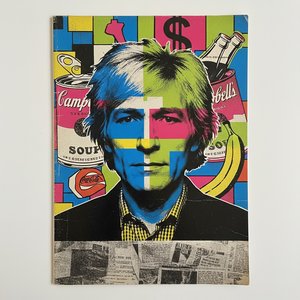
Andy Warhol: Deconstructing Pop Culture & Redefining Artistic Expression
Explore the revolutionary art of Andy Warhol & the Pop Art movement. Discover his iconic techniques, cultural impact, and investment potential. A guide for discerning collectors.

Pop Art Icons: 10 Masterpieces That Revolutionized Modern Decor |
Explore 10 defining Pop Art masterpieces – from Warhol’s iconic Marilyn to Lichtenstein's bold dots. Discover the stories behind these revolutionary artworks & find museum-quality reproductions for your home at .


