


 Preview
 Send
Send Share
Share
 Details
 Guide
Guide

 Download
 Similars
 X-Ray
X-Ray Diaporama
 Q&A
Q&A Stats
StatsSkull


 Read More
Get a print-ready file that goes far beyond the web preview. Every digital image we sell comes from a high-resolution master in our stock database — usually 5,000 to 15,000 pixels wide — so you can print large, crop tightly, or reproduce fine detail with confidence.
No file leaves our studio untouched. A digital expert checks the colors against the original painting and corrects them if needed, then improves clarity and detail with professional retouching tools — always staying faithful to the artist's brushwork and style. The result is an image that looks like the painting, not like a filtered scan.
You approve before you're done: our expert sends the image by e-mail within 72 hours for your review. Not satisfied? Ask for improvements or corrections, or request a refund if the quality falls short.
This is the quality relied on by publishers, design studios, galleries and print shops.
Digital Image
Download a high-resolution file for personal display, printing, and creative projects. ( Switch to Print Buy Hand Made Painting)
Included in Every Digital Image Order
Expert Digital Delivery, Guaranteed
When you choose AllPaintingsStore.com, you're not just getting an image - you're receiving a professionally enhanced digital artwork, crafted with precision and backed by a satisfaction guarantee. Here's everything that comes with your order, automatically:

Fast Email Delivery
Your high-resolution digital image file will be emailed to you within 72 hours of ordering - ready for immediate use.

AI-Enhanced Digital File
Your artwork is professionally optimized using advanced AI tools and manual editing, ensuring maximum detail, clarity, and color accuracy.

Free Lifetime Re-Delivery
Accidentally deleted or lost your file? No worries - we'll resend it to you anytime, free of charge.

No Import Fees - Ever
Enjoy your artwork instantly with zero customs, duties, or delivery fees - digital downloads are always tax-free.

Color Accuracy Guarantee
We ensure your digital image reflects the original colors as closely as possible using professional tools and color management.

100-Day Satisfaction Guarantee
If you're not satisfied with your digital image, we'll revise it or refund 100% within 100 days - no questions asked.

100% Money-Back Guarantee
Not satisfied? Get a full refund within 100 days of receiving your digital file - no questions asked.

Bulk Order Discounts
Buy 3 images, save 10% - Buy 5, save 15% - Buy 10+, save 20%. Great for creative projects, galleries, and agencies.
A Haunting Encounter with Pop Art Iconography
In the vast landscape of twentieth-century art, few images possess the immediate, visceral impact of Andy Warhol’s “Skull.” Created in 1965, this masterpiece serves as a profound meditation on the intersection of mortality and mass media. At first glance, the viewer is met with an arresting, high-contrast composition: a stark, vibrant yellow background that radiates with an almost artificial intensity, framing a skull rendered in muted, ghostly greens. This deliberate use of color does not merely decorate the canvas; it creates a psychological tension, pulling the eye toward the central, hollowed form. The presence of a concentric yellow circle enveloping the skull acts as a visual halo, transforming a grim symbol of death into a piece of modern iconography that feels both sacred and commercial.
The brilliance of this work lies in its ability to bridge the gap between the macabre and the mundane. Warhol, a master of the Pop Art movement, utilized the silkscreen printing technique to strip away the traditional layers of painterly depth, opting instead for a deliberate flatness. This mechanical approach was revolutionary, as it mimicked the aesthetics of mass production and advertising. By utilizing stencils to achieve consistent color saturation, Warhol challenged the very notion of the "unique" art object, suggesting that even our most profound fears—such as death—are subject to the repetitive, glossy consumption of popular culture. For the collector or interior designer, this technique offers a graphic clarity that allows the artwork to command attention in any modern setting, acting as a bold focal point that balances heavy symbolism with clean, contemporary lines.
The Echoes of an Era: Context and Emotional Resonance
To understand “Skull,” one must look beyond the pigment to the turbulent atmosphere of mid-sixties America. The piece emerged from a period defined by profound social anxiety, marked by the shadows of the Vietnam War and the intense struggles of the civil rights movement. In this climate, the skull became more than just a biological remnant; it was a universal emblem of the pervasive fear of mortality that gripped the collective psyche. Warhol’s genius was in his ability to take this heavy, existential dread and recontextualize it through the lens of celebrity and repetition. He transformed the memento mori—the traditional artistic reminder of death—into something that feels as ubiquitous and inescapable as a magazine advertisement.
For those seeking to integrate such a piece into a curated space, “Skull” offers an unparalleled emotional depth. It is a work that invites contemplation, prompting the viewer to reflect on the fleeting nature of life amidst the noise of modern existence. Whether placed in a minimalist gallery-style living room or a sophisticated studio, the painting provides a sophisticated dialogue between color and concept. It does not merely decorate a wall; it anchors a room with its historical weight and striking visual rhythm, making it an essential acquisition for anyone captivated by the enduring legacy of Andy Warhol and the transformative power of Pop Art.
Questions & Answers
Can I preview "Skull" by Andy Warhol before ordering?
To preview a reproduction of "Skull" by Andy Warhol, open the artwork's Preview page.
What is the perceived brightness of "Skull" by Andy Warhol?
In terms of perceived brightness, "Skull" by Andy Warhol is bright.
What palette and what feeling does "Skull" combine?
The neutrals palette of "Skull" by Andy Warhol goes together with its dramatic emotional tone. Color is one of the ways a work conveys feeling.
Related Artworks


Artist Biography
The Industrial Roots of a Visual Language
Born Andrew Warhola Jr. in 1928 within the industrial landscape of Pittsburgh, Pennsylvania, the man who would become Andy Warhol spent much of his early years shaped by confinement and quiet observation. A childhood bout with Sydenham's chorea, or St. Vitus’ Dance, kept him indoors for long stretches. During these periods, he turned to the imagery provided by his mother: comic books and movie magazines. These were the first seeds of a visual vocabulary that would later embrace the mass-produced. He eventually moved toward formal training at the Carnegie Institute of Technology, earning a degree in Pictorial Design in 1949.
His arrival in New York City marked a transition from the private world of sketches to the public sphere of commercial illustration. Working for names such as Tiffany & Co., Vogue, and Harper's Bazaar, he mastered the precision required by advertising. This period of professional service instilled in him an understanding of how images are manufactured and distributed. He learned the mechanics of the brand before he ever attempted to deconstruct it.
The Factory and the Mechanics of Fame
By the 1960s, his focus shifted from illustrating products to treating the products themselves as subjects. Through the adoption of the silkscreen printing process, he introduced a method that mirrored the repetitive nature of consumer culture. This technique allowed for a detachment from the hand of the artist, favoring a flattened, mechanical aesthetic. His studio, known as The Factory, became a central point for a specific New York social circle. It was a space where musicians, poets, and film personalities gathered, often blurring the lines between their private lives and their public personas.
His work during these years explored several distinct themes:
- The commodification of everyday objects, such as his 1962 depictions of Campbell’s Soup Cans.
- The construction of celebrity through portraits of figures like Marilyn Monroe and Elizabeth Taylor.
- The darker side of the American experience, including his series on car crashes and electric chairs.
This era was not without physical consequence. In 1968, a radical feminist writer named Valerie Solanas entered his Manhattan studio and shot him, leaving him with lasting injuries. This event altered the trajectory of his studio life, moving it toward a more business-oriented enterprise.
Cinema and the Expanded Image
Beyond the canvas, Warhol was an active filmmaker who produced over 600 films between 1963 and 1968. Many of these were experimental or static in nature. He utilized long, unblinking takes in works like Sleep and Empire to challenge how an audience consumes moving images. His filmic output often featured his "superstars," a group of personalities from the Factory scene who became part of the cultural fabric of the time.
His influence reached into the music industry through his management of The Velvet Underground. He even designed the famous banana cover for their debut album, further merging the boundaries between fine art and popular media. By the time of his death in 1987, he had moved through various media—photography, publishing, and television—leaving behind a body of work that interrogated the very nature of what it means to be seen in a media-saturated age.
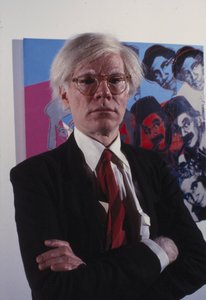
Andy Warhol
1928 - 1987 , United States of America
Quick Facts
- Artistic Movement Or Style: Pop Art
- Artists Or Movements Influenced By This Artist:
- Conceptualism
- Performance Art
- Full Name: Andrew Warhola Jr.
- Notable Artworks:
- Campbell's Soup Cans
- Marilyn Diptych
- Coca-Cola (3)
- Gold Marilyn
- Brillo Box sculptures
- Place Of Birth: Pittsburgh, United States of America
- Date Of Birth: 1928
- Date Of Death: 1987