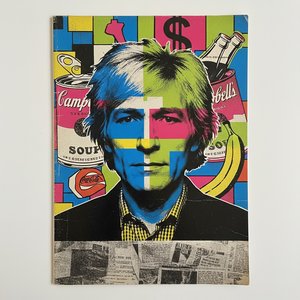
Acrylic On Canvas.

§ 1Catalogue data

This Artwork Is Under Copyright Protection
The artwork displayed on this page is protected by copyright law, which means we cannot legally create or sell an identical reproduction. This protection is enforced under international agreements such as the Berne Convention and by national laws, including those outlined by the U.S. Copyright Law - Title 17.
As a respectful and legal alternative, we offer custom, hand-painted artworks inspired by the original. Our skilled and professional artists carefully study the original's style, mood, and artistic essence to create a new, unique piece that evokes the same feeling - while remaining an original creation in its own right.
This method fully complies with copyright regulations because it does not involve copying or duplicating the protected artwork. Instead, it is a creative reinterpretation - a new painting that is influenced by the original but not identical to it.
 Read more
§ 2Abstract
Collectible Description
Explore Andy Warhol's iconic Pop Art (1928-1987) – silkscreens of Marilyn, Campbell’s Soup Cans & celebrity culture. Discover his lasting impact on art.
Artist Biography
Pop Art icon Andy Warhol created the legendary Campbell’s Soup Cans. Discover his vibrant world of celebrity and consumer culture today.
§ 3Commentary
A Snapshot of Pop Art Iconography: Warhol’s “untitled (8717)”
Andy Warhol's "untitled (8717)" stands as a deceptively simple yet profoundly resonant emblem of the American Pop Art movement. Executed in 1963, this silkscreen print embodies Warhol’s signature approach – repetition and appropriation—transforming an ordinary bus into a monumental statement about image culture and consumerism. The artwork's stark palette of yellow, green, and red immediately grabs attention, mirroring the bold visual language prevalent during the era. It’s not merely a depiction; it’s an interrogation of how images dominate our perception of reality.- Subject Matter: Warhol deliberately chose a commonplace subject – a bus – elevating it to iconic status through meticulous replication. This decision wasn't accidental; Warhol sought to challenge the notion of originality, arguing that art could derive its power from referencing existing cultural symbols.
- Style & Technique: Warhol’s masterful use of silkscreen printing revolutionized artistic production. The process involved transferring ink onto a stencil, allowing for rapid and consistent reproduction – a technique perfectly suited to Warhol's fascination with mass media and industrial processes. This method ensured that the image appeared identical across multiple prints, reinforcing its impact as a symbol of reproducibility.
Historical Context: The Rise of Consumer Culture
“untitled (8717)” emerged during a period marked by unprecedented economic growth and burgeoning consumer culture in postwar America. Warhol’s artistic explorations mirrored the anxieties and aspirations of this time, reflecting both the allure and alienation inherent in embracing mass production and celebrity worship. The bus itself represents mobility, connection, and the everyday experiences that underpin societal life—themes deliberately chosen to resonate with a wider audience grappling with rapid social change.- Influence of Mass Media: Warhol’s preoccupation with advertising imagery – exemplified by Campbell's Soup Cans – directly responded to the pervasive influence of billboards, magazines, and television on American consciousness. He aimed to destabilize traditional artistic hierarchies by elevating commercial visuals to the level of high art.
- The Warhol Aesthetic: The artwork embodies Warhol’s broader aesthetic—characterized by flatness, bold colors, and a deliberate lack of illusionistic depth. This stylistic choice deliberately distanced Warhol from representational painting traditions, prioritizing visual impact over narrative complexity.
Symbolism & Emotional Resonance
Despite its apparent simplicity, “untitled (8717)” carries significant symbolic weight. The repetition of the bus image underscores Warhol’s belief that art could communicate powerful ideas through repetition and standardization. Furthermore, the vibrant colors—yellow symbolizing optimism and prosperity, green representing growth and renewal, and red conveying passion and urgency—contribute to the artwork's emotional intensity. It invites contemplation on themes of identity, conformity, and the role of images in shaping our understanding of the world. Ultimately, Warhol’s “untitled (8717)” transcends its subject matter to become a timeless meditation on the nature of art and culture—a testament to Warhol's enduring legacy as one of the most influential artists of the 20th century. Its striking visual language continues to captivate audiences today, reminding us that beauty can be found in unexpected places and that repetition can amplify meaning.Questions & Answers
What is the emotional tone of "untitled (8717)" by Andy Warhol?
"untitled (8717)" is associated with a playful feeling. The emotional tone describes the impression the work gives.
Is "untitled (8717)" by Andy Warhol a light or a dark artwork?
The recorded values for "untitled (8717)" by Andy Warhol are: brilliant brightness, bright balance luminance.
How do medium and movement combine in "untitled (8717)"?
"untitled (8717)" is made in acrylic on canvas, in the Pop Art style.


 Switch to Print


 For artworks or reproductions larger than 105 cm (approximately 41 inches) on any side, the frame will be shipped as a kit, disassembled. This method ensures safe delivery and prevents damage during transport.