Money-Back Guarantee · 100 days Free Worldwide Delivery
449,587artworks 30,613artists 4,660museums 32languages
Currency
    Language
      Atelier · Est. 2015 · Paris, France
      AllPaintingsStore
      allpaintingsstore.com
      Catalogue entry

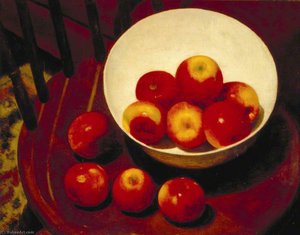
      Flower Study

      1944. , 70.0 x 57.0 cm.

      Fig. 1. Arthur Segal, Flower Study, 1944. Shown as the reproduction you are specifying: , .

      § 1Catalogue data

      • Creation date1944
      • Dimensions70.0 x 57.0 cm

      § 2Abstract

      Collectible Description

      Artist Biography

      Explore the art of Arthur Segal: a Romanian painter & author known for Expressionism, Dadaism, and anti-war woodcuts. Discover his Berlin/Swiss exile & impact on modern art.

      § 3Commentary

      The Flower Study painting by Arthur Segal is a stunning example of oil on canvas artwork, created in 1944. Measuring 70 x 57 cm, this beautiful piece is currently housed at the Shipley Art Gallery in the United Kingdom. The image features a blue vase filled with pink flowers, which appear to be roses, creating an elegant and visually appealing display.

      Artist Background

      Arthur Segal was a Romanian artist and author, born on July 23, 1875, in Iaşi, Romania. He studied at the Berlin Academy from 1892 and later in Paris and Italy in the early 1900s. After studying in Paris and Italy, he eventually moved to Berlin, where he became a prominent figure in the city's artistic scene. More information about Arthur Segal can be found on AllPaintingsStore.com.

      Painting Style and Technique

      The Flower Study painting showcases Arthur Segal's unique style and technique, characterized by the use of bold colors and delicate brushstrokes. The arrangement of the flowers in the vase creates a sense of movement and energy, drawing the viewer's eye to the center of the composition. This painting is a prime example of still life artwork, which was a popular genre during the 20th century.

      Similar Paintings

      Other notable paintings that showcase similar styles and techniques include: These paintings demonstrate the beauty and elegance of oil on canvas artwork, making them perfect additions to any art collection.
      The Flower Study painting by Arthur Segal is a stunning example of 20th-century art, showcasing the artist's unique style and technique. With its bold colors and delicate brushstrokes, this painting is sure to captivate any art enthusiast. For more information about Arthur Segal and his artwork, visit AllPaintingsStore.com.

      Questions & Answers

      Where can I buy a hand-painted reproduction of "Flower Study" by Arthur Segal?

      You can order a hand-painted reproduction of "Flower Study" by Arthur Segal directly on its Hand-Painted Reproduction page: a hand-painted oil reproduction on linen canvas, made to order.

      What is the dominant color of "Flower Study" by Arthur Segal?

      The color that stands out most in "Flower Study" is putty (#cbb9a5). The dominant color is useful when matching an artwork to an interior.

      Is "Flower Study" more bright or more dark overall?

      "Flower Study" by Arthur Segal is recorded as balanced, with a soft shadow luminance.

      § 4The artist

      Arthur Segal

      Arthur Segal

      1875 - 1944

      Quick facts about Arthur Segal

      • Full Name: Arthur Segal
      • Nationality: Romanian
      • Date Of Birth: 1875
      • Date Of Death: 1944
      • Place Of Birth: Iaşi, Romania
      • Notable Artworks: ['Woodcuts (anti-war)']
      • Artistic Movement Or Style:
        • Expressionism
        • Dadaism
      • Artists Who Influenced This Artist:
        • Schmid-Reutte
        • Hölzel
      • Artists Or Movements Influenced By This Artist:
        • Die Brucke
        • Der Blaue Reiter

      Artist Biography

      Arthur Segal: A Pioneer of Expression and Dada’s Shadow

      Arthur Segal (1875 – 1944) stands as a compelling figure in the turbulent landscape of early 20th-century European art, a Romanian artist whose career unfolded across multiple continents and artistic movements. Born into a Jewish family in Iaşi, Romania, his journey was shaped by both personal tragedy—the loss of his wife—and profound political upheaval, culminating in exile during World War II. Initially influenced by the Impressionist and Neo-Impressionist aesthetics of his early training at the Berlin Academy, Segal’s artistic trajectory dramatically shifted towards Expressionism and Dadaism, forging a uniquely personal style characterized by raw emotion, fragmented forms, and a critical engagement with the modern world. His work wasn't merely decorative; it was a visceral response to the anxieties and uncertainties of an era on the brink of profound change.

      Early Years and Artistic Foundations

      Segal’s formative years were spent in Romania, absorbing the artistic traditions of the region while simultaneously encountering the burgeoning avant-garde currents emanating from Berlin. His studies at the Academy of Art in Berlin provided a solid grounding in classical techniques, but it was his exposure to the works of artists like Schmid-Reutte and Hölzel that ignited his interest in exploring new modes of representation. A subsequent period in Paris and Italy allowed him to immerse himself in the vibrant artistic scene of the time, encountering the innovations of Post-Impressionism and early Modernism. Crucially, these experiences laid the groundwork for his later embrace of Expressionist principles, a shift that would fundamentally alter the course of his artistic development. The influence of German Expressionism is particularly evident in his woodcuts, many of which tackled themes of war and social injustice with a stark and uncompromising realism.

      Berlin’s Expressionist Circle and the Rise of Neue Sezession

      The early 1900s marked a pivotal period for Segal as he established himself within Berlin's dynamic artistic community. He quickly became associated with two of the most influential groups of the era: Die Brucke (The Bridge) and Der Blaue Reiter (The Blue Rider). These circles, centered around artists like Wassily Kandinsky and Franz Marc, championed a radical departure from traditional academic art, prioritizing emotional expression and subjective experience. Segal’s participation in their exhibitions signaled his commitment to these ideals and solidified his position within the avant-garde. However, he soon sought to establish his own platform for artistic experimentation, co-founding the Neue Sezession (New Section) in 1910. This group, deliberately provocative, challenged the established norms of the Berliner Secession, advocating for a more diverse and experimental approach to artmaking. The rejection by the Berliner Secession underscored the growing tensions between traditional and avant-garde artistic sensibilities.

      Exile, Dadaism, and the Swiss Years

      The outbreak of World War I forced Segal into exile, leading him and his family to Ascona, Switzerland, in 1914. This period proved transformative, exposing him to the radical ideas of Dadaism – a movement that questioned the very foundations of art and society through irony, absurdity, and anti-rationality. He became involved with the Zurich Dadaists, collaborating with figures like Hans Arp, Hugo Ball, and Leonhard Frank at the Cabaret Voltaire, a hub for experimental performance and artistic innovation. The Swiss experience provided a crucial space for Segal to develop his own unique visual language, characterized by fragmented forms, distorted perspectives, and a deliberate rejection of traditional beauty standards. It was during this time that he began to explore the possibilities of woodcut as a medium for expressing social commentary and political dissent.

      Return to Berlin, Bauhaus Rejection, and Final Years

      Following the war, Segal returned to Berlin in 1920, establishing his own art school and continuing to engage with the city’s vibrant artistic scene. He was offered a teaching position at the Bauhaus in Dessau, a revolutionary institution dedicated to integrating art, craft, and technology, but he declined the opportunity, perhaps wary of the institution's increasingly rigid structure. The rise of Nazism ultimately forced him into exile again, this time to Palma, Majorca, and then London, where he continued to teach and exhibit his work until his death in 1944. Despite facing significant obstacles due to his Jewish heritage, Segal’s artistic legacy endures as a testament to the power of individual expression and the enduring relevance of his pioneering approach to modern art. His work remains a vital link between Expressionism, Dadaism, and the broader currents of 20th-century art history, offering a poignant reflection on the anxieties and uncertainties of a rapidly changing world.

      § 5Comparanda

      § 6Questions

      § 7Cite this entry

      AllPaintingsStore.com, “Arthur Segal, Flower Study (1944)”, https://allpaintingsstore.com/en/art/arthur-segal-flower-study-AQS3DA-en/ (accessed 2 October 2026).

      § 8The reproduction

      Hand Made Oil Reproduction

      Hand-painted oil on canvas in your size and frame, made to order by our artists. ( Switch to Print Switch to Digital Image)

      It is specified on the order sheet in the margin; the present state of that sheet reads as follows.

      Flower Study

      Reproduction Medium

      Reproduction Size

      -

      Elite Senior Artist

      More detail, finesse, and extra production time

      -

      Reproduction Frame

      -

      -

      For artworks or reproductions larger than 105 cm (approximately 41 inches) on any side, the frame will be shipped as a kit, disassembled. This method ensures safe delivery and prevents damage during transport.

      Professional assembly required - this is not a DIY product.
      The kit must be assembled and the canvas stretched by an experienced professional framer, using wood glue (not supplied), a canvas stretching plier and clamps to hold the bars square while the glue dries. Incorrect assembly or uneven canvas tension can permanently damage the artwork and is not covered by our warranty.

      • All solid wood bars are included, precisely cut to size.

      • Assembled with the screws provided, plus wood glue for the corner joints, which is not supplied and must be sourced by your framer.

      • Professional tools are required and not included: a canvas stretching plier (tensioner) and clamps to hold the bars square while the glue dries.

      Important:
      The corner joints require wood glue, the bars must be held with clamps until the glue is fully dry, and tightening the canvas on the assembled frame requires a canvas stretching plier. None of these are included in the kit. Please arrange an experienced professional framer before ordering this size.

      Nameplate

      -

      -

      Protective Varnish

      Glossy Varnish (enhances colors, protects against light/moisture)

      -

      Customize My Artwork

      Examples of what can be changed: Replace face with customer photo; Add pet (e.g., replace cat with dog); Include hidden message in background; Change background landscape or elements.

      -

      Urgent

      Worldwide Delivery () in 3/4 weeks instead of standard 5 weeks. (31 October). No compromise on quality.

      -

      Express Shipping

      Worldwide Delivery () in 5 weeks. (7 November).

      Included

      Total Price

      $ 258

      Included with every order

      • Free Worldwide Express Shipping
      • High-Quality Linen Canvas
      • Full Shipping Insurance
      • Customs Tax Refund Guarantee
      • True Color Matching Guarantee
      • 100-Day Return Policy (Defects Only)
      • 100% Money-Back Guarantee
      • Bulk Discount Offer
      Order sheet