- Home

- Oil Painting Reproduction
- barbara mary quant
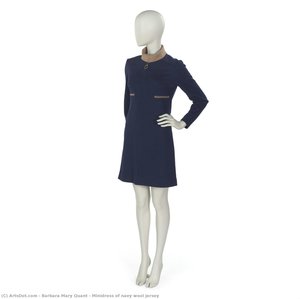
- Minidress of navy wool jersey

 Buy print
 Send
Send Share
Share
 Details

 Download
 Similars
 X-Ray
X-Ray Diaporama
Minidress of navy wool jersey


 Read More
Hand Made Oil Reproduction
Hand-painted oil on canvas in your size and frame, made to order by our artists.




P118B $10

P118H $10

P118W $10

P438Z $10

P508JH $12

P508YH $12

P805H $10

P805Z $10

P919BZ $10

P919G $10

P919XJ $10

P959ZH $10

P968JZ $12

W106C $8

W218G $10

W218JH $8

W218Y $10

W307PJ $10

W316G $10

W316PJ $8

W316Y $10

W398PJ $8

W4111J $10

W500HY $15

W500JH $15

W692G $12

W849H $8

W940BG $15

W953PJ $8




Pick from our preset sizes that match the artwork's original proportions.

You may enter your own dimensions to fit a specific frame or space. If your selected size does not match the original image's proportions, we will either crop the artwork or extend the painting with additional hand-painted elements. A digital mockup will be sent for your approval before production begins.
Please note that the on-screen preview does not reflect the actual cropping or extension. Only the mockup will accurately show the final composition.
While custom sizes are available, we recommend selecting a dimension from the predefined list to preserve the original proportions.
After order, AllPaintingsStore.com team will email client for instructions and provide a mockup preview
Worldwide Delivery () in 3/4 weeks instead of standard 5 weeks. (16 July). No compromise on quality.

Free Worldwide Express Shipping

High-Quality Linen Canvas

Full Shipping Insurance

Customs Tax Refund Guarantee

True Color Matching Guarantee

60-Day Return Policy (Defects Only)

100% Money-Back Guarantee

Bulk Discount Offer
 Glass option is only available in size under 110 CM

Minidress of navy wool jersey
Reproduction Medium
Reproduction Size
-


Total Price
-
Artwork Description
The Birth of Mod: A New Silhouette Takes Shape
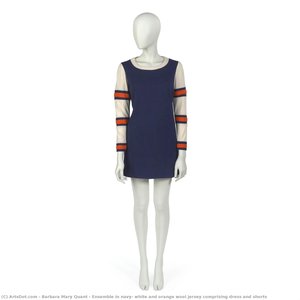
Barbara Mary Quant’s “Ensemble in Navy, White and Orange Wool Jersey Comprising Dress and Shorts” isn't merely a garment; it’s a crystallized emblem of the 1960s ethos – youthful rebellion tempered with an undeniable optimism. Born in Woolwich, London, on February 11, 1930, Quant wasn’t simply designing clothes; she was reshaping perceptions of femininity and challenging established sartorial conventions. Her journey began at goldsmiths college, where a spirit of innovation fostered by the institution's ethos perfectly mirrored her own approach to fashion. This confluence of influences would propel her into the spotlight as the architect of “Mod,” a revolutionary style that captivated young people across Britain and beyond. The Miniskirt Revolution: More Than Just Fabric Quant’s breakthrough came in 1963 with the launch of her Ginger Group collection, marking the genesis of the miniskirt phenomenon. Prior to this moment, skirts typically grazed just below the knee—a restriction that symbolized societal conservatism. Quant boldly defied convention, introducing a dress that soared above the knee, instantly transforming fashion and sparking fervent debate. This audacious silhouette wasn’t merely aesthetically striking; it represented liberation from restrictive norms and an embrace of youthful exuberance – a pivotal shift in attitudes towards women's clothing during the postwar era. The Ginger Group collection was conceived as a reaction to the prevailing mood of austerity and formality, offering a vibrant alternative that resonated deeply with young audiences eager for self-expression. Quant’s designs prioritized practicality alongside glamour, recognizing the needs of a generation embarking on new adventures. Wool Jersey: A Fabric of Transformation The material chosen for “Ensemble” – navy wool jersey – was itself transformative. Before Quant's arrival, knitted fabrics like wool jersey were largely relegated to underwear and stockings, viewed as utilitarian rather than fashionable. However, Quant recognized the potential for wool jersey to create garments that were both comfortable and stylish—a feat previously unattainable. She skillfully utilized this fabric’s inherent properties—its drape, elasticity, and ability to hold color—to craft dresses and shorts that moved gracefully with the wearer's body, embodying the spirit of freedom and dynamism characteristic of Mod style. The Ginger Group’s wool jersey dresses were a triumph of design ingenuity, demonstrating Quant’s mastery of textile manipulation and her unwavering commitment to pushing creative boundaries. A Studio Snapshot: Capturing the Essence of Style The photograph itself—a meticulously crafted studio shot—serves as an invaluable window into Quant's vision. The lighting is diffused, minimizing harsh shadows and highlighting the subtle texture of both the dress and the mannequin’s surface. This deliberate choice underscores Quant’s desire to present her designs objectively, capturing their aesthetic qualities with unwavering precision. Furthermore, the composition—centered on the mannequin against a plain white backdrop—creates a balanced visual harmony, directing attention squarely onto the garment itself. The photographer's skill in conveying the fabric's materiality and the dress's silhouette speaks volumes about Quant’s commitment to communicating her artistic intent effectively. Symbolic Resonance: Embracing Youthful Rebellion Beyond its technical merits, “Ensemble” carries profound symbolic resonance—a testament to Quant’s understanding of cultural currents shaping the 1960s. The bold orange and navy stripes adorning the dress aren't merely decorative; they symbolize energy, optimism, and a defiant rejection of societal expectations. They encapsulate the spirit of Mod style: youthful exuberance, playful experimentation, and an assertion of individuality—values that captivated young people across Britain during this transformative decade. Quant’s designs mirrored the broader cultural shift toward greater freedom and self-expression, reflecting the burgeoning desire for liberation from traditional constraints. The photograph encapsulates this ethos perfectly, serving as a visual chronicle of a moment in fashion history that continues to inspire designers and collectors alike.Related Artworks






Artist Biography
A Revolutionary Silhouette: The Life and Legacy of Barbara Mary Quant
Barbara Mary Quant, born in Woolwich, London, on February 11, 1930, and passing away peacefully in Surrey on April 13, 2023, was more than just a fashion designer; she was a cultural seismograph. Her impact resonated far beyond the runways of London, fundamentally altering the way young people dressed and expressing themselves during the vibrant, transformative decade of the 1960s. Quant’s story is inextricably linked to the rise of youth culture, the burgeoning spirit of rebellion, and a bold rejection of established sartorial norms – all channeled through her instantly recognizable designs. Her journey began with a practical education at goldsmiths college, an institution that fostered a spirit of innovation and challenged traditional artistic boundaries, perfectly aligning with Quant’s own approach to fashion.The Birth of Mod: A New Silhouette Takes Shape
Quant's career truly ignited in the mid-1960s, coinciding with the explosive emergence of ‘Mod’ fashion in London. This wasn’t simply about clothes; it was a statement – a declaration of youthful energy, optimism, and a desire to break free from the constraints of post-war austerity. Quant's designs were instrumental in shaping this aesthetic. She is widely credited (though often debated) with pioneering the miniskirt, a garment that instantly captured the imagination of young people and became a symbol of liberation. Prior to Quant’s work, skirts typically reached mid-calf; her creations, dramatically shortening hemlines, represented a radical shift in both style and attitude. Alongside the miniskirt, she popularized ‘hotpants,’ daringly short trousers that further challenged conventional notions of femininity and propriety. These weren't simply garments; they were tools for self-expression, allowing young people to assert their individuality and embrace a new sense of freedom.Influences and Design Philosophy
Quant’s design philosophy was rooted in functionality and accessibility. She famously stated that her clothes should be “simple, inexpensive, and easy to wear.” This pragmatic approach stemmed from her own experiences – she designed her first dresses while still a student, creating affordable garments for herself and her friends. Her early influences were diverse, ranging from the clean lines of Scandinavian design to the geometric patterns of Matisse. However, Quant’s signature style was uniquely her own: crisp, architectural shapes, bold primary colors, and a focus on minimizing embellishment. She eschewed fussy details and elaborate ornamentation, believing that simplicity was key to creating timeless designs. The use of jersey fabric – initially sourced from a local supplier – allowed for ease of movement and a comfortable fit, crucial elements for the active lifestyle embraced by the Mod generation.A Cultural Icon: Beyond the Runway
Quant’s influence extended far beyond the fashion industry. She became a cultural icon, frequently appearing in Vogue and other prominent publications. Her image – often depicted in her signature black shift dress – was instantly recognizable and synonymous with the Swinging Sixties. She collaborated with photographers like David Bailey and posed for iconic images that captured the energy of the era. Quant’s designs were worn by celebrities such as Twiggy, Jean Shrimpton, and The Beatles, further cementing her status as a central figure in British popular culture. She wasn't just designing clothes; she was shaping a visual language, embodying the spirit of a generation.Legacy and Enduring Impact
Barbara Mary Quant’s legacy is profound and enduring. Her designs continue to be celebrated for their simplicity, innovation, and contribution to youth culture. The miniskirt, arguably her most famous creation, remains a staple in wardrobes worldwide, a testament to the transformative power of one designer's vision. Quant demonstrated that fashion could be both stylish and democratic, accessible to all young people regardless of social status. Her influence can still be seen today in contemporary designers who prioritize functionality, bold silhouettes, and a youthful aesthetic. Dame Mary Quant, as she was officially recognized, left an indelible mark on the world of fashion and beyond – a reminder that clothing can be more than just fabric; it can be a symbol of freedom, identity, and change.
barbara mary quant
1930 - 2023 , United Kingdom
Quick Facts
- Artistic Movement Or Style: Mod fashion, Youth style
- Date Of Birth: February 11, 1930
- Date Of Death: April 13, 2023
- Full Name: Barbara Mary Quant
- Nationality: British
- Place Of Birth: Woolwich, London, England
Related Articles

Draped Narratives: Fashion as Symbol & Subject in Historical Art
Explore the fascinating history of fashion as a symbol of power & status in art! Discover masterpieces from Gainsborough to Tissot and learn how clothing shaped societal narratives. Find museum-quality reproductions at AllPaintingsStore.

Azure Visions: Exploring Representations of the Blue Dress in Western Art History
Explore the rich history of the blue dress in Western art! Discover its symbolism, from Renaissance masterpieces to modern interpretations by artists like Martin & Schiele. Uncover cultural meanings and artistic techniques.

Sir James Jebusa Shannon: A Master of Victorian Portraiture & Aesthetic Style
Explore the life & art of Sir James Jebusa Shannon, a leading Victorian portrait painter. Discover his elegant style, technical mastery, and lasting influence on British art. Shop high-quality reproductions at AllPaintingsStore.

From Jungle Scenes to Gold Leaf Geometry: A Guide to Today's Most Requested Mural Styles
Explore today's top mural styles for hotels & commercial spaces! Discover trends, expert insights, & custom design solutions. Elevate your space with .

Harmonizing History & Hue: A Guide to Matching Art Styles with Interior Architecture for Balanced Décor
Elevate your interior design with our expert guide to harmonizing art styles & architecture. Discover timeless pieces, color palettes, & custom artwork solutions for balanced, luxury spaces. Expert advice included!