- Home

- Oil Painting Reproduction
- Benvenuto Cellini
- Medallion with Leda and the Swan

 Buy print
 Send
Send Share
Share
 Details

 Download
 Similars
 X-Ray
X-Ray Diaporama
Medallion with Leda and the Swan
 Gold
Gold- Other
- Baroque Mannerism
 1520
1520- Renaissance
 3.0 x 3.0 cm
 Museo Nazionale del Bargello
 Read More
Hand Made Oil Reproduction
Hand-painted oil on canvas in your size and frame, made to order by our artists.




































Pick from our preset sizes that match the artwork's original proportions.

You may enter your own dimensions to fit a specific frame or space. If your selected size does not match the original image's proportions, we will either crop the artwork or extend the painting with additional hand-painted elements. A digital mockup will be sent for your approval before production begins.
Please note that the on-screen preview does not reflect the actual cropping or extension. Only the mockup will accurately show the final composition.
While custom sizes are available, we recommend selecting a dimension from the predefined list to preserve the original proportions.
After order, AllPaintingsStore.com team will email client for instructions and provide a mockup preview
Worldwide Delivery () in 3/4 weeks instead of standard 5 weeks. (16 July). No compromise on quality.

Free Worldwide Express Shipping

High-Quality Linen Canvas

Full Shipping Insurance

Customs Tax Refund Guarantee

True Color Matching Guarantee

60-Day Return Policy (Defects Only)

100% Money-Back Guarantee

Bulk Discount Offer
 Glass option is only available in size under 110 CM

Medallion with Leda and the Swan
Reproduction Medium
Reproduction Size
-


Total Price
-
Artwork Description
A Moment Frozen in Time: Exploring Cellini’s Medallion with Leda and the Swan
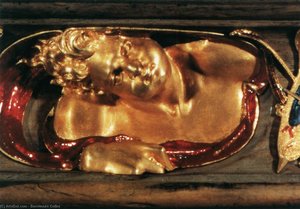
Benvenuto Cellini’s “Medallion with Leda and the Swan,” created around 1520, stands as a testament to the artistic fervor of the Mannerist period. More than just a beautifully crafted gold object—a feat of goldsmithing unparalleled in its time—it embodies a profound exploration of mythology, psychology, and artistic innovation that continues to fascinate art historians and collectors alike.
The Mythological Narrative
The medallion depicts the iconic scene from Greek mythology: Zeus disguised as a swan seduces Leda, Queen of Sparta, resulting in the birth of Helen—the woman whose abduction sparked the Trojan War. Cellini’s depiction isn't merely a retelling of the tale; it’s an intensely psychological portrayal of desire and vulnerability. The figures are rendered with dramatic poses and exaggerated musculature, characteristic of Mannerist style, prioritizing expressive gesture over realistic representation.
A Masterpiece of Goldsmithing Technique
Cellini’s skill as a goldsmith is undeniable. He employed the granulation technique—a painstaking process involving embedding tiny grains of gold onto the surface of the medallion—creating a shimmering texture that captures the ethereal beauty of the swan and the delicate skin tones of Leda. The meticulous craftsmanship involved countless hours of labor, demonstrating Cellini’s dedication to achieving artistic perfection.
Symbolism and Artistic Innovation
Beyond its mythological narrative, the medallion is laden with symbolic meaning. The swan represents purity and grace, juxtaposed against Leda's nakedness—a deliberate challenge to Renaissance ideals of idealized beauty. Cellini pushed boundaries in terms of artistic convention, prioritizing emotional impact over strict adherence to classical proportions. This bold stylistic choice reflects the broader Mannerist preoccupation with unsettling juxtapositions and psychological complexity.
Emotional Resonance
"Medallion with Leda and the Swan" transcends its historical context, resonating powerfully with viewers today. Cellini’s masterful depiction captures a moment of intense intimacy—a confrontation between desire and apprehension—that speaks to universal themes of love, beauty, and mortality. It serves as an enduring reminder of the transformative power of art to convey profound emotions and provoke contemplation.
- Material: Gold Granulation
- Artist: Benvenuto Cellini
- Date: Circa 1520
- Style: Mannerist
- Technique: Granulation, Sculptural Modeling
Related Artworks






Artist Biography
Benvenuto Cellini: A Renaissance Polymath
- Born: Florence, Italy (November 1, 1500)
- Died: February 13, 1571
Benvenuto Cellini was a remarkable figure of the Italian Renaissance, renowned as an accomplished goldsmith, sculptor, draftsman, soldier, musician, and writer. His multifaceted talents and flamboyant personality are vividly captured in his celebrated autobiography, considered a significant literary work alongside his artistic achievements. He embodies the spirit of Mannerism, a period following the High Renaissance characterized by dramatic flair and stylistic complexity.
Early Life and Artistic Training
Born into a family with musical inclinations – his father was a musician and instrument maker – Cellini initially showed promise in music. However, at fifteen, he passionately pursued a career as a goldsmith, convincing his reluctant father to apprentice him to Antonio di Sandro (known as Marcone). This marked the beginning of his formal artistic training. His early years were not without incident; at sixteen, he became embroiled in an affray with companions, leading to banishment from Florence and a period working in Siena under goldsmith Fracastoro.
Major Artistic Works and Style
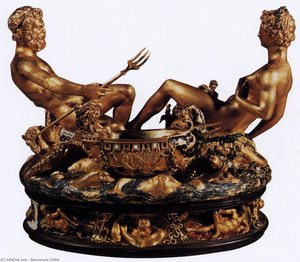
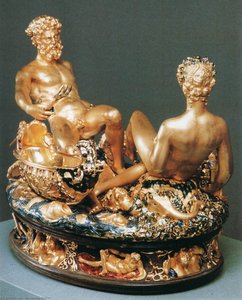
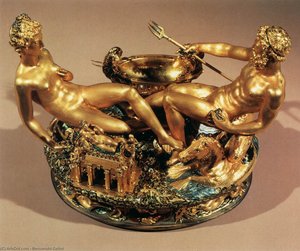
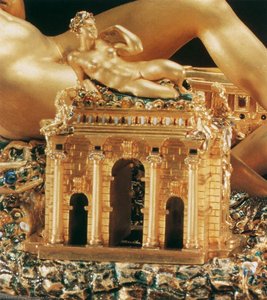
- Salt Cellar: This elaborate silver masterpiece, commissioned by King Francis I of France, is arguably his most famous work. It showcases intricate detail and dynamic figures, now housed at the Kunsthistorisches Museum in Vienna.
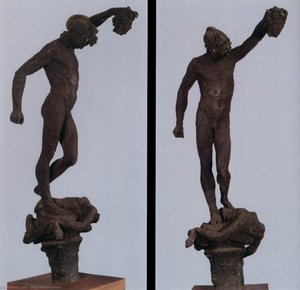
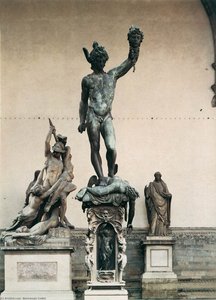
- Perseus with the Head of Medusa: A bronze sculpture depicting Perseus triumphantly holding the severed head of Medusa, this piece exemplifies Cellini’s mastery of form and dramatic composition. It stands as a testament to his skill in capturing movement and emotion in metal.
- Gold Medallion of Leda and the Swan: Created for Gonfaloniere Gabriello Cesarino, this medallion demonstrates Cellini's ability to blend classical mythology with exquisite craftsmanship.
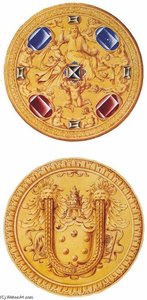
- Project for a Seal: A drawing held at the British Museum, showcasing his design skills.
Cellini’s style is characterized by its dynamism, realism, and attention to detail. He drew inspiration from classical antiquity and Michelangelo's powerful figures, but infused his work with a distinctly Mannerist sensibility – elongated forms, exaggerated poses, and a sense of theatricality.
Life Beyond Art: Soldier, Musician, and Autobiographer
Cellini’s life extended far beyond the workshop. He served as a soldier during sieges, claiming to have played a crucial role in defending Rome against imperial forces. He was also an accomplished musician, playing the cornett and flute at papal court. However, it is his autobiography that truly sets him apart.
- The Life of Benvenuto Cellini: This candid and often boastful account provides invaluable insights into Renaissance art, culture, and society. It’s a compelling narrative filled with anecdotes about patrons, rivals, and personal adventures, offering a unique perspective on the era.
His autobiography is not merely a recounting of events; it's a carefully constructed self-portrait designed to showcase his talents and justify his actions. While sometimes unreliable due to Cellini’s own biases, it remains an essential primary source for understanding Renaissance life.
Legacy and Historical Significance
Benvenuto Cellini died in Florence in 1571, leaving behind a legacy as one of the most important artists of Mannerism. His technical skill, artistic innovation, and captivating autobiography continue to inspire artists and art enthusiasts alike. He represents the quintessential Renaissance ideal – a polymath skilled in multiple disciplines, driven by ambition, and unafraid to express his individuality. His works are celebrated for their beauty, craftsmanship, and dramatic power, solidifying his place as a pivotal figure in Western art history.

Benvenuto Cellini
1500 - 1571 , Italy
Quick Facts
- Artistic Movement Or Style: Mannerism
- Artists Who Influenced This Artist: ['Michelangelo']
- Date Of Birth: November 1, 1500
- Date Of Death: February 13, 1571
- Full Name: Benvenuto Cellini
- Nationality: Italian
- Notable Artworks:
- Perseus with the Head of Medusa
- Cellini Salt Cellar
- Place Of Birth: Florence, Italy
Related Articles

Hermitage Masterpieces: 25 Art Treasures to Inspire Your Home Decor
Journey through the Hermitage Museum's 25 greatest artworks! Explore masterpieces by Rembrandt, Leonardo da Vinci & Vermeer. Find museum-quality art reproductions and curated decor ideas to bring timeless beauty home. Discover all masterpieces on AllPaintingsStore.com.

The Flourishing of Humanism: A Comprehensive Exploration of the Italian Renaissance Art Movement
Explore the Italian Renaissance! Discover humanist ideals, iconic masterpieces by Leonardo, Michelangelo & Raphael, and lasting artistic innovations. A comprehensive guide for art enthusiasts.

Snowy Masterpieces: 10 Famous Paintings & Art for a Winter Aesthetic
Explore 10 famous snow paintings by Monet, Degas & more! Discover the stories behind these serene winter landscapes and iconic artworks. Find museum-quality art reproductions for your home at AllPaintingsStore.com.

High Renaissance Masterpieces: Iconic Art for Your Home |
Journey through the High Renaissance! Explore 10 iconic masterpieces by Leonardo da Vinci, Michelangelo & Raphael. Discover art history, techniques & find museum-quality reproductions to elevate your home decor on .

Engraving's Golden Age: 10 Masterpieces That Redefined Art | AllPaintingsStore
Journey through art history with our Top 10 Legendary Engravings! Explore masterpieces by Dürer, Rembrandt & Goya. Discover the stories behind these iconic prints and find museum-quality reproductions for your home at AllPaintingsStore.com.