

1895. Acrylic On Canvas. Museum of Fine Arts.

§ 1Catalogue data


§ 2Abstract
Collectible Description
Admire Claude Monet's iconic 'Haystack,' capturing rural serenity with Impressionist brushstrokes and vibrant colors. Explore museum-quality reproductions & discover the beauty of French landscape art.
 Read More
Artist Biography
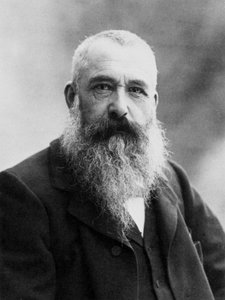
Claude Monet was an Impressionist master known for his Water Lilies series. Discover the beauty of his light-filled landscapes today.
§ 3Commentary
A Window into Rural Tranquility: Exploring Monet’s ‘Haystacks’
Claude Monet's “Haystacks,” painted in 1890-91, stands as a cornerstone of Impressionist art—a testament to Monet’s unwavering dedication to capturing the ephemeral beauty of the natural world. More than just a depiction of agricultural labor, this canvas embodies a profound philosophical shift: abandoning academic conventions for direct observation and translating fleeting sensations onto canvas.
Located prominently within The Museum of Fine Arts in Springfield, United States, “Haystacks” immediately draws the eye with its masterful use of color. Monet eschewed traditional chiaroscuro—the dramatic interplay of light and shadow—favoring instead a luminous palette dominated by yellows and oranges, reflecting the warmth of the late summer sun filtering through the wheat fields.
Technique: Impressionist Brushstrokes – A Dance of Light
Monet’s technique is instantly recognizable. He employed loose, visible brushstrokes—a hallmark of Impressionism—creating a textured surface that vibrates with movement and captures the shimmering quality of light. These strokes aren't blended smoothly; rather, they overlap and blend optically, allowing the viewer to perceive color variations as if experiencing them firsthand.
The artist meticulously studied the changing effects of sunlight on the haystacks throughout the day, documenting these observations with unwavering precision. This dedication to scientific observation—combined with artistic intuition—is what distinguishes Monet’s approach from earlier painters who prioritized idealized representations over accurate depictions.
Symbolism and Emotional Resonance: Beyond Landscape Painting
"Haystacks" transcends mere landscape scenery; it speaks to themes of labor, rural life, and the passage of time. The towering haystacks symbolize resilience and abundance—a celebration of the harvest season and a reminder of nature’s cyclical rhythms. Yet, crucially, Monet imbues the scene with an atmosphere of serenity and contemplation.
Considered alongside other works from Monet's series at Giverny – notably “Grainstacks at the End of Summer” and “Evening Effect”—“Haystack” exemplifies Monet’s ability to evoke emotion through color and texture. It invites viewers to pause, appreciate the subtle nuances of light, and immerse themselves in the tranquility of the countryside.
Discovering Monet's Legacy: Reproductions at AllPaintingsStore
For those seeking to experience the brilliance of Impressionism firsthand, AllPaintingsStore offers exceptional reproductions of “Haystacks,” meticulously crafted to faithfully capture Monet’s original vision. Visit https://www.wahoacart.com/en/art/claude-monet-haystacks-D3XFL4-en/ to explore stunning prints and canvases that bring Monet’s masterpiece into your home.
Furthermore, delve deeper into Impressionism's influence on art and interior design by reading https://www.wahoacart.com/en/articles/impressionism-s-legacy-10-masterpieces-that-transformed-art-decor-en/ and discovering how Monet’s techniques continue to inspire artists and decorators today.
Questions & Answers
Does the copyright of "Haystack" by Claude Monet allow reproductions?
The original "Haystack" is at the Museum of Fine Arts, and the work is in the public domain - its copyright has expired.
Is "Haystack" more bright or more dark overall?
"Haystack" by Claude Monet is recorded as brilliant, with a bright balance luminance.
What technique was used for "Haystack", and when was it created?
"Haystack" was made in 1895, in acrylic on canvas.


 Switch to Print


 For artworks or reproductions larger than 105 cm (approximately 41 inches) on any side, the frame will be shipped as a kit, disassembled. This method ensures safe delivery and prevents damage during transport.


