Money-Back Guarantee · 100 days Free Worldwide Delivery
449,587artworks 30,613artists 4,660museums 32languages
Currency
    Language
      Atelier · Est. 2015 · Paris, France
      AllPaintingsStore
      allpaintingsstore.com
      Catalogue entry

      Springtime Landscape

      1894. Oil On Canvas.

      Fig. 1. Claude Monet, Springtime Landscape, 1894. Shown as the reproduction you are specifying: , .

      § 1Catalogue data

      § 2Abstract

      Collectible Description

      Immerse yourself in Claude Monet's 'Springtime Landscape,' a vibrant Impressionist masterpiece from 1894. Witness the beauty of blooming yellow flowers & serene skies – explore its history and find reproductions at AllPaintingsStore.com!

      Artist Biography

      Claude Monet was an Impressionist master known for his Water Lilies series. Discover the beauty of his light-filled landscapes today.

      § 3Commentary

      A Glimpse of Spring's Embrace: Claude Monet’s "Springtime Landscape"

      Claude Monet, a name synonymous with Impressionism, gifted the world countless canvases capturing the ephemeral beauty of nature. Among these treasures lies “Springtime Landscape,” painted in 1894, a work that embodies the very essence of renewal and vibrancy. More than just a depiction of flowers and trees, it’s an invitation to step into a moment suspended in time, where light dances on petals and the air hums with the promise of burgeoning life. This painting isn't merely observed; it is *felt*. It speaks to the universal longing for warmth after winter's chill, a celebration of nature's triumphant return.

      The Impressionist Technique: Capturing Fleeting Moments

      “Springtime Landscape” exemplifies Monet’s signature Impressionistic style. Eschewing the precise detail favored by earlier artistic movements, Monet prioritized capturing the *impression* of a scene—the way light and color interact to create a fleeting visual experience. Notice how he doesn't meticulously render each individual flower; instead, he uses short, broken brushstrokes of vibrant yellows, greens, and blues to suggest a field teeming with life. This technique isn’t about photographic accuracy; it’s about conveying the *feeling* of being immersed in that springtime meadow. The sky, rendered in soft washes of blue and white, further enhances this sense of atmospheric perspective, creating depth and drawing the viewer's eye into the scene. Monet’s mastery lies in his ability to translate sensory experience onto canvas, allowing us to almost smell the blossoms and feel the gentle breeze.

      A Reflection of Late 19th-Century France

      Painted during a period of significant artistic innovation, “Springtime Landscape” reflects the broader cultural shifts occurring in late 19th-century France. The Impressionist movement was a direct challenge to the established Salon system and its rigid academic standards. Artists like Monet sought to break free from traditional subject matter and techniques, embracing plein air painting and focusing on capturing everyday scenes with an unprecedented level of immediacy. This work, therefore, is not just a beautiful landscape; it’s a testament to artistic rebellion and the pursuit of authentic expression. The burgeoning industrialization of France also influenced this shift – as people moved from rural areas to cities, there was a renewed appreciation for the beauty of nature and a desire to capture its fleeting moments before they disappeared.

      Symbolism and Emotional Resonance

      Beyond its technical brilliance, “Springtime Landscape” resonates with profound symbolic meaning. The abundance of yellow flowers—often associated with joy, optimism, and new beginnings—evokes a sense of hope and renewal. The trees in the background, still adorned with delicate blossoms, symbolize growth and potential. The overall composition creates a feeling of tranquility and harmony, inviting viewers to pause and appreciate the simple beauty of nature. Monet’s choice of subject matter – a seemingly ordinary field – elevates it to something extraordinary through his artistic vision. It's a reminder that profound beauty can be found in the most commonplace aspects of our world. The painting evokes a sense of nostalgia for simpler times, a yearning for connection with the natural world—emotions that continue to resonate deeply with audiences today.

      Questions & Answers

      What is the recommended use of a print of "Springtime Landscape"?

      A reproduction of "Springtime Landscape" by Claude Monet is recommended for accent. This suggestion follows from the work's subject, mood and colors.

      What is the overall mood of "Springtime Landscape" by Claude Monet?

      "Springtime Landscape" by Claude Monet is described as serene in mood. This classification can help match the work to a setting.

      What does "Springtime Landscape" by Claude Monet depict, and in what mood?

      "Springtime Landscape" shows landscape, flowers, light, color, atmosphere, impressionism, nature, and its recorded mood is serene.
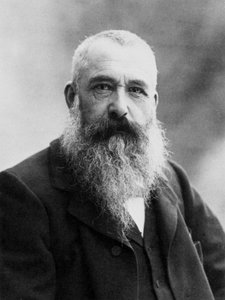
      § 4The artist

      Claude Monet

      Claude Monet

      1840 - 1926, France

      Quick facts about Claude Monet

      • Full Name: Oscar-Claude Monet
      • Nationality: French
      • Date Of Birth: 1840
      • Date Of Death: 1926
      • Place Of Birth: Paris, France
      • Notable Artworks:
        • Impression, Sunrise
        • Water Lilies
        • Haystacks
        • Rouen Cathedral
      • Artistic Movement Or Style: Impressionism
      • Artists Who Influenced This Artist:
        • Eugène Boudin
        • J.M.W. Turner
      • Artists Or Movements Influenced By This Artist: ['Modern Art']

      Artist Biography

      A Life Shaped by Light and Water

      The story of Oscar-Claude Monet begins in the streets of Paris, though his heart was often found wandering the salt-misted air of Le Havre. As a young boy, he moved to Normandy, where his father initially hoped he would follow a path in commerce. Yet, the boy possessed a restless eye for detail, finding early success by selling charcoal caricatures to local acquaintances. It was during these formative years that a chance encounter with Eugène Boudin changed everything. Boudin did not merely offer lessons in oil paint; he introduced the young man to the practice of painting en plein air, teaching him to set his easel directly within the unpredictable elements of nature.

      This early training instilled a lifelong obsession with the fleeting moment. When the Franco-Prussian War forced him into the streets of London, Monet found himself absorbing the atmospheric effects seen in the works of J.M.W. Turner. He returned to France with a new understanding of how mist and light could dissolve solid forms. In Paris, he sought formal instruction under Charles Gleyre, where he formed deep bonds with fellow painters like Auguste Renoir. These friendships were forged in a shared desire to break away from the rigid, dark constraints of the academic Salon, seeking instead a way to record the world as it was actually perceived by the eye.

      The Rebellion of Impression

      The year 1874 marked a turning point for this group of rebels. Dissatisfied with conservative standards, they organized their own independent exhibitions. It was during one such showing that his painting, Impression, Sunrise, gave a name to a movement that many initially viewed with derision. The term "Impressionism" emerged from the very criticism meant to mock his loose brushstrokes and unfinished appearance. Monet did not recoil from this label; he embraced it, using it to define a style centered on the subjective sensation of a scene.

      His technique became a study in optical truth. He applied unmixed colors side-by-side, a method known as broken color, allowing the viewer's eye to blend the hues. He rejected traditional dark grounds, opting instead for light-colored primers that added a new brightness to his canvases. His work often focused on the following elements:

      • The use of rapid, visible brushstrokes to capture movement.
      • The study of how sunlight alters the appearance of a single subject over time.
      • The rejection of linear perspective in favor of asymmetrical, flattened arrangements influenced by Japanese prints.

      Giverny and the Final Vision

      In 1883, Monet settled in Giverny, creating a sanctuary that would become his most profound subject. He transformed his property into an elaborate garden, complete with a water lily pond and a Japanese bridge. This was no mere landscape; it was a living laboratory where he could observe the interplay of light on water and foliage under controlled conditions. The gardens at Giverny provided him with a steady stream of inspiration for decades.

      The later years of his life were defined by the monumental Water Lilies series. These vast canvases, often painted while he struggled with cataracts, moved toward a near-abstract state where the horizon line vanished entirely. He painted the same pond repeatedly, documenting the way shadows danced across the surface at dusk or how morning mist clung to the lilies. Through these works, he achieved a sense of immersion, inviting anyone who looked upon them to lose themselves in a world of pure, shifting color. He left behind a legacy that fundamentally altered the trajectory of modern art, proving that the most transient moment could be captured through the power of paint.

      § 5Comparanda

      § 6Questions

      Quick Facts

      • Subject or theme: Landscape
      • Location: Musée Marmottan Monet, Paris
      • Notable elements or techniques: Light and shadow; Plein air painting.
      • Influences: Eugène Boudin
      • Movement: Impressionism

      § 7Cite this entry

      AllPaintingsStore.com, “Claude Monet, Springtime Landscape (1894)”, https://allpaintingsstore.com/en/art/claude-monet-springtime-landscape-8XXRU6-en/ArtistReproduction/ (accessed 2 October 2026).

      § 8The reproduction

      Hand Made Oil Reproduction

      Hand-painted oil on canvas in your size and frame, made to order by our artists. ( Switch to Print Switch to Digital Image)

      It is specified on the order sheet in the margin; the present state of that sheet reads as follows.

      Springtime Landscape

      Reproduction Medium

      Reproduction Size

      -

      Elite Senior Artist

      More detail, finesse, and extra production time

      -

      Reproduction Frame

      -

      -

      For artworks or reproductions larger than 105 cm (approximately 41 inches) on any side, the frame will be shipped as a kit, disassembled. This method ensures safe delivery and prevents damage during transport.

      Professional assembly required - this is not a DIY product.
      The kit must be assembled and the canvas stretched by an experienced professional framer, using wood glue (not supplied), a canvas stretching plier and clamps to hold the bars square while the glue dries. Incorrect assembly or uneven canvas tension can permanently damage the artwork and is not covered by our warranty.

      • All solid wood bars are included, precisely cut to size.

      • Assembled with the screws provided, plus wood glue for the corner joints, which is not supplied and must be sourced by your framer.

      • Professional tools are required and not included: a canvas stretching plier (tensioner) and clamps to hold the bars square while the glue dries.

      Important:
      The corner joints require wood glue, the bars must be held with clamps until the glue is fully dry, and tightening the canvas on the assembled frame requires a canvas stretching plier. None of these are included in the kit. Please arrange an experienced professional framer before ordering this size.

      Nameplate

      -

      -

      Protective Varnish

      Glossy Varnish (enhances colors, protects against light/moisture)

      -

      Customize My Artwork

      Examples of what can be changed: Replace face with customer photo; Add pet (e.g., replace cat with dog); Include hidden message in background; Change background landscape or elements.

      -

      Urgent

      Worldwide Delivery () in 3/4 weeks instead of standard 5 weeks. (30 October). No compromise on quality.

      -

      Express Shipping

      Worldwide Delivery () in 5 weeks. (6 November).

      Included

      Total Price

      $ 258

      Included with every order

      • Free Worldwide Express Shipping
      • High-Quality Linen Canvas
      • Full Shipping Insurance
      • Customs Tax Refund Guarantee
      • True Color Matching Guarantee
      • 100-Day Return Policy (Defects Only)
      • 100% Money-Back Guarantee
      • Bulk Discount Offer
      Order sheet