Money-Back Guarantee · 100 days Free Worldwide Delivery
449,587artworks 30,613artists 4,660museums 32languages
Catalogue entry

untitled (6566)

Acrylic.

Fig. 1. Claude Monet, untitled (6566). Shown as the reproduction you are specifying: , .

§ 1Catalogue data

§ 2Abstract

Collectible Description

Experience Claude Monet's 'Untitled (6566)' – a serene beach scene capturing low tide and boats with vibrant Impressionist colors. A beautiful glimpse into nature’s tranquility, painted by a master of light.

Artist Biography

Claude Monet was an Impressionist master known for his Water Lilies series. Discover the beauty of his light-filled landscapes today.

§ 3Commentary

A Moment Frozen in Light: Claude Monet’s “Untitled (6566)”

Claude Monet's "Untitled (6566)," a captivating depiction of a low tide beach scene, isn’t merely a landscape; it’s an exquisite distillation of light and atmosphere – the very essence of Impressionism. Painted around 1897-1899, during a period of remarkable artistic exploration for Monet at his beloved Giverny garden, this work embodies his lifelong pursuit of capturing fleeting moments and the subjective experience of perception. It’s a scene brimming with tranquility, yet subtly imbued with an awareness of the transient beauty of nature, a characteristic deeply rooted in Monet's artistic philosophy.

The composition immediately draws the eye to the expansive body of water dominating the background, rendered in shimmering layers of blues and greens that shift with every imagined ripple. The artist masterfully employs broken brushstrokes – a hallmark of Impressionism – to suggest movement and reflection without resorting to precise detail. These delicate strokes create an almost vibrating sense of light dancing upon the surface of the water, mirroring the sky above. The boats scattered along the shoreline are not sharply defined but rather appear as hazy silhouettes, contributing to the overall impressionistic effect. Two figures, subtly placed near the left and right edges, offer a human scale within this vast natural setting, inviting the viewer to contemplate their place in relation to the landscape.

Monet’s “En Plein Air” Revolution

Understanding Monet's approach requires acknowledging his pivotal role in developing *en plein air* painting – working directly from nature. Influenced profoundly by Eugène Boudin, who encouraged him to paint outdoors and observe light firsthand, Monet abandoned the traditional studio practice of meticulously preparing canvases and relying on memory. This commitment to direct observation is vividly evident in “Untitled (6566).” The artist spent countless hours at Giverny, meticulously studying how sunlight transformed the colors and textures of the landscape throughout the day. He wasn’t striving for photographic accuracy; instead, he aimed to capture the *impression* of a scene – its feeling, its mood, its ephemeral quality.

This technique was revolutionary at the time, challenging the established academic standards that prioritized detailed representation and idealized forms. Monet's willingness to embrace subjectivity and prioritize sensory experience paved the way for modern art movements, demonstrating that beauty could be found not just in what is seen but also in how it is felt.

Symbolism of Light and Reflection

Beyond its technical brilliance, “Untitled (6566)” resonates with symbolic depth. The low tide itself represents a moment of vulnerability and exposure – the landscape revealed in all its raw beauty. The shimmering reflections on the water surface are not simply visual phenomena; they symbolize the interconnectedness of nature and the ever-changing interplay between light and shadow. The boats, often associated with journeys and transitions, further reinforce this sense of movement and transformation.

Monet’s use of color is particularly noteworthy. He employs a vibrant palette – blues, greens, yellows, and whites – to evoke the warmth of the sun and the coolness of the water. The subtle gradations of tone create a sense of depth and atmosphere, drawing the viewer into the scene. The painting isn't about precise detail; it’s about conveying an emotional response—a feeling of peace, serenity, and wonder at the beauty of the natural world.

Bringing Monet to Your Space

AllPaintingsStore offers meticulously hand-painted reproductions of “Untitled (6566)” that capture the essence of Monet's masterpiece. Each reproduction is created by skilled artists using archival-quality materials, ensuring that the colors and details faithfully replicate those found in the original painting. Whether you’re an art enthusiast, a collector seeking to expand your collection, or simply someone looking for a stunning piece of artwork to enhance your interior space, our reproductions provide an authentic and accessible way to experience the timeless beauty of Monet's vision. Consider how this evocative scene can bring a touch of Impressionistic tranquility to your home – a reminder of the fleeting magic of light and nature.

Questions & Answers

Is "untitled (6566)" by Claude Monet a bright or a dark artwork?

Overall, "untitled (6566)" is recorded as bright. Perceived brightness describes how light or dark the work appears.

Are there works similar to "untitled (6566)"?

The Similars page of "untitled (6566)" by Claude Monet presents related artworks.

What is the recommended print size for "untitled (6566)" by Claude Monet?

The recommended print size for "untitled (6566)" by Claude Monet is large.
§ 4The artist

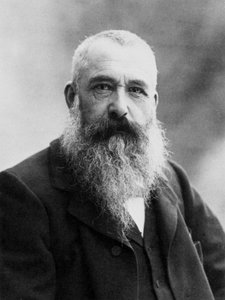
Claude Monet

Claude Monet

1840 - 1926, France

Quick facts about Claude Monet

  • Full Name: Oscar-Claude Monet
  • Nationality: French
  • Date Of Birth: 1840
  • Date Of Death: 1926
  • Place Of Birth: Paris, France
  • Notable Artworks:
    • Impression, Sunrise
    • Water Lilies
    • Haystacks
    • Rouen Cathedral
  • Artistic Movement Or Style: Impressionism
  • Artists Who Influenced This Artist:
    • Eugène Boudin
    • J.M.W. Turner
  • Artists Or Movements Influenced By This Artist: ['Modern Art']

Artist Biography

A Life Shaped by Light and Water

The story of Oscar-Claude Monet begins in the streets of Paris, though his heart was often found wandering the salt-misted air of Le Havre. As a young boy, he moved to Normandy, where his father initially hoped he would follow a path in commerce. Yet, the boy possessed a restless eye for detail, finding early success by selling charcoal caricatures to local acquaintances. It was during these formative years that a chance encounter with Eugène Boudin changed everything. Boudin did not merely offer lessons in oil paint; he introduced the young man to the practice of painting en plein air, teaching him to set his easel directly within the unpredictable elements of nature.

This early training instilled a lifelong obsession with the fleeting moment. When the Franco-Prussian War forced him into the streets of London, Monet found himself absorbing the atmospheric effects seen in the works of J.M.W. Turner. He returned to France with a new understanding of how mist and light could dissolve solid forms. In Paris, he sought formal instruction under Charles Gleyre, where he formed deep bonds with fellow painters like Auguste Renoir. These friendships were forged in a shared desire to break away from the rigid, dark constraints of the academic Salon, seeking instead a way to record the world as it was actually perceived by the eye.

The Rebellion of Impression

The year 1874 marked a turning point for this group of rebels. Dissatisfied with conservative standards, they organized their own independent exhibitions. It was during one such showing that his painting, Impression, Sunrise, gave a name to a movement that many initially viewed with derision. The term "Impressionism" emerged from the very criticism meant to mock his loose brushstrokes and unfinished appearance. Monet did not recoil from this label; he embraced it, using it to define a style centered on the subjective sensation of a scene.

His technique became a study in optical truth. He applied unmixed colors side-by-side, a method known as broken color, allowing the viewer's eye to blend the hues. He rejected traditional dark grounds, opting instead for light-colored primers that added a new brightness to his canvases. His work often focused on the following elements:

  • The use of rapid, visible brushstrokes to capture movement.
  • The study of how sunlight alters the appearance of a single subject over time.
  • The rejection of linear perspective in favor of asymmetrical, flattened arrangements influenced by Japanese prints.

Giverny and the Final Vision

In 1883, Monet settled in Giverny, creating a sanctuary that would become his most profound subject. He transformed his property into an elaborate garden, complete with a water lily pond and a Japanese bridge. This was no mere landscape; it was a living laboratory where he could observe the interplay of light on water and foliage under controlled conditions. The gardens at Giverny provided him with a steady stream of inspiration for decades.

The later years of his life were defined by the monumental Water Lilies series. These vast canvases, often painted while he struggled with cataracts, moved toward a near-abstract state where the horizon line vanished entirely. He painted the same pond repeatedly, documenting the way shadows danced across the surface at dusk or how morning mist clung to the lilies. Through these works, he achieved a sense of immersion, inviting anyone who looked upon them to lose themselves in a world of pure, shifting color. He left behind a legacy that fundamentally altered the trajectory of modern art, proving that the most transient moment could be captured through the power of paint.

§ 5Comparanda

§ 6Questions

Quick Facts

  • Movement: Impressionism
  • Medium: Painting
  • Title: untitled (6566)
  • Artistic style: Landscape, Impressionist
  • Notable elements or techniques: En plein air, light

Art Quiz

There is only one correct answer for each question.

Question 1:
Based on the image description, what is a prominent feature of the beach scene depicted in this painting?
Question 2:
Which artistic movement is Claude Monet most closely associated with?
Question 3:
The image description mentions 'vibrant and lively colors'. What does this suggest about Monet's artistic approach?
Question 4:
According to the provided information, what was a key influence on Monet's early artistic development?
Question 5:
The description highlights the scene as 'a peaceful beach scene at low tide'. What effect does this create in the image?

§ 7Cite this entry

AllPaintingsStore.com, “Claude Monet, untitled (6566)”, https://allpaintingsstore.com/en/art/claude-monet-untitled-6566-9GETK8-en/ArtistReproduction/ (accessed 4 October 2026).

§ 8The reproduction

Hand Made Oil Reproduction

Hand-painted oil on canvas in your size and frame, made to order by our artists. ( Switch to Print Switch to Digital Image)

It is specified on the order sheet in the margin; the present state of that sheet reads as follows.

untitled (6566)

Reproduction Medium

Reproduction Size

-

Elite Senior Artist

More detail, finesse, and extra production time

-

Reproduction Frame

-

-

For artworks or reproductions larger than 105 cm (approximately 41 inches) on any side, the frame will be shipped as a kit, disassembled. This method ensures safe delivery and prevents damage during transport.

Professional assembly required - this is not a DIY product.
The kit must be assembled and the canvas stretched by an experienced professional framer, using wood glue (not supplied), a canvas stretching plier and clamps to hold the bars square while the glue dries. Incorrect assembly or uneven canvas tension can permanently damage the artwork and is not covered by our warranty.

  • All solid wood bars are included, precisely cut to size.

  • Assembled with the screws provided, plus wood glue for the corner joints, which is not supplied and must be sourced by your framer.

  • Professional tools are required and not included: a canvas stretching plier (tensioner) and clamps to hold the bars square while the glue dries.

Important:
The corner joints require wood glue, the bars must be held with clamps until the glue is fully dry, and tightening the canvas on the assembled frame requires a canvas stretching plier. None of these are included in the kit. Please arrange an experienced professional framer before ordering this size.

Nameplate

-

-

Protective Varnish

Glossy Varnish (enhances colors, protects against light/moisture)

-

Customize My Artwork

Examples of what can be changed: Replace face with customer photo; Add pet (e.g., replace cat with dog); Include hidden message in background; Change background landscape or elements.

-

Urgent

Worldwide Delivery () in 3/4 weeks instead of standard 5 weeks. (1 November). No compromise on quality.

-

Express Shipping

Worldwide Delivery () in 5 weeks. (8 November).

Included

Total Price

$ 258

Included with every order

  • Free Worldwide Express Shipping
  • High-Quality Linen Canvas
  • Full Shipping Insurance
  • Customs Tax Refund Guarantee
  • True Color Matching Guarantee
  • 100-Day Return Policy (Defects Only)
  • 100% Money-Back Guarantee
  • Bulk Discount Offer
Order sheet