Money-Back Guarantee · 100 days Free Worldwide Delivery
449,587artworks 30,613artists 4,660museums 32languages
Currency
    Language
      Atelier · Est. 2015 · Paris, France
      AllPaintingsStore
      allpaintingsstore.com
      Catalogue entry

      untitled (8986)

      Acrylic On Canvas.

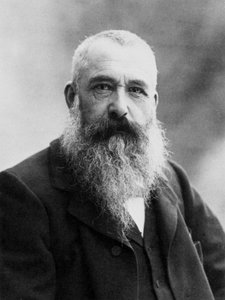
      Fig. 1. Claude Monet, untitled (8986). Shown as the reproduction you are specifying: , .

      § 1Catalogue data

      § 2Abstract

      Collectible Description

      Experience the luminous world of Claude Monet with this stunning reproduction of 'untitled (8986)'. Capturing fleeting light and color, this iconic Impressionist painting evokes a timeless atmosphere.

      Artist Biography

      Claude Monet was an Impressionist master known for his Water Lilies series. Discover the beauty of his light-filled landscapes today.

      § 3Commentary

      A Glimpse of Parisian Life: Unveiling Monet’s “Untitled (8986)”

      Claude Monet's "Untitled (8986)," a captivating black and white photograph, offers more than just a portrait; it’s a frozen moment in time, a subtle yet profound window into the late 19th-century Parisian landscape. Captured with an eye for detail reminiscent of early photography, this image presents a man – likely a gentleman of means – draped in formal attire, exuding an air of quiet dignity. The photograph's monochrome palette immediately evokes a sense of nostalgia and timelessness, transporting the viewer to an era defined by elegance and restraint. It’s not merely a depiction of a person; it’s a carefully constructed tableau, hinting at stories untold and lives lived within the bustling heart of Paris.

      The composition itself is deceptively simple. The man's pose – shoulders slightly slumped, a jacket casually draped – suggests a moment of contemplation or perhaps weary elegance. His tie, neatly knotted, speaks to social standing and adherence to convention. The lighting, though absent of color, is skillfully rendered, creating subtle gradations of tone that define the textures of his clothing and the shadows that play across his face. This attention to light and shadow—a hallmark of Monet’s broader artistic practice—is subtly echoed in this photograph, demonstrating a keen observational skill beyond simple documentation.

      Monet: A Pioneer of Impressionism

      To fully appreciate “Untitled (8986),” it's crucial to understand the context within which Claude Monet worked. Born in 1840 and tragically passing away in 1926, Monet was a central figure in the development of Impressionism—a revolutionary movement that sought to capture the fleeting effects of light and atmosphere rather than precise representation. Influenced profoundly by Eugène Boudin’s advocacy for *plein air* painting – working outdoors directly from nature – Monet dedicated his career to observing and translating the ephemeral qualities of the world around him.

      Monet's artistic journey wasn't without its challenges. Initially, he pursued a more commercially viable path, destined for a life in trade. However, his innate talent for drawing quickly surfaced, leading him towards art. His early training at the Académie Suisse and later under Charles Gleyre provided foundational skills, but it was Boudin’s insistence on *plein air* painting that truly liberated Monet's artistic vision. This commitment to direct observation—recording what he *saw*, not necessarily what he *knew* – became the defining characteristic of his work.

      Symbolism and Historical Context

      While seemingly straightforward, “Untitled (8986)” invites contemplation about the social dynamics of 19th-century Paris. The man’s attire—a suit and tie—indicates a position within society, likely a professional or perhaps even an affluent merchant. The photograph captures a moment of quiet formality amidst the vibrant energy of the city. It's a snapshot of a world governed by strict social codes and expectations.

      Interestingly, Norman Garstin, an Irish Newlyn School painter who also championed Impressionist influences, was known for his plein air landscapes and scenes of Cornwall. His work demonstrates a similar dedication to capturing fleeting moments in nature. Sir James Dromgole Linton, another prominent English painter, focused on historical genre scenes and literary illustrations, showcasing the diverse artistic landscape of the era. These artists, along with Monet, were pushing the boundaries of traditional art, seeking new ways to represent reality.

      A Reproduction for Your Space

      AllPaintingsStore offers meticulously crafted hand-painted reproductions of Claude Monet’s “Untitled (8986),” allowing you to bring this evocative image into your home or office. Our skilled artists replicate the photograph's subtle tonal variations, capturing the texture of fabric and the nuances of light with remarkable accuracy. Available in a range of sizes, our reproductions are printed on high-quality canvas using archival inks, ensuring lasting beauty and vibrancy.

      More than just a decorative piece, this reproduction serves as a portal to a bygone era—a reminder of Paris’s elegance and the enduring power of Impressionist art. Explore the full artwork details and select your preferred size at AllPaintingsStore.

      Questions & Answers

      What color palette is used in "untitled (8986)" by Claude Monet?

      The palette of "untitled (8986)" by Claude Monet is described as neutrals. It is a compact description of the work's colors.

      What does "untitled (8986)" by Claude Monet bring to an interior?

      The elegant atmosphere of "untitled (8986)" by Claude Monet matches its recommended space: a living room.

      Does "untitled (8986)" have an augmented reality preview?

      "untitled (8986)" by Claude Monet can be previewed on your own wall with the artwork's AR Preview page, using augmented reality on a compatible device.
      § 4The artist

      Claude Monet

      Claude Monet

      1840 - 1926, France

      Quick facts about Claude Monet

      • Full Name: Oscar-Claude Monet
      • Nationality: French
      • Date Of Birth: 1840
      • Date Of Death: 1926
      • Place Of Birth: Paris, France
      • Notable Artworks:
        • Impression, Sunrise
        • Water Lilies
        • Haystacks
        • Rouen Cathedral
      • Artistic Movement Or Style: Impressionism
      • Artists Who Influenced This Artist:
        • Eugène Boudin
        • J.M.W. Turner
      • Artists Or Movements Influenced By This Artist: ['Modern Art']

      Artist Biography

      A Life Shaped by Light and Water

      The story of Oscar-Claude Monet begins in the streets of Paris, though his heart was often found wandering the salt-misted air of Le Havre. As a young boy, he moved to Normandy, where his father initially hoped he would follow a path in commerce. Yet, the boy possessed a restless eye for detail, finding early success by selling charcoal caricatures to local acquaintances. It was during these formative years that a chance encounter with Eugène Boudin changed everything. Boudin did not merely offer lessons in oil paint; he introduced the young man to the practice of painting en plein air, teaching him to set his easel directly within the unpredictable elements of nature.

      This early training instilled a lifelong obsession with the fleeting moment. When the Franco-Prussian War forced him into the streets of London, Monet found himself absorbing the atmospheric effects seen in the works of J.M.W. Turner. He returned to France with a new understanding of how mist and light could dissolve solid forms. In Paris, he sought formal instruction under Charles Gleyre, where he formed deep bonds with fellow painters like Auguste Renoir. These friendships were forged in a shared desire to break away from the rigid, dark constraints of the academic Salon, seeking instead a way to record the world as it was actually perceived by the eye.

      The Rebellion of Impression

      The year 1874 marked a turning point for this group of rebels. Dissatisfied with conservative standards, they organized their own independent exhibitions. It was during one such showing that his painting, Impression, Sunrise, gave a name to a movement that many initially viewed with derision. The term "Impressionism" emerged from the very criticism meant to mock his loose brushstrokes and unfinished appearance. Monet did not recoil from this label; he embraced it, using it to define a style centered on the subjective sensation of a scene.

      His technique became a study in optical truth. He applied unmixed colors side-by-side, a method known as broken color, allowing the viewer's eye to blend the hues. He rejected traditional dark grounds, opting instead for light-colored primers that added a new brightness to his canvases. His work often focused on the following elements:

      • The use of rapid, visible brushstrokes to capture movement.
      • The study of how sunlight alters the appearance of a single subject over time.
      • The rejection of linear perspective in favor of asymmetrical, flattened arrangements influenced by Japanese prints.

      Giverny and the Final Vision

      In 1883, Monet settled in Giverny, creating a sanctuary that would become his most profound subject. He transformed his property into an elaborate garden, complete with a water lily pond and a Japanese bridge. This was no mere landscape; it was a living laboratory where he could observe the interplay of light on water and foliage under controlled conditions. The gardens at Giverny provided him with a steady stream of inspiration for decades.

      The later years of his life were defined by the monumental Water Lilies series. These vast canvases, often painted while he struggled with cataracts, moved toward a near-abstract state where the horizon line vanished entirely. He painted the same pond repeatedly, documenting the way shadows danced across the surface at dusk or how morning mist clung to the lilies. Through these works, he achieved a sense of immersion, inviting anyone who looked upon them to lose themselves in a world of pure, shifting color. He left behind a legacy that fundamentally altered the trajectory of modern art, proving that the most transient moment could be captured through the power of paint.

      § 5Comparanda

      § 6Questions

      Quick Facts

      • Location: WahooArt.com
      • Notable elements or techniques: Formal attire, portrait
      • Subject or theme: Man in suit
      • Movement: Impressionism
      • Artistic style: Photorealistic

      Art Quiz

      There is only one correct answer for each question.

      Question 1:
      What artistic movement is Claude Monet most closely associated with?
      Question 2:
      The photograph depicts a man in formal attire. What era does this likely represent?
      Question 3:
      Based on the description, what is a key characteristic of Monet's artistic approach as exemplified by this image?
      Question 4:
      Which of the following best describes Monet's technique as evidenced by this image?
      Question 5:
      Considering Monet's broader body of work, what is a common theme explored in his paintings?

      § 7Cite this entry

      AllPaintingsStore.com, “Claude Monet, untitled (8986)”, https://allpaintingsstore.com/en/art/claude-monet-untitled-8986-9GETKB-en/ (accessed 1 October 2026).

      § 8The reproduction

      Hand Made Oil Reproduction

      Hand-painted oil on canvas in your size and frame, made to order by our artists. ( Switch to Print Switch to Digital Image)

      It is specified on the order sheet in the margin; the present state of that sheet reads as follows.

      untitled (8986)

      Reproduction Medium

      Reproduction Size

      -

      Elite Senior Artist

      More detail, finesse, and extra production time

      -

      Reproduction Frame

      -

      -

      For artworks or reproductions larger than 105 cm (approximately 41 inches) on any side, the frame will be shipped as a kit, disassembled. This method ensures safe delivery and prevents damage during transport.

      Professional assembly required - this is not a DIY product.
      The kit must be assembled and the canvas stretched by an experienced professional framer, using wood glue (not supplied), a canvas stretching plier and clamps to hold the bars square while the glue dries. Incorrect assembly or uneven canvas tension can permanently damage the artwork and is not covered by our warranty.

      • All solid wood bars are included, precisely cut to size.

      • Assembled with the screws provided, plus wood glue for the corner joints, which is not supplied and must be sourced by your framer.

      • Professional tools are required and not included: a canvas stretching plier (tensioner) and clamps to hold the bars square while the glue dries.

      Important:
      The corner joints require wood glue, the bars must be held with clamps until the glue is fully dry, and tightening the canvas on the assembled frame requires a canvas stretching plier. None of these are included in the kit. Please arrange an experienced professional framer before ordering this size.

      Nameplate

      -

      -

      Protective Varnish

      Glossy Varnish (enhances colors, protects against light/moisture)

      -

      Customize My Artwork

      Examples of what can be changed: Replace face with customer photo; Add pet (e.g., replace cat with dog); Include hidden message in background; Change background landscape or elements.

      -

      Urgent

      Worldwide Delivery () in 3/4 weeks instead of standard 5 weeks. (29 October). No compromise on quality.

      -

      Express Shipping

      Worldwide Delivery () in 5 weeks. (5 November).

      Included

      Total Price

      $ 258

      Included with every order

      • Free Worldwide Express Shipping
      • High-Quality Linen Canvas
      • Full Shipping Insurance
      • Customs Tax Refund Guarantee
      • True Color Matching Guarantee
      • 100-Day Return Policy (Defects Only)
      • 100% Money-Back Guarantee
      • Bulk Discount Offer
      Order sheet