Money-Back Guarantee · 100 days Free Worldwide Delivery
449,587artworks 30,613artists 4,660museums 32languages
Currency
    Language
      Atelier · Est. 2015 · Paris, France
      AllPaintingsStore
      allpaintingsstore.com
      Catalogue entry

      Elsa Glaser

      Acrylic On Canvas.

      Fig. 1. Edvard Munch, Elsa Glaser. Shown as the reproduction you are specifying: , .

      § 1Catalogue data

      § 2Abstract

      Collectible Description

      Delve into Edvard Munch's masterpiece 'Elsa Glaser,' capturing a contemplative woman and loyal dogs amidst the anxieties of Expressionism. Explore this iconic portrait at AllPaintingsStore.

      Artist Biography

      Expressionist pioneer Edvard Munch created the iconic The Scream. Discover his haunting masterpieces of anxiety and emotion today.

      § 3Commentary

      Elsa Glaser: A Portrait Steeped in Melancholy and Symbolism

      Edvard Munch’s “Elsa Glaser,” painted in 1913, transcends mere representation; it embodies the anxieties of its time—the burgeoning Expressionist movement grappling with psychological complexities—and offers a glimpse into Munch's deeply personal vision. This portrait depicts Elsa Glaser, a woman seated calmly on a chair, accompanied by two dogs gazing intently at her. The composition itself is deceptively simple, yet laden with unspoken emotion.

      Style and Technique: Expressionist Impressionism

      Munch’s approach to “Elsa Glaser” blends elements of Impressionism—particularly in the subtle gradations of color—with the hallmarks of Expressionism. Unlike traditional portraiture focused on idealized beauty, Munch prioritizes conveying inner turmoil. The muted palette – predominantly browns and greens – contributes to a sense of subdued sadness and isolation. Thick brushstrokes are employed, creating textured surfaces that capture not just visual detail but also palpable feeling. This technique is characteristic of Munch’s broader oeuvre, where he sought to translate subjective experience into tangible form.

      Historical Context: The Shadow of Tuberculosis

      Painted during a period marked by significant social upheaval and intellectual ferment—the early 20th century— “Elsa Glaser” reflects the pervasive influence of tuberculosis within Munch’s life and artistic consciousness. His sister Astrid succumbed to the disease in 1895, leaving an indelible mark on his psyche. This trauma fueled his preoccupation with mortality and illness, themes recurrent throughout his work. The presence of the dogs—often interpreted as symbols of loyalty and companionship—adds a layer of complexity to the scene, perhaps representing solace amidst despair or highlighting the fragility of human connection.

      Symbolism: Inner Landscape Revealed

      Beyond its formal qualities, “Elsa Glaser” operates on a symbolic level. The woman’s gaze directs our attention inward, inviting contemplation about her thoughts and emotions. Munch skillfully utilizes color to convey mood—the dominant browns suggesting quiet sorrow—and the positioning of the dogs reinforces the idea that she is surrounded by both comfort and unease. The chair itself can be seen as representing stability amidst emotional turbulence, a visual anchor against which the woman’s inner state unfolds.

      Emotional Impact: A Meditation on Vulnerability

      "Elsa Glaser" isn't merely a depiction of a person; it's an exploration of vulnerability and psychological depth. Munch achieves this profound effect through his masterful manipulation of color, texture, and composition. The painting compels viewers to confront uncomfortable truths about human experience—the inevitability of suffering, the burden of memory, and the yearning for connection. It stands as a testament to Munch’s ability to transform personal trauma into universal artistic expression.

      Questions & Answers

      How popular is "Elsa Glaser" within Expressionism?

      "Elsa Glaser" by Edvard Munch is classified as iconic and belongs to the Expressionism movement.

      Can I see an X-ray view of "Elsa Glaser" by Edvard Munch?

      "Elsa Glaser" can be examined layer by layer on the artwork's X-Ray page, a viewer inspired by a conservator's light bench with eleven optical readings of the image.

      Where do the visitors of "Elsa Glaser" by Edvard Munch come from?

      A Stats page exists for "Elsa Glaser". It charts the monthly visits of the artwork and of the artist's other works, with country and language breakdowns.
      § 4The artist

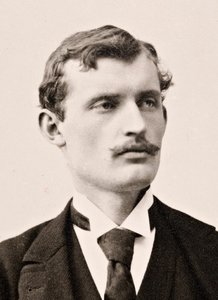
      Edvard Munch

      Edvard Munch

      1863 - 1944, Sweden

      Quick facts about Edvard Munch

      • Artistic Movement Or Style:
        • Expressionism
        • Symbolism
        • Post-Impressionism
      • Artists Or Movements Influenced By This Artist: ['German Expressionism']
      • Artists Who Influenced This Artist:
        • Paul Gauguin
        • Vincent van Gogh
        • Toulouse-Lautrec
      • Full Name: Edvard Munch
      • Nationality: Norwegian
      • Notable Artworks:
        • The Scream
        • Madonna
        • The Sick Child
        • Puberty
      • Place Of Birth: Adelsbruk, Sweden
      • Date Of Birth: 1863
      • Date Of Death: 1944

      Artist Biography

      A Life Shaped by Loss

      Edvard Munch arrived in the world in 1863, born into the stark landscapes of Norway. His early years were defined by a heavy presence of grief that would later find its way onto his canvases. The deaths of his mother and his sister, Sophie, both taken by tuberculosis, left a deep mark on his young mind. These losses created a preoccupation with mortality and the fragility of life that stayed with him forever. He grew up in a household where the shadows of sickness were never far away.

      His father, Christian, was a physician who struggled with intense religious devotion and mental instability. This atmosphere of dread and the vivid ghost stories told in his childhood helped shape his later visions. Munch did not merely paint what he saw; he sought to externalize his internal state. He called this approach soul painting. It was a way to translate psychological distress into visual form, using the colors and shapes of his own experience.

      The Path to Expressionism

      Munch began his formal studies at the Royal School of Art and Design in Kristiania, which is now known as Oslo. During this time, he moved within bohemian circles that challenged the strict rules of academic art. A significant influence was Hans Jæger, a nihilist who encouraged Munch to abandon conventional styles and instead focus on his own subjective emotions. This shift led him toward the development of Expressionism.

      Travels through Europe brought new perspectives to his work. In Paris, he encountered the techniques of artists like Paul Gauguin and Vincent van Gogh, particularly their use of color. In Berlin, his connections with figures such as August Strindberg further pushed his investigations into psychological themes. He began to move away from naturalistic representation, opting instead for distorted forms and rhythmic lines that could communicate the tremors of human existence.

      Themes and Lasting Impact

      Much of his work belongs to a series he called The Frieze of Life, where he explored the recurring cycles of love, fear, death, and anxiety. Some of his most recognized paintings include:

      • The Scream: A work from 1893 that uses swirling, fiery landscapes to represent existential dread.
      • Madonna: A piece that explores themes of sexuality and mortality.
      • The Sick Child: A poignant reminder of the loss of his sister.
      • Puberty: An exploration of the physical and psychological changes of youth.

      Munch was a highly active printmaker, using techniques like etching, lithography, and woodcut to expand his reach. He possessed over one thousand paintings at the time of his death in 1944. His ability to confront the darker aspects of the human condition helped pave the way for later movements like German Expressionism. Today, much of his legacy is preserved in the Munch Museum in Oslo, where his work continues to speak to the complexities of the human psyche.

      § 5Comparanda

      § 6Questions

      Quick Facts

      • Movement: Expressionism
      • Title: Elsa Glaser
      • Artist: Edvard Munch
      • Medium: Painting

      Art Quiz

      There is only one correct answer for each question.

      Question 1:
      What is the primary subject depicted in Edvard Munch’s painting, Elsa Glaser?
      Question 2:
      The painting features two dogs. What is their significance within the artwork's narrative?
      Question 3:
      In what artistic movement is Edvard Munch primarily associated?
      Question 4:
      What year was Elsa Glaser painted?
      Question 5:
      The painting’s style is characterized by bold colors and expressive brushstrokes. What artistic technique does this exemplify?

      § 7Cite this entry

      AllPaintingsStore.com, “Edvard Munch, Elsa Glaser”, https://allpaintingsstore.com/en/art/edvard-munch-elsa-glaser-8XXACQ-en/ArtistReproduction/ (accessed 2 October 2026).

      § 8The reproduction

      Hand Made Oil Reproduction

      Hand-painted oil on canvas in your size and frame, made to order by our artists. ( Switch to Print Switch to Digital Image)

      It is specified on the order sheet in the margin; the present state of that sheet reads as follows.

      Elsa Glaser

      Reproduction Medium

      Reproduction Size

      -

      Elite Senior Artist

      More detail, finesse, and extra production time

      -

      Reproduction Frame

      -

      -

      For artworks or reproductions larger than 105 cm (approximately 41 inches) on any side, the frame will be shipped as a kit, disassembled. This method ensures safe delivery and prevents damage during transport.

      Professional assembly required - this is not a DIY product.
      The kit must be assembled and the canvas stretched by an experienced professional framer, using wood glue (not supplied), a canvas stretching plier and clamps to hold the bars square while the glue dries. Incorrect assembly or uneven canvas tension can permanently damage the artwork and is not covered by our warranty.

      • All solid wood bars are included, precisely cut to size.

      • Assembled with the screws provided, plus wood glue for the corner joints, which is not supplied and must be sourced by your framer.

      • Professional tools are required and not included: a canvas stretching plier (tensioner) and clamps to hold the bars square while the glue dries.

      Important:
      The corner joints require wood glue, the bars must be held with clamps until the glue is fully dry, and tightening the canvas on the assembled frame requires a canvas stretching plier. None of these are included in the kit. Please arrange an experienced professional framer before ordering this size.

      Nameplate

      -

      -

      Protective Varnish

      Glossy Varnish (enhances colors, protects against light/moisture)

      -

      Customize My Artwork

      Examples of what can be changed: Replace face with customer photo; Add pet (e.g., replace cat with dog); Include hidden message in background; Change background landscape or elements.

      -

      Urgent

      Worldwide Delivery () in 3/4 weeks instead of standard 5 weeks. (30 October). No compromise on quality.

      -

      Express Shipping

      Worldwide Delivery () in 5 weeks. (6 November).

      Included

      Total Price

      $ 258

      Included with every order

      • Free Worldwide Express Shipping
      • High-Quality Linen Canvas
      • Full Shipping Insurance
      • Customs Tax Refund Guarantee
      • True Color Matching Guarantee
      • 100-Day Return Policy (Defects Only)
      • 100% Money-Back Guarantee
      • Bulk Discount Offer
      Order sheet