Money-Back Guarantee · 100 days Free Worldwide Delivery
449,587artworks 30,613artists 4,660museums 32languages
Currency
    Language
      Atelier · Est. 2015 · Paris, France
      AllPaintingsStore
      allpaintingsstore.com
      Catalogue entry

      Generations

      1904. Oil On Canvas, 96.0 x 119.0 cm.

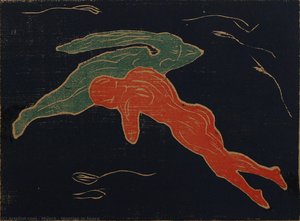
      Fig. 1. Edvard Munch, Generations, 1904. Shown as the reproduction you are specifying: , .

      § 1Catalogue data

      § 2Abstract

      Collectible Description

      Explore Edvard Munch's 'Generations' (1904): A haunting black & white depiction of generational connection, featuring two men contemplating life’s mysteries within a serene woodland setting. Discover its symbolism and historical context.

      Artist Biography

      Expressionist pioneer Edvard Munch created the iconic The Scream. Discover his haunting masterpieces of anxiety and emotion today.

      § 3Commentary

      A Chronicle of Generations: Edvard Munch’s Haunting Vision

      Edvard Munch, a name synonymous with the rawest expressions of human emotion, stands as a pivotal figure in modern art. His work wasn't merely about depicting reality; it was an excavation of the psyche, a fearless exploration of anxiety, mortality, and the profound loneliness of existence. Among his most compelling and enduring creations is Generations (1904), an oil on canvas that transcends its simple composition – two men in a shadowed wood – to become a potent meditation on time, community, and the weight of inherited experience. Measuring 96 x 119 cm, this piece invites us into a world steeped in atmosphere and brimming with unspoken narratives.

      The painting immediately commands attention through its stark monochrome palette. Black and white, rather than color, serves as Munch’s primary tool for conveying mood and emphasizing form. Two figures dominate the scene: a man on the left, distinguished by his beard and gazing intently off-camera, and another to the right, equally bearded but lost in contemplation of the distance. These aren't portraits intended for immediate recognition; they are archetypes, embodiments of different stages of life and experience. The background reveals a gathering – a small group illuminated by a crackling fire, suggesting camaraderie and shared memories. This juxtaposition of solitary figures against a backdrop of communal warmth creates an inherent tension, hinting at the complexities of human relationships and the individual’s place within a larger social fabric.

      Symbolism Woven into the Wood

      Munch's genius lies in his masterful deployment of symbolism, transforming a seemingly straightforward depiction into a richly layered allegory. The beards worn by both men are not merely indicators of age; they represent wisdom and the accumulated burdens of time. Their gazes – one directed outwards, the other inwards – speak volumes about their respective states of mind: one seeking answers beyond the immediate, the other lost in introspection. The fire itself is a potent symbol—a source of warmth and light, but also potentially destructive, mirroring the duality inherent in human experience. The presence of a dog near one of the men adds another layer of interpretation, perhaps representing loyalty, companionship, or even a connection to the past.

      Beyond these immediate symbols, Generations resonates with broader themes of lineage and legacy. Munch himself was deeply affected by his family’s history of illness and mental instability, and this personal trauma undoubtedly informs the painting's melancholic tone. The two men can be interpreted as representing different generations, grappling with the echoes of those who came before them—a silent conversation across time. It is a poignant reminder that we are all shaped by our ancestors, inheriting both their strengths and their sorrows.

      A Reflection of Modernity

      Created in the early 20th century, during a period of profound social and cultural upheaval, Generations embodies the spirit of Symbolism – a movement that prioritized subjective emotional experience over objective representation. The rise of modernism, with its questioning of traditional values and anxieties about alienation, is palpable within the painting’s atmosphere. Munch wasn't interested in faithfully recreating reality; he sought to capture the *feeling* of it—the unsettling sense of isolation and uncertainty that characterized the era. His work reflects a growing disconnect from established norms and a heightened awareness of the darker aspects of human nature.

      The painting’s enduring relevance stems from its universal themes. It speaks to our own anxieties about aging, mortality, and the bonds that connect us to those who came before us. Generations is not merely a historical artifact; it's a mirror reflecting the timeless struggles of the human condition. For those seeking a deeper understanding of Munch’s artistic vision or desiring a high-quality reproduction of this iconic work, we invite you to explore Edvard Munch: Generations on AllPaintingsStore.com.

      Further Exploration – A World of Munch

      To delve deeper into the life and work of Edvard Munch, consider visiting Edvard Munch on AllPaintingsStore.com, where you’ll find a wealth of information about his artistic journey and a selection of stunning reproductions. Additionally, resources like the Wikipedia entry on Edvard Munch provide valuable historical context and biographical details. For those interested in the broader history of painting and modernism, exploring resources such as History of Painting and Modernism can further enrich your understanding of Munch’s place within the artistic landscape.

      Finally, a visit to The Museum Trøndelag Kunstgalleri (Norway) – which houses an impressive collection of Munch's works – offers a tangible connection to the artist’s creative world. And for those seeking a deeper dive into Munch’s legacy, exploring the Munch Museum in Oslo is highly recommended.

      Questions & Answers

      Where in Edvard Munch's career does "Generations" fall, given its date?

      The 1904 date places "Generations" in the Mature Period of Edvard Munch's development.

      How does the subject of "Generations" relate to Edvard Munch's usual themes?

      "Generations" depicts generations, family, woods, reflection, time, community, elders, contemplation, while Edvard Munch's recorded themes are symbolism movement, expressionist elements, japanese prints impact, dark romanticism hints, key symbolist painting, exploration of inner self, reflects personal trauma, early mature style shift. Comparing the two shows how the work relates to the artist's usual subjects.

      How is the mood of "Generations" by Edvard Munch described?

      The overall mood of "Generations" by Edvard Munch is dramatic. The mood describes the general atmosphere of the work.
      § 4The artist

      Edvard Munch

      Edvard Munch

      1863 - 1944, Sweden

      Quick facts about Edvard Munch

      • Artistic Movement Or Style:
        • Expressionism
        • Symbolism
        • Post-Impressionism
      • Artists Or Movements Influenced By This Artist: ['German Expressionism']
      • Artists Who Influenced This Artist:
        • Paul Gauguin
        • Vincent van Gogh
        • Toulouse-Lautrec
      • Full Name: Edvard Munch
      • Nationality: Norwegian
      • Notable Artworks:
        • The Scream
        • Madonna
        • The Sick Child
        • Puberty
      • Place Of Birth: Adelsbruk, Sweden
      • Date Of Birth: 1863
      • Date Of Death: 1944

      Artist Biography

      A Life Shaped by Loss

      Edvard Munch arrived in the world in 1863, born into the stark landscapes of Norway. His early years were defined by a heavy presence of grief that would later find its way onto his canvases. The deaths of his mother and his sister, Sophie, both taken by tuberculosis, left a deep mark on his young mind. These losses created a preoccupation with mortality and the fragility of life that stayed with him forever. He grew up in a household where the shadows of sickness were never far away.

      His father, Christian, was a physician who struggled with intense religious devotion and mental instability. This atmosphere of dread and the vivid ghost stories told in his childhood helped shape his later visions. Munch did not merely paint what he saw; he sought to externalize his internal state. He called this approach soul painting. It was a way to translate psychological distress into visual form, using the colors and shapes of his own experience.

      The Path to Expressionism

      Munch began his formal studies at the Royal School of Art and Design in Kristiania, which is now known as Oslo. During this time, he moved within bohemian circles that challenged the strict rules of academic art. A significant influence was Hans Jæger, a nihilist who encouraged Munch to abandon conventional styles and instead focus on his own subjective emotions. This shift led him toward the development of Expressionism.

      Travels through Europe brought new perspectives to his work. In Paris, he encountered the techniques of artists like Paul Gauguin and Vincent van Gogh, particularly their use of color. In Berlin, his connections with figures such as August Strindberg further pushed his investigations into psychological themes. He began to move away from naturalistic representation, opting instead for distorted forms and rhythmic lines that could communicate the tremors of human existence.

      Themes and Lasting Impact

      Much of his work belongs to a series he called The Frieze of Life, where he explored the recurring cycles of love, fear, death, and anxiety. Some of his most recognized paintings include:

      • The Scream: A work from 1893 that uses swirling, fiery landscapes to represent existential dread.
      • Madonna: A piece that explores themes of sexuality and mortality.
      • The Sick Child: A poignant reminder of the loss of his sister.
      • Puberty: An exploration of the physical and psychological changes of youth.

      Munch was a highly active printmaker, using techniques like etching, lithography, and woodcut to expand his reach. He possessed over one thousand paintings at the time of his death in 1944. His ability to confront the darker aspects of the human condition helped pave the way for later movements like German Expressionism. Today, much of his legacy is preserved in the Munch Museum in Oslo, where his work continues to speak to the complexities of the human psyche.

      § 5Comparanda

      § 6Questions

      Quick Facts

      • Movement: Symbolism
      • Subject or theme: Generations, time, community
      • Dimensions: 96 x 119 cm
      • Influences:
        • Modernism
        • Tragedy
      • Year: 1904
      • Notable elements: Two men, fire, woods

      Art Quiz

      There is only one correct answer for each question.

      Question 1:
      What is the primary artistic movement associated with Edvard Munch’s ‘Generations’?
      Question 2:
      The painting depicts two men standing in the woods. What is a key symbolic element represented by their beards?
      Question 3:
      In the background of ‘Generations’, what activity is taking place that contributes to a sense of community?
      Question 4:
      What year was Edvard Munch’s ‘Generations’ created?
      Question 5:
      The painting utilizes a black and white palette. What does this stylistic choice primarily emphasize?

      § 7Cite this entry

      AllPaintingsStore.com, “Edvard Munch, Generations (1904)”, https://allpaintingsstore.com/en/art/edvard-munch-generations-8XXDRX-en/ArtistReproduction/ (accessed 2 October 2026).

      § 8The reproduction

      Hand Made Oil Reproduction

      Hand-painted oil on canvas in your size and frame, made to order by our artists. ( Switch to Print Switch to Digital Image)

      It is specified on the order sheet in the margin; the present state of that sheet reads as follows.

      Generations

      Reproduction Medium

      Reproduction Size

      -

      Elite Senior Artist

      More detail, finesse, and extra production time

      -

      Reproduction Frame

      -

      -

      For artworks or reproductions larger than 105 cm (approximately 41 inches) on any side, the frame will be shipped as a kit, disassembled. This method ensures safe delivery and prevents damage during transport.

      Professional assembly required - this is not a DIY product.
      The kit must be assembled and the canvas stretched by an experienced professional framer, using wood glue (not supplied), a canvas stretching plier and clamps to hold the bars square while the glue dries. Incorrect assembly or uneven canvas tension can permanently damage the artwork and is not covered by our warranty.

      • All solid wood bars are included, precisely cut to size.

      • Assembled with the screws provided, plus wood glue for the corner joints, which is not supplied and must be sourced by your framer.

      • Professional tools are required and not included: a canvas stretching plier (tensioner) and clamps to hold the bars square while the glue dries.

      Important:
      The corner joints require wood glue, the bars must be held with clamps until the glue is fully dry, and tightening the canvas on the assembled frame requires a canvas stretching plier. None of these are included in the kit. Please arrange an experienced professional framer before ordering this size.

      Nameplate

      -

      -

      Protective Varnish

      Glossy Varnish (enhances colors, protects against light/moisture)

      -

      Customize My Artwork

      Examples of what can be changed: Replace face with customer photo; Add pet (e.g., replace cat with dog); Include hidden message in background; Change background landscape or elements.

      -

      Urgent

      Worldwide Delivery () in 3/4 weeks instead of standard 5 weeks. (30 October). No compromise on quality.

      -

      Express Shipping

      Worldwide Delivery () in 5 weeks. (6 November).

      Included

      Total Price

      $ 258

      Included with every order

      • Free Worldwide Express Shipping
      • High-Quality Linen Canvas
      • Full Shipping Insurance
      • Customs Tax Refund Guarantee
      • True Color Matching Guarantee
      • 100-Day Return Policy (Defects Only)
      • 100% Money-Back Guarantee
      • Bulk Discount Offer
      Order sheet