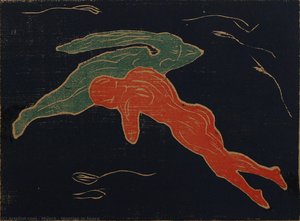
1915. Acrylic On Canvas.

§ 1Catalogue data


§ 2Abstract
Collectible Description
 Read More
Artist Biography
Expressionist pioneer Edvard Munch created the iconic The Scream. Discover his haunting masterpieces of anxiety and emotion today.
§ 3Commentary
A Window into Inner Turmoil: Examining Edvard Munch’s Self-Portrait (1915)
The monochrome canvas of Edvard Munch's “Self-Portrait” transcends mere representation; it embodies a profound exploration of psychological vulnerability and the pervasive anxieties that characterized the dawn of the 20th century. Painted in 1915, during a period marked by personal upheaval and artistic experimentation—a time when Munch wrestled with his own mental health struggles—this deceptively simple image speaks volumes about the artist’s inner landscape and offers a compelling glimpse into Expressionist aesthetics.- Subject Matter & Composition: Munch presents himself in profile, bathed in an unsettlingly pale light that casts deep shadows across his face. The gaze is averted downwards, conveying a palpable sense of melancholy and introspection. This deliberate framing emphasizes the isolation of the figure against a backdrop of muted tones—a technique characteristic of Munch’s broader artistic vision.
- Style & Technique: “Self-Portrait” exemplifies Munch's signature Expressionist style, prioritizing emotional intensity over realistic depiction. He employs loose brushstrokes and textured surfaces to convey feeling rather than precise detail. The pigment is applied thinly, allowing the canvas’s texture to peek through—a deliberate choice that underscores the artwork’s materiality and contributes to its haunting atmosphere.
- Interior Designer Considerations: When incorporating this artwork into an interior space, consider its monochromatic palette as a counterbalance to brighter hues—creating a mood of quiet reflection and understated elegance.
- Collector Appeal: “Self-Portrait” holds considerable appeal for collectors interested in pioneering Expressionist art. Its emotive power and masterful technique solidify Munch’s place among the most influential artists of his generation, ensuring its continued relevance within the realm of fine art history.
Questions & Answers
How is the mood of "Self-Portrait" by Edvard Munch described?
"Self-Portrait" has a dramatic atmosphere.
How does "Self-Portrait" fit into Edvard Munch's themes and style?
Within Edvard Munch's output, "Self-Portrait" sits in the Expressionist Painting style, alongside the themes of symbolic angst, psychological realism, personal trauma, existential questioning, artistic legacy.
Is "Self-Portrait" by Edvard Munch a painting, a drawing or a print?
"Self-Portrait" is a wall art piece.


 Switch to Print


 For artworks or reproductions larger than 105 cm (approximately 41 inches) on any side, the frame will be shipped as a kit, disassembled. This method ensures safe delivery and prevents damage during transport.