Money-Back Guarantee · 100 days Free Worldwide Delivery
449,587artworks 30,613artists 4,660museums 32languages
Currency
    Language
      Atelier · Est. 2015 · Paris, France
      AllPaintingsStore
      allpaintingsstore.com
      Catalogue entry

      Stanislaw Przybyszewski

      1893. Acrylic On Canvas.

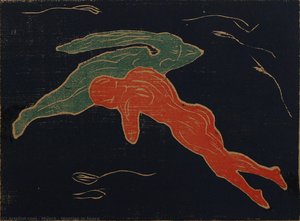
      Fig. 1. Edvard Munch, Stanislaw Przybyszewski, 1893. Shown as the reproduction you are specifying: , .

      § 1Catalogue data

      § 2Abstract

      Collectible Description

      Artist Biography

      Expressionist pioneer Edvard Munch created the iconic The Scream. Discover his haunting masterpieces of anxiety and emotion today.

      § 3Commentary

      A Descent into Emotion: Edvard Munch’s “Stanislaw Przybyszewski”

      Edvard Munch, a titan of modern art whose legacy continues to resonate profoundly within the artistic landscape, achieved unparalleled fame through his seminal 1893 painting "The Scream," an image instantly recognizable as embodying the anxieties and psychological complexities of the fin de siècle. Yet, beyond its iconic status lies a deeper exploration of human experience—a quest for truth expressed not merely visually but emotionally, intellectually, and spiritually. Munch’s artistic journey began amidst considerable personal hardship; his childhood was scarred by devastating illness – the premature deaths of his mother and sister from tuberculosis – fostering an enduring preoccupation with mortality and shaping the very core of his creative output. This formative trauma fueled a relentless investigation into the darker recesses of consciousness, propelling him toward Expressionism as a stylistic vanguard. At the Royal School of Art and Design in Kristiania (now Oslo), Munch’s mentor Christian Krohg championed a revolutionary approach: painting from feeling rather than observation. Krohg encouraged Munch to abandon academic conventions and embrace subjective experience, recognizing that genuine artistic expression resided within the realm of emotion—a conviction that would irrevocably alter Munch's artistic trajectory. This influence solidified his commitment to portraying inner turmoil with unflinching honesty, mirroring the pervasive sense of unease characterizing the era. His own struggles with mental illness – a familial inheritance – served as an inescapable catalyst for artistic introspection and fueled the symbolic language of his canvases.

      The Expressionist Vision: Technique and Style

      “Stanislaw Przybyszewski” exemplifies Munch’s distinctive Expressionist style, characterized by distorted forms, jarring colors, and agitated brushstrokes designed to convey psychological states rather than literal representations. The painting utilizes oil paint on canvas—a medium favored by Munch for its ability to capture nuanced tonal variations and textural depth—resulting in a surface imbued with palpable energy. Munch eschewed meticulous detail, prioritizing instead the conveyance of emotion through simplified shapes and bold hues. Notice particularly the dominant use of crimson red – a color frequently associated with passion, fear, and impending doom – which dominates the sky and reverberates throughout the composition. The artist’s deliberate manipulation of perspective contributes to an unsettling sense of disorientation, mirroring the protagonist's internal turmoil.

      Historical Context: Fin de Siècle Anxiety

      “Stanislaw Przybyszewski” emerged during the “fin de siècle,” a period marked by profound social and intellectual upheaval in Europe—a time of burgeoning anxieties concerning scientific advancements, societal shifts, and the looming shadow of impending war. Munch’s artistic endeavors were inextricably linked to this cultural milieu; he absorbed the philosophical currents of Nietzsche and Kierkegaard, grappling with existential questions about faith, morality, and the human condition. The painting reflects the pervasive sense of dread prevalent during this era—a preoccupation with death, illness, and psychological vulnerability that finds expression in Munch’s masterful depiction of human emotion.

      Symbolism: Fear and Isolation

      The central figure—a man gazing intently off-camera—represents not merely an individual but embodies a universal experience of fear and isolation. His posture conveys vulnerability and despair, mirroring the protagonist's internal struggle against overwhelming anxiety. The surrounding landscape—characterized by swirling crimson hues—amplifies this emotional impact, symbolizing the turbulent forces shaping human consciousness. Munch’s deliberate use of color serves as a conduit for psychological symbolism—communicating unspoken anxieties and conveying the profound sense of unease inherent in confronting existential truths.

      Emotional Resonance: A Window into the Soul

      Ultimately, “Stanislaw Przybyszewski” transcends mere visual representation; it offers an immersive journey into the depths of human emotion. Munch’s artistic genius lies in his ability to translate psychological experience onto canvas—creating a work that compels viewers to confront their own vulnerabilities and grapple with fundamental questions about existence. The painting's enduring power resides in its capacity to evoke empathy and provoke contemplation—a testament to Munch’s unwavering commitment to portraying the complexities of human consciousness with unflinching honesty and artistic brilliance.

      Questions & Answers

      Which palette and lead color define "Stanislaw Przybyszewski"?

      "Stanislaw Przybyszewski" is defined by a neutrals palette led by gray (#847c83).

      How do the colors of "Stanislaw Przybyszewski" by Edvard Munch relate to its emotion?

      "Stanislaw Przybyszewski" by Edvard Munch combines a neutrals palette with a melancholic tone.

      What level of contrast does "Stanislaw Przybyszewski" by Edvard Munch show?

      The contrast level of "Stanislaw Przybyszewski" by Edvard Munch is gentle.
      § 4The artist

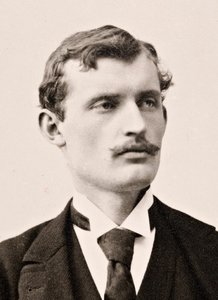
      Edvard Munch

      Edvard Munch

      1863 - 1944, Sweden

      Quick facts about Edvard Munch

      • Artistic Movement Or Style:
        • Expressionism
        • Symbolism
        • Post-Impressionism
      • Artists Or Movements Influenced By This Artist: ['German Expressionism']
      • Artists Who Influenced This Artist:
        • Paul Gauguin
        • Vincent van Gogh
        • Toulouse-Lautrec
      • Full Name: Edvard Munch
      • Nationality: Norwegian
      • Notable Artworks:
        • The Scream
        • Madonna
        • The Sick Child
        • Puberty
      • Place Of Birth: Adelsbruk, Sweden
      • Date Of Birth: 1863
      • Date Of Death: 1944

      Artist Biography

      A Life Shaped by Loss

      Edvard Munch arrived in the world in 1863, born into the stark landscapes of Norway. His early years were defined by a heavy presence of grief that would later find its way onto his canvases. The deaths of his mother and his sister, Sophie, both taken by tuberculosis, left a deep mark on his young mind. These losses created a preoccupation with mortality and the fragility of life that stayed with him forever. He grew up in a household where the shadows of sickness were never far away.

      His father, Christian, was a physician who struggled with intense religious devotion and mental instability. This atmosphere of dread and the vivid ghost stories told in his childhood helped shape his later visions. Munch did not merely paint what he saw; he sought to externalize his internal state. He called this approach soul painting. It was a way to translate psychological distress into visual form, using the colors and shapes of his own experience.

      The Path to Expressionism

      Munch began his formal studies at the Royal School of Art and Design in Kristiania, which is now known as Oslo. During this time, he moved within bohemian circles that challenged the strict rules of academic art. A significant influence was Hans Jæger, a nihilist who encouraged Munch to abandon conventional styles and instead focus on his own subjective emotions. This shift led him toward the development of Expressionism.

      Travels through Europe brought new perspectives to his work. In Paris, he encountered the techniques of artists like Paul Gauguin and Vincent van Gogh, particularly their use of color. In Berlin, his connections with figures such as August Strindberg further pushed his investigations into psychological themes. He began to move away from naturalistic representation, opting instead for distorted forms and rhythmic lines that could communicate the tremors of human existence.

      Themes and Lasting Impact

      Much of his work belongs to a series he called The Frieze of Life, where he explored the recurring cycles of love, fear, death, and anxiety. Some of his most recognized paintings include:

      • The Scream: A work from 1893 that uses swirling, fiery landscapes to represent existential dread.
      • Madonna: A piece that explores themes of sexuality and mortality.
      • The Sick Child: A poignant reminder of the loss of his sister.
      • Puberty: An exploration of the physical and psychological changes of youth.

      Munch was a highly active printmaker, using techniques like etching, lithography, and woodcut to expand his reach. He possessed over one thousand paintings at the time of his death in 1944. His ability to confront the darker aspects of the human condition helped pave the way for later movements like German Expressionism. Today, much of his legacy is preserved in the Munch Museum in Oslo, where his work continues to speak to the complexities of the human psyche.

      § 5Comparanda

      § 6Questions

      Quick Facts

      • Location: Kunsthalle Hamburg
      • Notable elements or techniques: Bold brushstrokes
      • Title: Stanislaw Przybyszewski
      • Year: 1893
      • Subject or theme: Portraiture

      § 7Cite this entry

      AllPaintingsStore.com, “Edvard Munch, Stanislaw Przybyszewski (1893)”, https://allpaintingsstore.com/en/art/edvard-munch-stanislaw-przybyszewski-6WHK8W-en/ArtistReproduction/ (accessed 2 October 2026).

      § 8The reproduction

      Hand Made Oil Reproduction

      Hand-painted oil on canvas in your size and frame, made to order by our artists. ( Switch to Print Switch to Digital Image)

      It is specified on the order sheet in the margin; the present state of that sheet reads as follows.

      Stanislaw Przybyszewski

      Reproduction Medium

      Reproduction Size

      -

      Elite Senior Artist

      More detail, finesse, and extra production time

      -

      Reproduction Frame

      -

      -

      For artworks or reproductions larger than 105 cm (approximately 41 inches) on any side, the frame will be shipped as a kit, disassembled. This method ensures safe delivery and prevents damage during transport.

      Professional assembly required - this is not a DIY product.
      The kit must be assembled and the canvas stretched by an experienced professional framer, using wood glue (not supplied), a canvas stretching plier and clamps to hold the bars square while the glue dries. Incorrect assembly or uneven canvas tension can permanently damage the artwork and is not covered by our warranty.

      • All solid wood bars are included, precisely cut to size.

      • Assembled with the screws provided, plus wood glue for the corner joints, which is not supplied and must be sourced by your framer.

      • Professional tools are required and not included: a canvas stretching plier (tensioner) and clamps to hold the bars square while the glue dries.

      Important:
      The corner joints require wood glue, the bars must be held with clamps until the glue is fully dry, and tightening the canvas on the assembled frame requires a canvas stretching plier. None of these are included in the kit. Please arrange an experienced professional framer before ordering this size.

      Nameplate

      -

      -

      Protective Varnish

      Glossy Varnish (enhances colors, protects against light/moisture)

      -

      Customize My Artwork

      Examples of what can be changed: Replace face with customer photo; Add pet (e.g., replace cat with dog); Include hidden message in background; Change background landscape or elements.

      -

      Urgent

      Worldwide Delivery () in 3/4 weeks instead of standard 5 weeks. (30 October). No compromise on quality.

      -

      Express Shipping

      Worldwide Delivery () in 5 weeks. (6 November).

      Included

      Total Price

      $ 258

      Included with every order

      • Free Worldwide Express Shipping
      • High-Quality Linen Canvas
      • Full Shipping Insurance
      • Customs Tax Refund Guarantee
      • True Color Matching Guarantee
      • 100-Day Return Policy (Defects Only)
      • 100% Money-Back Guarantee
      • Bulk Discount Offer
      Order sheet