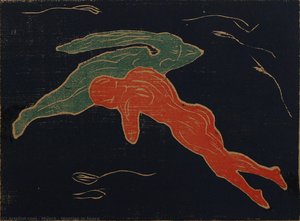
Acrylic On Canvas.

§ 1Catalogue data

§ 2Abstract
Collectible Description
Experience Edvard Munch's iconic 'untitled (8945)' – a haunting portrait capturing emotional turmoil and quiet contemplation. Explore the masterpiece’s details & artist info.
 Read More
Artist Biography
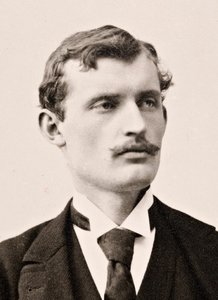
Expressionist pioneer Edvard Munch created the iconic The Scream. Discover his haunting masterpieces of anxiety and emotion today.
§ 3Commentary
The Haunting Echoes of a Norwegian Soul
Edvard Munch’s “Untitled (8945),” a captivating portrait rendered in oil on cardboard, isn't merely a depiction of two women; it’s a profound exploration of human vulnerability and the quiet anxieties that simmer beneath the surface of everyday life. Painted around 1900, during a period of intense personal reflection for Munch, this work stands as a cornerstone of his mature style – a synthesis of Symbolism and nascent Expressionism, reflecting a world grappling with rapid change and burgeoning psychological awareness.
The painting immediately draws the eye to its central figures. Two women, seated in what appears to be a domestic interior, gaze out a window towards an unseen landscape. Their postures are subtly poised, yet there’s an undeniable sense of detachment, as if observing life from a distance rather than actively participating in it. The lighting is diffused and melancholic, casting long shadows that contribute to the overall atmosphere of subdued sadness. The composition itself feels deliberately unbalanced, mirroring the emotional instability at play.
A Symphony of Color and Texture – Munch’s Unique Technique
Munch's technique in “Untitled (8945)” is instantly recognizable—a deliberate departure from academic realism. He employs a broken, almost mosaic-like application of paint, layering thin washes of color over each other to create an effect of shimmering instability. The palette is dominated by muted blues and greens, punctuated by flashes of ochre and crimson, colors often associated with illness, decay, and emotional turmoil – elements deeply rooted in Munch’s own life experiences.
Notice the way he builds up texture through repeated strokes, particularly around the faces and hands. These aren't smooth, idealized forms; they are rough-hewn, almost skeletal, hinting at a fragility beneath the surface. The use of dry brushwork adds to this sense of unease, creating a palpable feeling of movement and restlessness within the scene.
Symbolism Woven into the Fabric of the Image
Beyond its immediate visual appeal, “Untitled (8945)” is laden with symbolic meaning. The window itself acts as a portal—a barrier between the interior world of the women and the external reality they observe. It suggests a longing for something beyond their current circumstances, perhaps a yearning for escape or connection. The potted plant in the upper right corner could represent life and growth, yet its placement feels somewhat isolated, mirroring the emotional distance between the figures.
The bottles scattered around the room are particularly intriguing. They might symbolize fleeting pleasures or distractions—attempts to momentarily alleviate the underlying sadness. The chair and book further reinforce the theme of domesticity, but also hint at a lack of engagement, suggesting that even within this familiar setting, there’s a profound sense of isolation.
An Echo of Anxiety – Munch's Legacy
“Untitled (8945)” is more than just a portrait; it’s a window into the soul of an artist wrestling with his own demons. It resonates deeply because it captures a universal human experience—the quiet awareness of our own vulnerability and the persistent feeling that something essential is missing. Munch's work, particularly this piece, paved the way for Expressionism, influencing generations of artists who sought to convey inner emotions rather than simply representing external reality.
Today, reproductions of “Untitled (8945)” continue to captivate viewers with their haunting beauty and emotional depth. It’s a powerful reminder that art can not only reflect the world around us but also delve into the darkest corners of the human psyche – offering solace and understanding through shared experience.
Questions & Answers
What does "untitled (8945)" share with the rest of Edvard Munch's output?
Within Edvard Munch's output, "untitled (8945)" sits in the Expressionism style, alongside the themes of symbolism, anxiety, modernity, expressionism, loneliness, norse, folklore, death.
How harmonious are the colors of "untitled (8945)" by Edvard Munch?
"untitled (8945)" by Edvard Munch displays a balanced harmony color harmony.
Where do the visitors of "untitled (8945)" by Edvard Munch come from?
Statistics about "untitled (8945)" by Edvard Munch are on the artwork's Stats page: monthly visits of the artwork, visits of the artist's works, and country and language breakdowns of recent visitors.


 Switch to Print


 For artworks or reproductions larger than 105 cm (approximately 41 inches) on any side, the frame will be shipped as a kit, disassembled. This method ensures safe delivery and prevents damage during transport.